Reflecto News is an online news platform covering major international political events, global economic developments, and security conflicts. The site provides updates on topics such as Chinese manufacturing dominance, Middle Eastern political tensions, and high profile legal arrests. Readers can access current articles organized by categories like World News, Iran, and USA.
WASHINGTON — The Trump administration filed a federal lawsuit against the City of Denver on Tuesday, challenging the constitutionality of its decades-old ban on semi-automatic rifles and arguing that the city ordinance violates the Second Amendment rights of law-abiding citizens .
Acting Attorney General Todd Blanche, in a statement announcing the lawsuit, said the city’s prohibition on what it terms “assault weapons” directly infringes on the right to bear arms.
“The Constitution is not a suggestion and the Second Amendment is not a second-class right,” Blanche said. “Denver’s ban on commonly owned semi-automatic rifles directly violates the right to bear arms. This Department of Justice will vigorously defend the liberties of law-abiding citizens nationwide” .
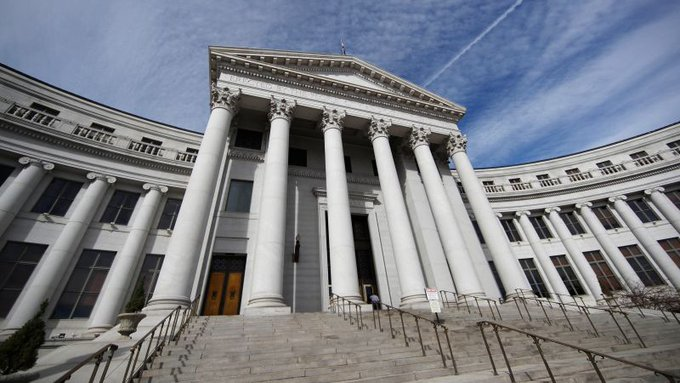
🏛️ The Denver Ordinance at the Center of the Dispute
The law in question, enacted by the Denver City Council in 1989, makes it a crime to possess, sell, or transfer “assault weapons,” a category that includes AR-15-style rifles . The ordinance was passed during a period of heightened concern over gun violence in Colorado’s capital city .
Denver Police Chief Ron Thomas said the ordinance has been effective for nearly 40 years. The department seized 2,100 guns last year, but fewer than 40 were assault-style weapons, he noted . The law also restricts magazines capable of holding more than 15 rounds .
Last week, the DOJ sent letters to city and state officials demanding they repeal their respective bans on assault weapons and large-capacity magazines, threatening legal action if they refused to comply .
⚖️ ‘Hell No’: Denver’s Defiant Response
Denver officials rejected the federal government’s demands Monday, with Mayor Mike Johnston publicly declaring the city would not back down.
“We’re here today to let them know that our answer is ‘hell no,'” Johnston said during a press conference. “No, we will not roll back a common-sense policy that has kept weapons of war off of these city streets for 37 years” .
The mayor also expressed concern for first responders, arguing that repealing the ban would put police at greater risk. “No, we will not put first responders at greater risk every time they respond to a dangerous incident,” he said .
City Attorney Michiko Brown called the DOJ’s legal threat “baseless, irresponsible, and a clear overreach of the federal government’s power” .
🔫 The DOJ’s Legal Argument
The federal government’s case leans heavily on two landmark Supreme Court decisions: District of Columbia v. Heller (2008) and New York State Rifle & Pistol Association v. Bruen (2022) .
In Heller, the Court held that the Second Amendment protects the right of law-abiding citizens to possess weapons that are “in common use for lawful purposes” . The DOJ argues that AR-15-style rifles easily meet this standard.
“The Ordinance bans many weapons, including AR-15 style semiautomatic rifles,” Assistant Attorney General Harmeet K. Dhillon wrote in a letter to Denver officials. “Law-abiding Americans own and use for lawful purposes literally tens of millions of AR-15 style rifles. Indeed, it is the most popular rifle in America” .
According to the gun control organization Brady, there are approximately 20 million AR-style firearms in the United States today, compared to just 100,000 in 2004 .
The Justice Department is using its newly created Second Amendment Section within the Civil Rights Division to bring this challenge . The lawsuit asks the U.S. District Court in Colorado to prevent Denver police from enforcing the ordinance “to the extent it bans the possession of AR-15 style rifles with standard capacity magazines” .
🎯 Broader Implications for Colorado and the Nation
The legal action against Denver comes as the DOJ is also pressuring Colorado officials to end the state’s ban on large-capacity magazines, which was enacted in 2013 in the wake of the Aurora theater shooting that killed 12 people and wounded 70 others . The Colorado Supreme Court upheld the state law in 2020 .
Colorado Attorney General Phil Weiser has vowed to defend the state’s law, noting that six different federal courts have previously upheld bans on assault weapons or large-capacity magazines .
The outcome of the Denver case could have significant implications for the 11 states plus the District of Columbia that have similar “assault weapon” bans, though the exact definition of the term varies by jurisdiction .
Questions people ask
What is China's current share of global manufacturing?
China now accounts for twenty eight percent of global manufacturing. This industrial output exceeds the combined manufacturing production of the United States, Japan, and Germany, making China the leading global industrial power according to recent reports.
Why were Andrew Tate and Tristan Tate arrested in Miami?
Andrew Tate and his brother Tristan Tate were taken into custody in Miami by the United States Marshals Service. They face thirty eight new charges in the United Kingdom, including rape and child pornography offences, and prosecutors are seeking their extradition.
What warning did Moscow issue about oil prices?
Kirill Dmitriev, the Chief Executive of the Russian Direct Investment Fund, warned that a tsunami of skyrocketing oil prices is approaching. Moscow describes this potential energy shock as a major threat to global markets.
What political shift is projected for Benjamin Netanyahu's coalition?
Political polls project that Prime Minister Benjamin Netanyahu's coalition is on track to lose its majority in the upcoming October election. This projection indicates a potential political shift in Jerusalem.
Why did a Russian military aircraft land in Tehran?
A Russian airborne command aircraft, widely known as a doomsday plane, landed in Tehran. The arrival of the aircraft represents a high stakes show of support from Russia for Iran during a period of heightened regional tensions.
What did President Masoud Pezeshkian claim about the United States and Israel?
Iranian President Masoud Pezeshkian claimed that the United States and Israel failed in a forty eight hour plan to topple the Iranian government. He made these statements during a televised address marking two years since his inauguration.