Reflecto News is an online news platform covering major international political events, global economic developments, and security conflicts. The site provides updates on topics such as Chinese manufacturing dominance, Middle Eastern political tensions, and high profile legal arrests. Readers can access current articles organized by categories like World News, Iran, and USA.
Reflecto News | Breaking News | Economy & Markets
WASHINGTON — The Federal Reserve has been steadily accumulating U.S. Treasury debt at a pace not seen since the depths of the 2008 financial crisis, raising questions about how long the central bank can sustain its presence in a bond market under pressure from record fiscal spending and elevated global uncertainty.
Since December 2025, the Fed has purchased $237 billion in Treasuries, bringing its total holdings to $4.4 trillion—the highest level since July 2024 . More striking, Treasuries now account for 65.9% of the Fed’s total assets, the largest share since March 2008
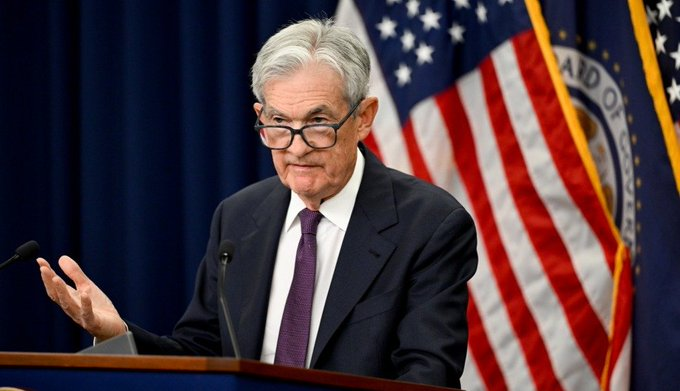
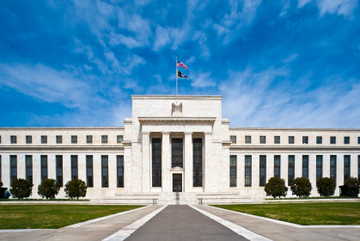
📈 The Numbers: A Central Bank Stepping In
Under normal quantitative tightening (QT), the Fed is supposed to be reducing its holdings, not increasing them. Yet, the Fed has quietly reversed course, buying Treasuries to add liquidity to a bond market strained by:
- Record fiscal deficits: The U.S. government borrowed $1.6 trillion in the first half of fiscal 2026 alone, with the national debt now at $39 trillion
- The war with Iran: Increased defense spending (costing an estimated $25 billion and counting) and the naval blockade of the Strait of Hormuz have contributed to increased fiscal outlays
- Ongoing debt ceiling negotiations: Political brinkmanship has spooked the Treasury market, despite a last-minute suspension of the limit in March 2026
The Fed’s heavy buying has held down long-term interest rates, preventing a sharp spike in mortgage, auto, and corporate borrowing costs. However, the bond market is sending a clear signal that something is amiss. The 10-year Treasury yield, which normally should rise as the government borrows more, has remained artificially low, suggesting that the Fed—not private investors—is the buyer of last resort .
🏛️ Why the Fed Is Buying: Liquidity, Not Stimulus
This is not quantitative easing (QE) as traditionally understood. QE is intended to lower long-term rates and stimulate the economy. The current purchases are defensive, designed to absorb an oversupply of bonds that private investors are unwilling to purchase at current yields .
| Indicator | Value | Significance |
|---|---|---|
| Fed Treasury holdings | $4.4T | Highest since July 2024 |
| Treasuries as % of assets | 65.9% | Highest since March 2008 |
| Fed purchases since Dec 2025 | $237B | Fastest pace since 2008 |
| U.S. debt-to-GDP ratio | 100.2% (debt held by public) | First time since 1946 |
| Total gross debt | $39T+ | — |
The primary driver is the collapse in demand from traditional foreign buyers. China and Japan have been net sellers of U.S. Treasuries for four consecutive quarters, diversifying into gold, euros, and yen . The war in the Middle East and the closure of the Strait of Hormuz have increased oil prices, reducing the pool of petrodollars available for recycling into U.S. debt .
The Fed is preventing a spike in yields that would crater the stock market and throw the economy into a recession just before the midterm elections, and is maintaining the illusion that a profligate government can borrow without consequence—at least for now .
⚠️ The $39 Trillion Problem: ‘How Long Can It Last?’
The Fed’s balance sheet now stands at roughly $6.7 trillion, down from its pandemic peak of $9 trillion but still far above pre-2008 levels of $0.9 trillion . Critics argue that the Fed’s purchases are enabling continued fiscal recklessness and postponing an inevitable day of reckoning.
“How long can it keep doing this? The answer is: until inflation expectations become unanchored, or until foreign investors stage a bond strike, forcing yields higher regardless of what the Fed does,” a former Treasury official told Bloomberg .
The Fed is trapped. If it stops buying, yields rise, the stock market falls, and a recession becomes more likely. If it continues buying, the balance sheet expands further, and the central bank risks becoming the permanent backstop for Treasury issuance—a situation that ends in either persistent inflation or a collapse of confidence in the dollar .
📊 The Balance Sheet Becomes the Story
So far, the purchases have not triggered a sharp uptick in inflation. Core PCE (the Fed’s preferred measure) remains around 3.1%, above the 2% target but not spiking uncontrollably . But as the national debt continues to grow, the Fed may be forced to hold more and more debt simply to maintain financial stability.
“The bond market vigilantes are not dead,” the former Treasury official warned. “They’re just waiting. And when they finally act, the Fed may not be able to stop them.”
📋 Key Takeaways for Reflecto News Readers
| Aspect | Summary |
|---|---|
| Fed Purchases | $237 billion since December 2025 (fastest since 2008) |
| Total Holdings | $4.4 trillion (highest since July 2024) |
| Treasuries as % of Assets | 65.9% (highest since March 2008) |
| Primary Driver | Collapse in foreign demand; record fiscal deficits; Iran war |
| Total National Debt | $39 trillion+ |
| Debt-to-GDP Ratio | 100.2% (debt held by public) |
| Is This QE? | No — defensive purchases to absorb oversupply |
| Key Risk | Balance sheet expansion could unanchor inflation expectations or trigger bond market revolt |
Follow Reflecto News for continuous updates on Federal Reserve policy, U.S. debt dynamics, and all breaking news from global financial markets.
This article is the intellectual property of Reflecto News. Redistribution without attribution is prohibited. For syndication or media inquiries, please contact the editorial team.
Questions people ask
What is China's current share of global manufacturing?
China now accounts for twenty eight percent of global manufacturing. This industrial output exceeds the combined manufacturing production of the United States, Japan, and Germany, making China the leading global industrial power according to recent reports.
Why were Andrew Tate and Tristan Tate arrested in Miami?
Andrew Tate and his brother Tristan Tate were taken into custody in Miami by the United States Marshals Service. They face thirty eight new charges in the United Kingdom, including rape and child pornography offences, and prosecutors are seeking their extradition.
What warning did Moscow issue about oil prices?
Kirill Dmitriev, the Chief Executive of the Russian Direct Investment Fund, warned that a tsunami of skyrocketing oil prices is approaching. Moscow describes this potential energy shock as a major threat to global markets.
What political shift is projected for Benjamin Netanyahu's coalition?
Political polls project that Prime Minister Benjamin Netanyahu's coalition is on track to lose its majority in the upcoming October election. This projection indicates a potential political shift in Jerusalem.
Why did a Russian military aircraft land in Tehran?
A Russian airborne command aircraft, widely known as a doomsday plane, landed in Tehran. The arrival of the aircraft represents a high stakes show of support from Russia for Iran during a period of heightened regional tensions.
What did President Masoud Pezeshkian claim about the United States and Israel?
Iranian President Masoud Pezeshkian claimed that the United States and Israel failed in a forty eight hour plan to topple the Iranian government. He made these statements during a televised address marking two years since his inauguration.