Reflecto News is an online news platform covering major international political events, global economic developments, and security conflicts. The site provides updates on topics such as Chinese manufacturing dominance, Middle Eastern political tensions, and high profile legal arrests. Readers can access current articles organized by categories like World News, Iran, and USA.
Reflecto News | Breaking News | Geopolitics & Defense
WASHINGTON/BEIJING — Despite a web of U.S. sanctions and export controls, Chinese manufacturers continue to supply critical drone components to both Iran and Russia, enabling Tehran to rebuild its unmanned aerial vehicle (UAV) fleet and Moscow to sustain its war effort in Ukraine, according to multiple intelligence reports and supply chain analyses.
The clandestine supply chains operate through a sophisticated network of shell companies, transshipment hubs, and dual-use technology exports that circumvent Western enforcement efforts . Key components—including navigation systems, sensors, motors, batteries, and microchips—flow to Iranian and Russian weapons manufacturers through intermediaries in China and Hong Kong .
🚁 Iran’s Drone Reconstruction: The ‘Foxtech Hobby’ Network
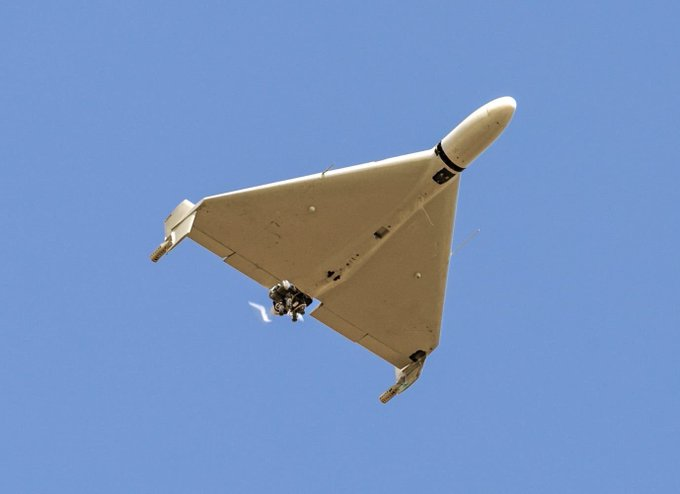
Iran continues to produce hundreds of Shahed-series attack drones despite intense U.S.-Israeli military pressure. A U.S. intelligence firm revealed that Pars Aero Institute Kerman, an Iranian company with clear ties to the nation’s military, acts as the central distributor in a secret procurement network .
Pars Aero sources its components from:
- Foxtech Hobby Co. – A Hong Kong-registered company that serves as a drone “distributor” for the Iranian regime. Its registered address matches three other companies already blacklisted by the U.S. Treasury
- Huixinghai Technology (Tianjin) Co., Ltd. – A Chinese firm that provides critical parts, including navigation systems and flight controllers, many produced by companies linked to China’s military and security forces
Neither Foxtech Hobby nor the Tianjin-based firm has been placed on the U.S. sanctions list, allowing Western component makers to continue selling to them unwittingly . The network uses transshipment hubs in Turkey, India, Kazakhstan, Vietnam, and the UAE to mask the final destination of the cargo .
Since the U.S.-Israeli war began on February 28, Iran has launched an estimated 3,600 drones at Gulf states, with a significant percentage of those platforms assembled using Western and Chinese components routed through these intermediaries .
🇷🇺 Russia’s Chinese Supply Chain
China has also significantly increased exports of key components for Russian drone production. According to customs data, a record 527,000 kilometers of fiber optic cable were shipped to Russia in August—nearly three times the amount shipped in June—providing critical material for FPV drones resistant to electronic warfare . Supplies of lithium-ion batteries to Russia also reached $54 million in the same period .
Russian manufacturers rely heavily on Chinese component imports. The Shahed-136 drone’s MD-550 engine is reverse-engineered from a German Limbach L550, but the supply chain that enables mass production runs through Chinese intermediaries . Russia’s domestic production capacity has reached up to 5,000 Shahed drones per month, according to Ukrainian estimates .
Chinese-made parts identified in recovered Russian drones include:
- DLE 111 gasoline engines for Shahed-107 variants
- Navigation systems and sensors
- Fiber-optic cable for FPV drone guidance systems
🇨🇳 China’s Dominance of the Global Drone Supply Chain
Industry experts warn that China’s monopoly over the global drone supply chain has effectively handed Beijing control of the modern battlefield. “China has already won the third world war, because everything is in its hands—short term and long term,” a Ukrainian drone operator told The Wall Street Journal .
Why can’t the US or Europe stop it?
- Scale Economics: China produces consumer drones in the hundreds of thousands annually, driving down unit costs to levels Western firms cannot match
- Raw Material Control: Chinese companies control a substantial portion of the rare earth magnets necessary for high-end drone motors
- Dual-Use Loopholes: Navigational chips, wireless transceivers, and micro-controllers are “dual-use” technologies; they can be imported legally for civilian drones but are repurposed for weapons in Iranian and Russian assembly plants
- Shell Company Networks: Hong Kong-registered shell companies provide cover for transactions that would otherwise trigger sanctions
Research shows that 80% of components in recovered Shahed drones originated from American companies, but were sourced through third countries rather than directly from the U.S. . This highlights the futility of current sanctions when goods can be purchased through intermediaries operating in jurisdictions with lax enforcement.
📋 Key Takeaways for Reflecto News Readers
| Aspect | Summary |
|---|---|
| The Network | Iran uses shell companies (Foxtech Hobby/Huixinghai) to buy drone parts via China/Hong Kong |
| The Russia Link | Russia imported 527,000 km of fiber optic cable from China in August; $54M in lithium batteries |
| Production Scale | Iran: 400 drones/day domestic capacity; Russia: 5,000 Shaheds/month |
| Strategic Impact | Iran launched ~3,600 drones against US targets in the Gulf since February 28 |
| Will It Change? | Experts doubt the US can stop the flow without drastically ramping up domestic drone manufacturing |
| China’s Position | Denies supplying lethal aid; maintains “normal economic cooperation” citing dual-use ambiguity |
Follow Reflecto News for continuous updates on the global defense supply chain, sanctions enforcement, and the wars in Ukraine and the Middle East.
This article is the intellectual property of Reflecto News. Redistribution without attribution is prohibited. For syndication or media inquiries, please contact the editorial team.
Questions people ask
What is China's current share of global manufacturing?
China now accounts for twenty eight percent of global manufacturing. This industrial output exceeds the combined manufacturing production of the United States, Japan, and Germany, making China the leading global industrial power according to recent reports.
Why were Andrew Tate and Tristan Tate arrested in Miami?
Andrew Tate and his brother Tristan Tate were taken into custody in Miami by the United States Marshals Service. They face thirty eight new charges in the United Kingdom, including rape and child pornography offences, and prosecutors are seeking their extradition.
What warning did Moscow issue about oil prices?
Kirill Dmitriev, the Chief Executive of the Russian Direct Investment Fund, warned that a tsunami of skyrocketing oil prices is approaching. Moscow describes this potential energy shock as a major threat to global markets.
What political shift is projected for Benjamin Netanyahu's coalition?
Political polls project that Prime Minister Benjamin Netanyahu's coalition is on track to lose its majority in the upcoming October election. This projection indicates a potential political shift in Jerusalem.
Why did a Russian military aircraft land in Tehran?
A Russian airborne command aircraft, widely known as a doomsday plane, landed in Tehran. The arrival of the aircraft represents a high stakes show of support from Russia for Iran during a period of heightened regional tensions.
What did President Masoud Pezeshkian claim about the United States and Israel?
Iranian President Masoud Pezeshkian claimed that the United States and Israel failed in a forty eight hour plan to topple the Iranian government. He made these statements during a televised address marking two years since his inauguration.