Reflecto News is an online news platform covering major international political events, global economic developments, and security conflicts. The site provides updates on topics such as Chinese manufacturing dominance, Middle Eastern political tensions, and high profile legal arrests. Readers can access current articles organized by categories like World News, Iran, and USA.
President Donald Trump’s repeated vows to bomb Iranian power plants, bridges, and critical infrastructure on Tuesday have drawn sharp criticism from legal experts, humanitarian organizations, and U.N. officials, who warn that such actions could constitute war crimes and cause widespread civilian suffering.
By Reflecto News Desk
April 7, 2026 | Washington / Geneva / Tehran
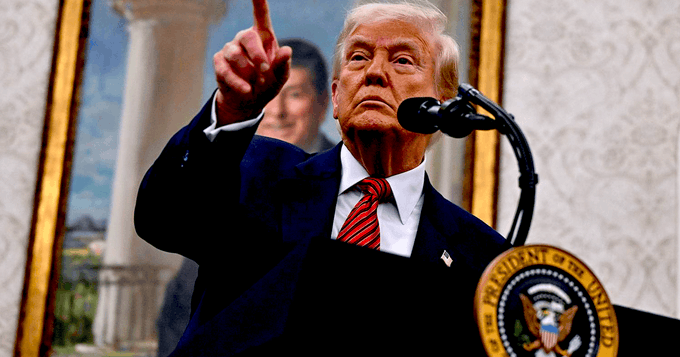
Trump’s latest ultimatum — demanding Iran fully reopen the Strait of Hormuz or face what he called “Power Plant Day and Bridge Day all wrapped up in one” — has escalated tensions to a new level. In blunt statements, the president warned Iran it would be “living in Hell” if the strategic waterway is not opened, explicitly threatening to target the country’s electricity generation and transportation network.
Legal scholars and international bodies have responded with strong caution. Targeting civilian infrastructure such as power plants on a large scale, especially when it foreseeably leads to prolonged blackouts affecting hospitals, water treatment, and civilian populations, risks violating international humanitarian law (IHL). Experts point to the principle of distinction (separating military from civilian targets) and proportionality as key concerns.
U.N. human rights officials and humanitarian groups have issued public warnings that indiscriminate or disproportionate attacks on energy infrastructure could amount to collective punishment and potentially qualify as war crimes under the Rome Statute of the International Criminal Court.
Why the Threats Raise War Crime Concerns
Power plants and bridges serve dual purposes but are overwhelmingly civilian in nature. Widespread destruction of Iran’s electrical grid would likely cause:
- Prolonged blackouts affecting millions of civilians.
- Disruption of hospitals, water purification, and sewage systems.
- Secondary humanitarian crises including food spoilage and medical supply failures.
International law experts note that even if some facilities have military value, attackers must demonstrate that anticipated military advantage outweighs expected civilian harm. Blanket threats to “blow up everything” or send Iran “back to the stone ages” (as referenced in earlier rhetoric) are being cited as evidence of intent that could cross legal lines.
Human Rights Watch and Amnesty International have called for restraint, urging all parties to respect IHL and avoid actions that punish civilians for the actions of their government.
Current Status of the Deadline
As of April 7, 2026, Trump’s deadline for Iran to reopen the Strait of Hormuz has technically expired. No large-scale U.S. strikes on power plants or bridges have been reported yet. However, Pentagon officials confirm that strike packages remain prepared and forces are on heightened alert.
Iran continues to maintain selective control over the strait, granting case-by-case exemptions for specific tankers while insisting the waterway “will never return to its former state, especially for America and Israel.” Limited transits (French-linked, Indian, and Iraqi vessels) have occurred, but full commercial shipping has not resumed.
Broader Conflict Context
The threats come amid ongoing military exchanges:
- Successful U.S. rescue of a wounded F-15E Colonel from deep inside Iran, following a high-risk seven-hour daylight operation.
- Iranian missile strikes on Israeli targets, including damage at the Ne’ot Hovav industrial zone.
- Debris from intercepted attacks causing fires at UAE facilities such as the Borouge petrochemical plant.
- Proxy risks highlighted by the U.S. Embassy in Baghdad describing recent incidents as assassination attempts on American diplomats.
Diplomatic channels remain active despite the rhetoric. Iran’s Foreign Minister Abbas Araghchi has reiterated willingness for mediated talks via Pakistan, while President Trump previously signaled a “good chance” of a deal within 24 hours.
International Reactions
- U.N. and Humanitarian Groups: Calls for de-escalation and adherence to international law.
- Legal Experts: Warnings that disproportionate infrastructure attacks could trigger accountability mechanisms.
- Gulf States: Concern over potential escalation that could further disrupt energy markets and regional stability.
- Allies: Mixed responses, with some NATO voices questioning the feasibility and legality of large-scale grid attacks.
FAQs: Trump’s Iran Threats and War Crime Concerns
Q1: Could bombing power plants and bridges be considered a war crime?
Yes, if the attacks are disproportionate or intentionally target civilian objects without sufficient military necessity. International humanitarian law prohibits collective punishment and requires proportionality.
Q2: Has Trump ordered strikes yet?
No confirmed large-scale strikes have occurred as of April 7, 2026. The deadline has passed, but diplomatic off-ramps and backchannel talks continue.
Q3: What is Iran’s position on the Strait of Hormuz?
Tehran states the strait will never return to its pre-crisis state for the U.S. and Israel, while allowing selective commercial transits on a case-by-case basis.
Q4: What are the potential humanitarian impacts?
Widespread blackouts could cripple hospitals, water systems, and food distribution, leading to significant civilian hardship.
Q5: Are there active peace efforts?
Yes. Mediated talks via Pakistan and other channels remain open, with both sides signaling interest in a “conclusive and lasting” resolution.
Reflecto News will continue monitoring any military developments, official statements from the White House or Pentagon, Iranian responses, and reactions from international organizations throughout the day.
Sources: Statements from President Trump, Iranian officials, U.N. human rights mechanisms, legal analyses from international law experts, and cross-referenced reporting from Reuters, Axios, The New York Times, and humanitarian organizations as of April 7, 2026. The situation remains highly fluid.
Questions people ask
What is China's current share of global manufacturing?
China now accounts for twenty eight percent of global manufacturing. This industrial output exceeds the combined manufacturing production of the United States, Japan, and Germany, making China the leading global industrial power according to recent reports.
Why were Andrew Tate and Tristan Tate arrested in Miami?
Andrew Tate and his brother Tristan Tate were taken into custody in Miami by the United States Marshals Service. They face thirty eight new charges in the United Kingdom, including rape and child pornography offences, and prosecutors are seeking their extradition.
What warning did Moscow issue about oil prices?
Kirill Dmitriev, the Chief Executive of the Russian Direct Investment Fund, warned that a tsunami of skyrocketing oil prices is approaching. Moscow describes this potential energy shock as a major threat to global markets.
What political shift is projected for Benjamin Netanyahu's coalition?
Political polls project that Prime Minister Benjamin Netanyahu's coalition is on track to lose its majority in the upcoming October election. This projection indicates a potential political shift in Jerusalem.
Why did a Russian military aircraft land in Tehran?
A Russian airborne command aircraft, widely known as a doomsday plane, landed in Tehran. The arrival of the aircraft represents a high stakes show of support from Russia for Iran during a period of heightened regional tensions.
What did President Masoud Pezeshkian claim about the United States and Israel?
Iranian President Masoud Pezeshkian claimed that the United States and Israel failed in a forty eight hour plan to topple the Iranian government. He made these statements during a televised address marking two years since his inauguration.