Reflecto News is an online news platform covering major international political events, global economic developments, and security conflicts. The site provides updates on topics such as Chinese manufacturing dominance, Middle Eastern political tensions, and high profile legal arrests. Readers can access current articles organized by categories like World News, Iran, and USA.
Published on Reflecto News | World News | Politics & Elections
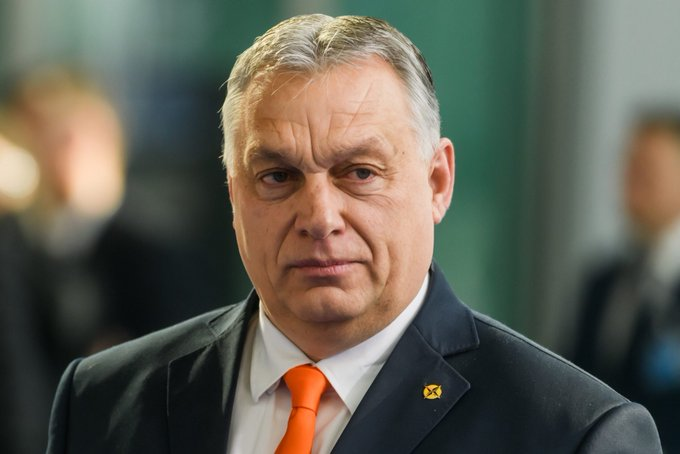
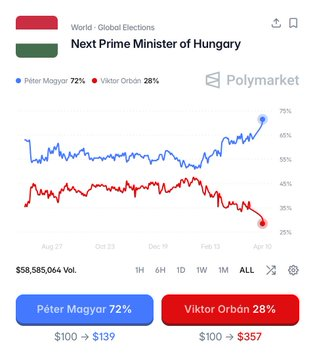
With just two days remaining before Hungarians head to the polls, Prime Minister Viktor Orbán’s chances of securing another term in office have plummeted to an unprecedented low. According to the prediction market Polymarket, Orbán’s probability of winning the parliamentary election on Sunday, April 12, has dropped to just 28 percent — the lowest level of his political career spanning more than 16 years .
The dramatic decline in the prime minister’s fortunes stands in stark contrast to the surging momentum of his primary challenger, Péter Magyar, whose center-right Tisza party now commands a 71 percent chance of victory according to the same prediction market .
Betting Markets Flash Red for Fidesz
The shift in political betting odds represents one of the most dramatic turnarounds in recent European electoral history. Data from the vegas.hu platform shows odds for Magyar’s victory at 1.4, while Orbán’s odds stand at 2.6 — meaning the market values the Tisza party’s chances significantly higher than those of the ruling Fidesz-KDNP coalition .
This trend is consistent across multiple platforms. On Kalshi, another major betting exchange, Orbán’s chances have fallen from 33.3 percent on April 5 to approximately 30 percent currently . The consistent pattern across different prediction markets suggests a genuine shift in sentiment rather than an anomaly.
| Metric | Orbán (Fidesz) | Magyar (Tisza) |
|---|---|---|
| Polymarket win probability | 28% | 71% |
| Vegas.hu odds | 2.6 | 1.4 |
| Publicus final poll | 39% | 52% |
| Median final poll | trailing | 23-point lead |
*Sources: Polymarket, Vegas.hu, Publicus, Median *
The Polling Picture: A Consistent Lead for Tisza
Independent polling data has consistently shown Magyar’s Tisza party leading Orbán’s Fidesz for more than a year, but the margin has widened significantly in recent weeks. According to a fresh poll by 21 Kutatokozpont, Tisza is now supported by 56 percent of decided voters, while Fidesz has fallen to 37 percent — a 19-point gap. Three weeks ago, the ratio was 53 percent to 39 percent .
A Publicus survey released on Friday put Tisza at 52 percent among decided voters compared to Fidesz’s 39 percent, with gains across all categories in the final stretch of the campaign . The authoritative Median polling service has recorded a 23 percentage point lead for Tisza, suggesting the opposition could secure a two-thirds parliamentary majority — enough to rewrite the constitution and fundamentally reset Hungary’s relationship with the European Union .
The aggregate poll result for March 28, published by Politico, showed 50 percent for Tisza against 39 percent for Fidesz — the first time the opposition has crossed the 50 percent threshold in polling averages .
Why Orbán Is Losing: Scandals, Economy, and Fatigue
The prime minister’s declining fortunes can be attributed to a confluence of factors that have eroded the once-solid Fidesz base.
The Kremlin Connection Scandal
In recent weeks, explosive revelations have emerged regarding Hungarian officials’ regular communications with the Kremlin. According to leaked phone call records, Hungarian Foreign Minister Péter Szijjártó reportedly called Russian Foreign Minister Sergei Lavrov regularly, sometimes during breaks in EU meetings, to discuss blocking EU sanctions against Russia .
The scandal deepened with reports of a secret “Moscow Protocol” — a 12-point plan providing for significant expansion of economic and energy ties with Russia . The opposition has seized on these revelations, with Magyar framing the election as a choice between “Europe or the Turkic council and dictators” .
Economic Malaise
After 16 years of Fidesz rule, many Hungarians have grown weary of what critics describe as economic stagnation and declining living standards. Transparency International ranks Hungary as the most corrupt country in the European Union . The government has faced mounting criticism over the poor state of public services and healthcare shortages — issues that Magyar has highlighted by personally delivering basic medical supplies to underfunded hospitals .
Voter Fatigue and the Unified Opposition
Unlike previous elections where the opposition was fragmented, nearly all other parties have stepped aside to make the race a two-horse contest between Fidesz and Tisza, maximizing Magyar’s chances of victory . This strategic consolidation has transformed what was once an unassailable Fidesz majority into a genuine electoral contest.
Zsuzsanna Szelényi, director of the Democracy Institute Leadership Academy at Central European University, told Newsweek: “The one reason why it is now such a different election than the last four is that Orbán has been in power for 15 years and there is a general fatigue of this government” .
The US Factor: Trump’s Endorsement Fails to Move the Needle
Despite an all-out effort from the Trump administration to boost Orbán’s chances, the American intervention appears to have had little — or potentially even negative — impact. Vice President JD Vance traveled to Budapest on Wednesday, appearing at an Orbán campaign rally and praising the prime minister as a model of leadership for Europe .
President Trump himself called into the rally, telling the crowd: “I’m a big fan of Viktor. I’m with him all the way” . Trump has also issued a “Complete and Total Endorsement” of Orbán on Truth Social, calling him “a true friend, fighter and WINNER” .
However, betting odds show Orbán’s stock has actually fallen marginally since Vance’s appearance . This suggests that the Trump administration’s ability to influence elections abroad may be more limited than previously assumed — and that Hungarian voters are prioritizing domestic concerns over international endorsements.
The EU has accused the Trump administration of “foreign election interference” for its open support of Orbán, adding an extra layer of controversy to the prime minister’s campaign .
The Electoral System: Fidesz’s Built-In Advantage
Despite the grim polling and betting odds, some analysts caution against writing off Orbán prematurely. Hungary’s electoral system, which Fidesz redesigned after securing a supermajority in 2010, provides significant advantages to the ruling party .
Key factors that could still deliver a Fidesz victory include:
- Gerrymandered Constituencies: Electoral district boundaries were redrawn in 2010 to favor the governing party .
- Media Control: Fidesz exerts strong influence over much of the country’s media, allowing it to shape the narrative in ways not fully captured by independent polls .
- Rural Vote-Buying: A documentary by activists, “The Price of a Vote,” has racked up 2 million views for its exposé of rural vote-buying practices by Fidesz .
- Polling Skepticism: Voters in rural areas may be reluctant to disclose their true voting intentions to pollsters, potentially understating Fidesz’s actual support .
Dániel Róna of the 21 Research Center, while consistently placing Tisza ahead, has cautioned that “the chances are equal or almost equal” due to the electoral system’s built-in advantages for the incumbent .
What a Tisza Victory Would Mean
If Magyar and Tisza secure victory — particularly with a two-thirds majority — the implications would be profound both domestically and internationally.
Domestic Reset
Magyar has promised to dismantle what he calls Orbán’s system of “illiberal democracy,” including replacing high court judges, the prosecutor general, and potentially the president — all of whom were appointed during Orbán’s tenure . A two-thirds majority would give Tisza the constitutional authority to carry out these sweeping changes.
European Relations
Perhaps the most immediate international impact would be on Hungary’s relationship with the European Union. Brussels has frozen approximately €20 billion in aid for Hungary over corruption concerns . A Tisza government would likely move quickly to unlock these funds by addressing EU rule-of-law concerns, providing a significant boost to the Hungarian economy.
Ukraine and Russia
Orbán has been Putin’s staunchest — and often only — ally in the EU, consistently blocking sanctions and aid packages for Ukraine. Magyar has pledged to work constructively with the EU on Ukraine, take a firmer line with Putin, and revisit Hungary’s existing energy arrangements with Russia — all of which could significantly bolster European unity .
US-Hungary Relations
The relationship with Washington could become more complicated. While Orbán is a key ally of President Trump, a Tisza government may not be as favorable to the Trump administration . This would highlight the limitations of the administration’s ability to influence elections abroad and weaken the perception of US global power .
The Final Stretch: Orbán’s Last-Ditch Appeal
In a sign of the campaign’s urgency, Orbán addressed the nation on Friday morning in what amounted to a final plea for support.
“We are now facing the danger of losing everything we have built together,” Orbán said on his social media channel. “The stakes are high and change is dangerous” .
The prime minister also claimed that “foreign intelligence services” were interfering in the election to sow “chaos,” though he provided no evidence for these allegations . The EU has separately warned of Russian interference in the Hungarian elections, including the creation of fake media outlets to spread disinformation about Magyar .
Magyar, for his part, responded by urging Hungarians “not to rise to provocations” or potential “false flag operations” — and to vote for Tisza . Thousands of young opposition supporters filled a square in Budapest on Friday for a concert featuring more than 40 artists, celebrating what they hope will be Orbán’s political demise .
What Happens Next
Hungarians will cast their ballots on Sunday, April 12. Polling stations are scheduled to close at 7 p.m. local time, with initial exit polls expected shortly thereafter.
| Event | Date |
|---|---|
| Election Day | Sunday, April 12, 2026 |
| Polling stations close | 7 p.m. local time |
| Exit polls expected | Immediately following |
| Final results | Likely within 24-48 hours |
Whether the prediction markets and polls prove accurate — or whether they repeat the mistakes of 2022, when most forecasters underestimated Fidesz’s strength — will become clear over the weekend. What is certain is that Hungary stands at a crossroads, and the outcome of this election will reverberate far beyond its borders.
Frequently Asked Questions (FAQs)
1. What are Viktor Orbán’s current chances of winning the election?
According to the prediction market Polymarket, Orbán’s probability of victory has dropped to an all-time low of 28 percent. His main opponent, Péter Magyar, has a 71 percent chance of winning .
2. When will the Hungarian election take place?
The election is scheduled for Sunday, April 12, 2026 .
3. Who is Péter Magyar?
Magyar is a former Fidesz insider turned Orbán critic who leads the center-right Tisza party. He left Orbán’s party in 2024 and has since emerged as the most serious electoral challenger to Orbán’s 16-year rule .
4. How has the Trump administration responded to the election?
President Trump has issued a “Complete and Total Endorsement” of Orbán, calling him “a true friend, fighter and WINNER.” Vice President JD Vance traveled to Budapest to appear at an Orbán campaign rally .
5. Why is Orbán’s popularity declining?
Key factors include a series of scandals involving close ties to the Kremlin, economic stagnation, allegations of corruption, and general voter fatigue after 16 years of Fidesz rule .
6. Could Orbán still win despite the polls?
Yes. Hungary’s electoral system provides significant advantages to the ruling party, including gerrymandered constituencies and strong influence over media. Some analysts caution that polling may understate Fidesz’s actual support, particularly in rural areas .
7. What would a Tisza victory mean for the European Union?
A Tisza government would likely move to unlock approximately €20 billion in frozen EU funds by addressing rule-of-law concerns, take a firmer line with Russia on Ukraine, and work more constructively with Brussels — potentially reshaping Hungary’s role in Europe .
Stay informed with Reflecto News – Your trusted source for breaking political and international intelligence. Subscribe for real-time updates on the Hungarian election results and their global implications.
Questions people ask
What is China's current share of global manufacturing?
China now accounts for twenty eight percent of global manufacturing. This industrial output exceeds the combined manufacturing production of the United States, Japan, and Germany, making China the leading global industrial power according to recent reports.
Why were Andrew Tate and Tristan Tate arrested in Miami?
Andrew Tate and his brother Tristan Tate were taken into custody in Miami by the United States Marshals Service. They face thirty eight new charges in the United Kingdom, including rape and child pornography offences, and prosecutors are seeking their extradition.
What warning did Moscow issue about oil prices?
Kirill Dmitriev, the Chief Executive of the Russian Direct Investment Fund, warned that a tsunami of skyrocketing oil prices is approaching. Moscow describes this potential energy shock as a major threat to global markets.
What political shift is projected for Benjamin Netanyahu's coalition?
Political polls project that Prime Minister Benjamin Netanyahu's coalition is on track to lose its majority in the upcoming October election. This projection indicates a potential political shift in Jerusalem.
Why did a Russian military aircraft land in Tehran?
A Russian airborne command aircraft, widely known as a doomsday plane, landed in Tehran. The arrival of the aircraft represents a high stakes show of support from Russia for Iran during a period of heightened regional tensions.
What did President Masoud Pezeshkian claim about the United States and Israel?
Iranian President Masoud Pezeshkian claimed that the United States and Israel failed in a forty eight hour plan to topple the Iranian government. He made these statements during a televised address marking two years since his inauguration.