Reflecto News is an online news platform covering major international political events, global economic developments, and security conflicts. The site provides updates on topics such as Chinese manufacturing dominance, Middle Eastern political tensions, and high profile legal arrests. Readers can access current articles organized by categories like World News, Iran, and USA.
Published on Reflecto News | World News | Middle East Conflict
In a defiant address following one of the most intense weeks of fighting in Lebanon since the conflict began, Hezbollah Secretary-General Naim Qassem has vowed to continue resistance against Israel “until the last breath” . The statement, issued Friday, rejected any return to pre-war conditions and urged Lebanese officials to avoid making what he called “gratuitous concessions” .
Qassem’s message came as Israeli airstrikes killed more than 300 people across Lebanon in a single 24-hour period this week — one of the deadliest escalations since hostilities began on March 2 . Despite the heavy toll, the Hezbollah chief declared that Israeli forces had failed to achieve their military objectives, including a planned ground incursion into southern Lebanon .
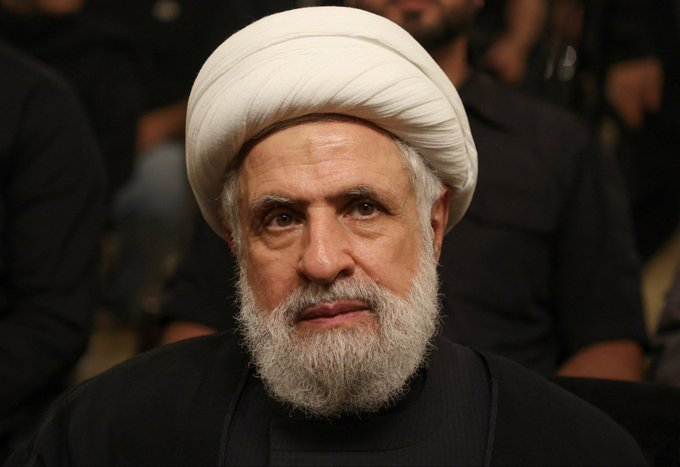
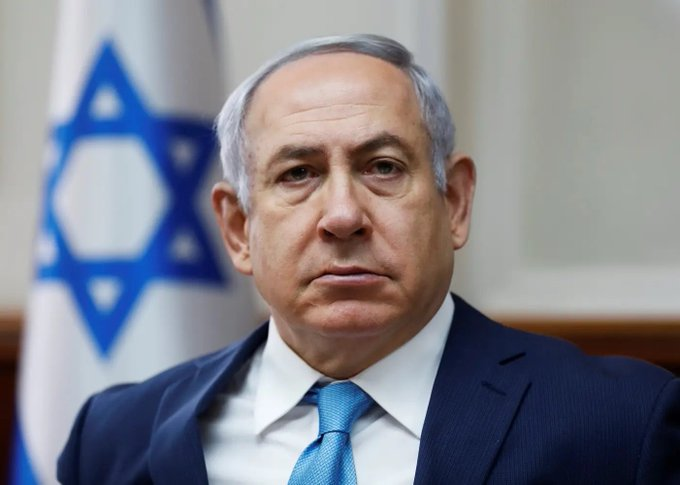
‘The Resistance Will Continue Until the Last Breath’
In a written message broadcast on Hezbollah’s Al-Manar TV, Qassem was unequivocal about the group’s determination to continue fighting.
“We will not accept a return to the previous situation, and we call on officials to stop gratuitous concessions. The resistance will continue until the last breath.” — Naim Qassem, Hezbollah Secretary-General
The Hezbollah chief framed the ongoing conflict as a battle for Lebanon’s sovereignty, calling for unity among “the state, the army, the people, and the resistance” to protect the country and “expel the occupier” . This formulation reflects Hezbollah’s long-standing position that its military wing operates in defense of Lebanese national interests, even as critics accuse the group of dragging the country into war.
Qassem also extended condolences to the families of those killed in the conflict, including civilians and fighters, and wished a speedy recovery for the wounded .
‘Israel Has Failed on the Ground’
Despite the devastating Israeli airstrikes that have killed nearly 1,900 people in Lebanon since March 2, Qassem asserted that Israel’s military campaign has been a strategic failure .
Key claims from Qassem’s statement include:
| Claim | Details |
|---|---|
| Ground invasion failure | Israeli forces failed to achieve a planned ground incursion into Lebanon |
| Military losses | Israeli troops suffered losses in ambushes; military vehicles destroyed along the border |
| Rocket capabilities | Israel failed to stop Hezbollah rockets, artillery, and drones from reaching Haifa and beyond |
| Civilian strikes | Israel intensified strikes on civilian areas to compensate for battlefield “setbacks” |
*Sources: Hezbollah statements *
“The threats and weapons of the enemy will not intimidate us,” Qassem said, reaffirming his group’s commitment to defend Lebanon’s sovereignty .
Rejecting Disarmament and Political Concessions
Qassem’s statement carries particular weight given the broader political context. Lebanon is preparing for potential direct negotiations with Israel in Washington next week, facilitated by the United States . The talks are expected to focus on Hezbollah’s disarmament and the establishment of peaceful relations — outcomes the group has explicitly rejected.
Qassem’s Political Red Lines:
| Red Line | Position |
|---|---|
| Return to pre-war conditions | Rejected |
| Free concessions to Israel | Opposed |
| Disarmament of Hezbollah | “Karbala-like confrontation” to prevent |
| Direct Lebanon-Israel talks | Rejection of “any direct negotiations” |
This is not the first time Qassem has rejected disarmament. In a major speech marking the one-year anniversary of his predecessor Hassan Nasrallah’s assassination, Qassem vowed that the group would “face a Karbala-like confrontation” — a reference to the foundational narrative of sacrifice and resistance in Shiite Islam — to prevent being disarmed .
Qassem has also consistently rejected direct negotiations with Israel, a stance that puts Hezbollah at odds with the Lebanese government’s apparent willingness to engage in US-facilitated talks .
The Deadly Context: Over 300 Killed in Single Day
Qassem’s vow to continue resistance came just two days after one of the deadliest waves of Israeli airstrikes since the conflict began. On Wednesday, hours after a two-week ceasefire was announced between the United States and Iran, Israeli warplanes struck more than 100 targets across Beirut, the Bekaa Valley, and southern Lebanon in roughly ten minutes .
According to Lebanese health authorities:
| Casualty Metric | Count |
|---|---|
| Killed in Wednesday strikes | 303+ |
| Wounded in Wednesday strikes | 1,150+ |
| Total killed since March 2 | 1,888 |
| Total wounded since March 2 | 6,092 |
| Displaced persons | ~1.5 million |
*Sources: Lebanese Health Ministry, Civil Defense *
Hezbollah described the strikes as “brutal crimes” targeting civilians in Beirut, the southern suburbs, Sidon, the south, and Bekaa, resulting in hundreds of casualties, including children, women, and the elderly . The group called the attacks a “desperate attempt to punish civilians” after what it said was Israel’s failure to break Lebanese and Iranian resilience .
The Ceasefire Dispute: Lebanon’s Exclusion
Qassem’s defiance comes amid a critical diplomatic dispute over whether the two-week US-Iran ceasefire applies to Lebanon.
| Party | Position on Lebanon |
|---|---|
| Hezbollah/Iran | Ceasefire includes Lebanon; Israeli strikes are violations |
| Pakistan (Mediator) | Ceasefire applies “everywhere, including Lebanon” |
| United States | Lebanon NOT included; “separate skirmish” |
| Israel | Ceasefire “does not include Lebanon” |
Iranian officials have maintained that the ceasefire includes Lebanon, with Parliament Speaker Mohammad Bagher Ghalibaf stating that “Lebanon and the entire Resistance Axis form an inseparable part of the ceasefire” . The United States and Israel have explicitly denied this interpretation.
Qassem has aligned Hezbollah with Iran’s position, stating that the group’s response to Israeli attacks would continue “until the US-Israeli aggression against our country and our people stops” . Hezbollah has continued military operations throughout the ceasefire period, including rocket fire toward Israeli settlements and a precision-guided missile strike on an Israeli naval base in Ashdod .
Hezbollah’s Leadership: Continuity Under Pressure
Qassem assumed leadership of Hezbollah following the assassination of his predecessor, Hassan Nasrallah, who was killed in an Israeli airstrike in late March along with several senior commanders . Nasrallah had led the group for more than three decades, overseeing its transformation into the most powerful non-state military force in the Middle East.
The transition to Qassem’s leadership has occurred under the most severe pressure the group has faced in decades. Israel has targeted Hezbollah’s command structure, weapons depots, and communications networks, while the Lebanese government — emboldened by international support — has called for confining weapons to state authority .
Despite these pressures, Qassem has maintained the group’s core strategic alignment with Iran. Analysts have noted that Qassem has “chosen to cling ever closer to the Guardian Jurist” — a reference to Iran’s Supreme Leader — emphasizing the long history of Iran’s Guardianship over Shiite Muslims . This alignment reinforces Hezbollah’s position as the most powerful member of Iran’s “Axis of Resistance.”
The Path Forward: War or Diplomacy?
As Lebanon and Israel prepare for potential US-hosted talks in Washington next week, Qassem’s statement throws the diplomatic process into doubt. The Hezbollah chief has made clear that the group will not be bound by any agreement that requires its disarmament or a return to pre-war conditions .
Key Developments to Watch:
| Event | Timing | Significance |
|---|---|---|
| US-Iran talks (Islamabad) | Ongoing | Will determine broader ceasefire framework |
| Israel-Lebanon talks (Washington) | Next week | US-hosted; Hezbollah opposes |
| Israeli military operations | Ongoing | No ceasefire in Lebanon per Israel |
The Lebanese government faces an impossible balancing act. Prime Minister Nawaf Salam has indicated willingness to engage in direct negotiations with Israel, while Hezbollah — which operates as a state-within-a-state — has rejected any such engagement and vowed to continue fighting .
As one Lebanese official told Anadolu Ajansı, the upcoming Washington meeting is “preparatory and not a negotiation” . Whether it can become something more — and whether Hezbollah can be brought into any eventual agreement — remains deeply uncertain.
Qassem’s message is clear: the resistance will continue. For Lebanon, caught between a powerful militant group and a determined Israeli military, the path to peace remains as elusive as ever.
Frequently Asked Questions (FAQs)
1. What did Hezbollah Chief Naim Qassem say about continuing resistance?
Qassem vowed that “the resistance will continue until the last breath,” rejected any return to pre-war conditions, and urged Lebanese officials to stop making “gratuitous concessions” to Israel .
2. Did Qassem acknowledge Israeli military successes?
No. Qassem asserted that Israeli forces have failed to achieve their military objectives, including a planned ground incursion, and that Israel was unable to stop Hezbollah rockets from reaching Haifa and beyond .
3. What is Hezbollah’s position on the upcoming Israel-Lebanon talks in Washington?
Hezbollah opposes direct negotiations with Israel. Qassem has previously stated that the group rejects “any direct negotiations” and has warned Lebanese officials against making concessions .
4. Is Hezbollah willing to disarm?
No. Qassem has vowed a “Karbala-like confrontation” to prevent disarmament, using the foundational narrative of sacrifice in Shiite Islam to signal the group’s willingness to fight to the end rather than give up its weapons .
5. What has been the human toll of recent Israeli strikes on Lebanon?
Israeli strikes on Wednesday killed at least 303 people and wounded more than 1,150 in a single day. Since the conflict began on March 2, 1,888 people have been killed and 6,092 wounded in Lebanon .
6. Does the US-Iran ceasefire apply to Lebanon?
This remains disputed. Iran and Pakistan maintain that the ceasefire includes Lebanon, while the United States and Israel have explicitly denied this. Qassem has aligned Hezbollah with Iran’s position .
Stay informed with Reflecto News – Your trusted source for breaking conflict and diplomatic intelligence. Subscribe for real-time updates on the Israel-Hezbollah front, the Washington talks, and regional security developments.
Questions people ask
What is China's current share of global manufacturing?
China now accounts for twenty eight percent of global manufacturing. This industrial output exceeds the combined manufacturing production of the United States, Japan, and Germany, making China the leading global industrial power according to recent reports.
Why were Andrew Tate and Tristan Tate arrested in Miami?
Andrew Tate and his brother Tristan Tate were taken into custody in Miami by the United States Marshals Service. They face thirty eight new charges in the United Kingdom, including rape and child pornography offences, and prosecutors are seeking their extradition.
What warning did Moscow issue about oil prices?
Kirill Dmitriev, the Chief Executive of the Russian Direct Investment Fund, warned that a tsunami of skyrocketing oil prices is approaching. Moscow describes this potential energy shock as a major threat to global markets.
What political shift is projected for Benjamin Netanyahu's coalition?
Political polls project that Prime Minister Benjamin Netanyahu's coalition is on track to lose its majority in the upcoming October election. This projection indicates a potential political shift in Jerusalem.
Why did a Russian military aircraft land in Tehran?
A Russian airborne command aircraft, widely known as a doomsday plane, landed in Tehran. The arrival of the aircraft represents a high stakes show of support from Russia for Iran during a period of heightened regional tensions.
What did President Masoud Pezeshkian claim about the United States and Israel?
Iranian President Masoud Pezeshkian claimed that the United States and Israel failed in a forty eight hour plan to topple the Iranian government. He made these statements during a televised address marking two years since his inauguration.