By Reflecto News Staff
April 4, 2026
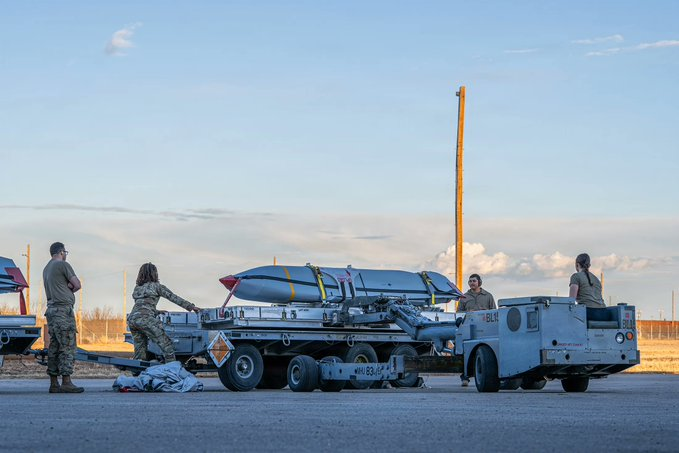
Lahore, Pakistan – The United States is rapidly depleting its inventory of advanced AGM-158 JASSM-ER (Joint Air-to-Surface Standoff Missile – Extended Range) stealth cruise missiles to sustain strikes on Iranian targets, with only about 425 units now remaining available worldwide from a pre-war stockpile of roughly 2,300, according to Bloomberg reporting. Over 1,000 of these high-value missiles have reportedly been expended in the first month of the conflict alone, pulling reserves originally earmarked for potential contingencies in other theaters such as the Indo-Pacific.
Each JASSM-ER costs approximately $1.5–3.6 million, features low-observable stealth technology, and can strike deeply buried or heavily defended targets from standoff ranges exceeding 500–1,000 km when launched from bombers or fighters. These weapons have been central to U.S. efforts to degrade Iran’s missile production facilities, air defenses, and hardened sites amid persistent Iranian layered defenses.
Severe Munitions Strain and Replenishment Challenges
The heavy usage of JASSM-ER forms part of a broader pattern of high-end precision munitions depletion during the six-week Iran war:
- Production capacity remains limited (Lockheed Martin’s current rate is around 800–860 JASSM-family missiles per year), meaning full replenishment of depleted stocks could take years.
- Similar concerns apply to related systems like Tomahawk cruise missiles (hundreds to over 1,000 fired) and LRASM anti-ship variants for operations near the Strait of Hormuz.
- The U.S. has shifted toward cheaper alternatives like JDAM-guided bombs where possible, but stealth standoff missiles remain essential for high-threat environments.
This depletion has prompted urgent Pentagon efforts to ramp up production through contracts with Lockheed Martin and other suppliers, but supply chain bottlenecks — including engines and seekers — limit rapid scaling.
Strategic map of the Strait of Hormuz region, where long-range stealth missiles play a critical role in countering Iranian coastal and naval threats. (Image: Institute for the Study of War)
Connection to Ongoing Operations and Escalation Risks
The intensified drawdown on JASSM-ER reserves occurs as:
- Fresh U.S. and Israeli strikes trigger massive explosions in northern Tehran, Isfahan, and other areas.
- Iran rejects temporary ceasefire proposals and maintains selective restrictions on the Strait of Hormuz (recently exempting Iraq while keeping pressure on adversaries).
- A fourth strike near the Bushehr Nuclear Power Plant draws Russian condemnation as an “evil deed,” with ongoing IAEA concerns over potential radiological risks.
- Iran’s Khatam al-Anbiya claims its core capabilities remain largely intact in dispersed underground facilities.
- Hezbollah continues rocket attacks on northern Israel, including recent civilian site damage.
President Donald Trump’s 48-hour ultimatum for a deal or full reopening of the Strait of Hormuz adds urgency, as sustained operations accelerate munitions burn rate.
Domestic and Strategic Implications
The munitions strain directly feeds into the administration’s request for a record $1.5 trillion defense budget for FY2027, including supplemental funding to replenish stocks amid daily war costs nearing or exceeding $2 billion. It also contributes to public discontent over economic fallout, including elevated U.S. gas prices above $4 per gallon due to Hormuz disruptions, as noted in recent Atlantic coverage of Trump’s sliding approval ratings.
Strategically, experts warn that heavy expenditure on Iran could constrain readiness for higher-priority scenarios, such as a potential conflict with China, where JASSM-ER and similar systems would be vital for penetrating advanced air defenses.
With Trump’s deadline looming and Iran showing defiance on ceasefires, the coming days could see continued high-tempo usage of remaining precision assets or a shift in operational tempo to conserve stocks.
Reflecto News will track further details on munitions inventories, production ramp-up efforts, and battlefield developments. The sustainability of America’s high-end missile stockpiles remains a pivotal factor in the war’s trajectory and long-term U.S. military posture.
This is a developing story based on Bloomberg reporting and related defense analyses.