Reflecto News is an online news platform covering major international political events, global economic developments, and security conflicts. The site provides updates on topics such as Chinese manufacturing dominance, Middle Eastern political tensions, and high profile legal arrests. Readers can access current articles organized by categories like World News, Iran, and USA.
Trump Claims Protection for Iranian Negotiators Amid Ceasefire Talks as Deadline Looms for Reopening Strait of Hormuz
By Reflecto News Staff
April 6, 2026
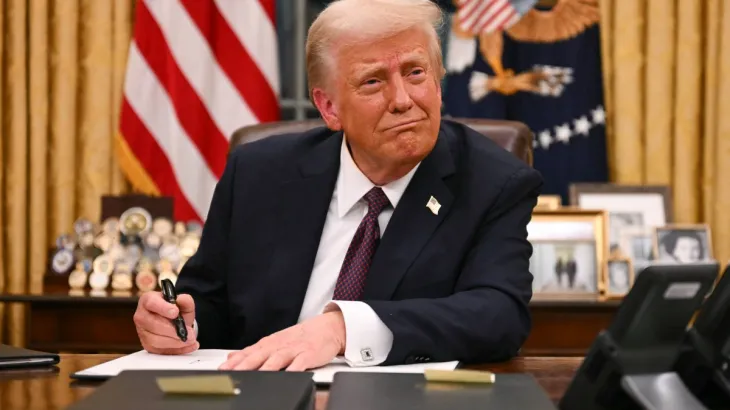
In a striking development amid intense US-Iran tensions, President Donald Trump has revealed that the United States has granted “immunity from death” to Iranian negotiators involved in ceasefire discussions. The statement, made during an interview with Fox News correspondent Trey Yingst, comes as Washington pressures Tehran to reopen the Strait of Hormuz or face escalated military action.
Trump described the immunity as a measure requested by the Iranian side to facilitate ongoing talks, claiming that significant concessions — including Iran’s abandonment of nuclear weapons ambitions — have already been made.
Context of the Statement: High-Stakes Negotiations
Trump told Fox News that Iranian negotiators “have been granted amnesty at this time, so they can continue the talks.” He expressed optimism about reaching a deal soon, stating there is a “good chance” of an agreement by Monday, with most negotiation points already conceded by Tehran.
The president emphasized that Iran has accepted it will not pursue a nuclear weapon, describing the issue as “so easy” and no longer under negotiation. However, he paired this diplomatic overture with stern warnings, reiterating threats to target Iranian infrastructure, including power plants and bridges, if the Strait of Hormuz remains closed beyond the deadline.
This latest comment fits into a pattern of mixed messaging from the Trump administration — blending threats of overwhelming force with offers of protection to encourage dialogue.
The Strait of Hormuz Crisis: Why It Remains Central
The narrow Strait of Hormuz continues to be the focal point of the standoff. Iran has restricted maritime traffic through the waterway — a critical chokepoint for global energy supplies — in response to US and Israeli military actions.
The strait handles approximately 20 million barrels of oil per day, representing about 20% of global petroleum consumption and a significant portion of seaborne oil and LNG trade. Disruptions have driven up energy prices worldwide and raised fears of broader economic fallout.
Trump’s Dual Approach: Immunity and Ultimatums
According to reports, Trump has extended deadlines multiple times while maintaining pressure. In recent statements, he warned that failure to reopen the strait or reach a deal could result in severe consequences, including strikes on Iranian energy infrastructure.
The “immunity from death” assurance appears aimed at building trust with Iranian interlocutors, who reportedly sought personal safety guarantees to participate in talks. Trump has previously offered similar protections to Iranian military and Revolutionary Guard members who might lay down arms.
Despite these overtures, Iran has publicly dismissed some US claims about negotiations as “fake news,” while behind-the-scenes diplomatic efforts — including talks involving Oman — continue.
Broader Implications for the Region and Global Energy
A successful ceasefire could rapidly ease tensions, stabilize oil markets, and allow shipping to resume through the Strait of Hormuz. However, prolonged closure risks supply shocks, higher inflation, and potential escalation involving regional actors.
Analysts note that alternative pipelines in the Gulf offer only limited capacity to bypass the strait, underscoring its irreplaceable role in global energy security.
Trump has indicated the conflict could conclude “in days, not weeks,” but has left little doubt about US willingness to use force if talks fail.
What’s Next?
As the latest deadline approaches, all eyes remain on whether Iranian negotiators — now operating under the reported US-granted immunity — can deliver a breakthrough on reopening the strait and other core issues.
Reflecto News will continue monitoring this fast-evolving situation, including any official response from Tehran and updates on maritime activity in the Persian Gulf.
This story is developing.
Sources include Fox News, Reuters, Anadolu Agency, and other international reports.
Questions people ask
What is China's current share of global manufacturing?
China now accounts for twenty eight percent of global manufacturing. This industrial output exceeds the combined manufacturing production of the United States, Japan, and Germany, making China the leading global industrial power according to recent reports.
Why were Andrew Tate and Tristan Tate arrested in Miami?
Andrew Tate and his brother Tristan Tate were taken into custody in Miami by the United States Marshals Service. They face thirty eight new charges in the United Kingdom, including rape and child pornography offences, and prosecutors are seeking their extradition.
What warning did Moscow issue about oil prices?
Kirill Dmitriev, the Chief Executive of the Russian Direct Investment Fund, warned that a tsunami of skyrocketing oil prices is approaching. Moscow describes this potential energy shock as a major threat to global markets.
What political shift is projected for Benjamin Netanyahu's coalition?
Political polls project that Prime Minister Benjamin Netanyahu's coalition is on track to lose its majority in the upcoming October election. This projection indicates a potential political shift in Jerusalem.
Why did a Russian military aircraft land in Tehran?
A Russian airborne command aircraft, widely known as a doomsday plane, landed in Tehran. The arrival of the aircraft represents a high stakes show of support from Russia for Iran during a period of heightened regional tensions.
What did President Masoud Pezeshkian claim about the United States and Israel?
Iranian President Masoud Pezeshkian claimed that the United States and Israel failed in a forty eight hour plan to topple the Iranian government. He made these statements during a televised address marking two years since his inauguration.