Reflecto News is an online news platform covering major international political events, global economic developments, and security conflicts. The site provides updates on topics such as Chinese manufacturing dominance, Middle Eastern political tensions, and high profile legal arrests. Readers can access current articles organized by categories like World News, Iran, and USA.
Reflecto News | Breaking News | Global Energy & Geopolitics
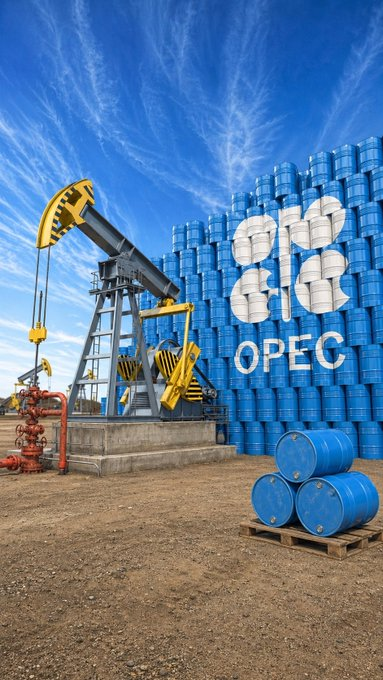
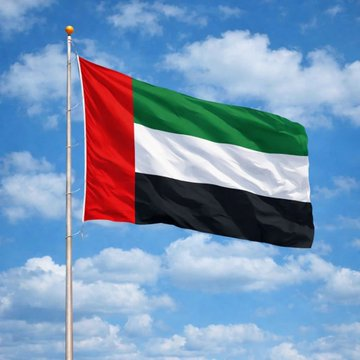
DUBAI — The United Arab Emirates has announced it will withdraw from the Organization of the Petroleum Exporting Countries (OPEC) and the wider OPEC+ alliance, effective May 1, 2026, in a decision that could fundamentally reshape the global oil market and weaken the bloc’s ability to influence prices .
The announcement, carried by the state-run Emirates News Agency (WAM), marks a seismic shift in the global energy landscape. The UAE, one of the world’s top oil producers and a key U.S. ally in the Gulf, has been a member of OPEC since 1967 through the Emirate of Abu Dhabi .
📜 Reasons for Withdrawal: National Interest and Market Needs
According to the official statement, the decision was made after a “comprehensive review” of the UAE’s production policy, current capacity, and long-term energy strategy .
Abu Dhabi stated that the move is based on its “national interest” and its commitment to contributing effectively to meeting the market’s pressing needs . The government emphasized that it will continue to act as a “responsible and reliable” energy supplier, bringing additional production to the market in a gradual and measured manner in line with demand and market conditions .
Strains with Saudi Arabia
Industry analysts cited by Gulf Business noted that the UAE had been at odds with OPEC’s general policy for some time. The decision “signifies the general drift in the historically strong alliance between the UAE and Saudi Arabia,” said Ajay Parmar, a director at ICIS .
The UAE has massive plans to expand production capacity to 5 million barrels per day (bpd) by 2027. Experts suggest it would be difficult to achieve these ambitious growth targets while remaining constrained by OPEC+ quotas .
⛏️ Production and Capacity
| Metric | Figure |
|---|---|
| Current Production | ~3.2–3.5 million bpd |
| Installed Capacity | ~4 million bpd |
| Target Capacity by 2027 | 5 million bpd |
| Typical Exports | ~2.5–3 million bpd (primarily Asia) |
By exiting the group, the UAE gains the freedom to aggressively increase output to meet its 5 million bpd target and potentially capture greater market share, taking advantage of high oil prices following the closure of the Strait of Hormuz due to the war with Iran .
🎯 Global and Strategic Implications
A Blow to OPEC
The decision is considered a major blow to OPEC and its de facto leader, Saudi Arabia. The UAE was one of the few members with significant “spare capacity” — the volume of oil OPEC can turn on and off to stabilize prices .
Analysts warn that a weaker OPEC could lead to a more volatile oil market, as the cartel’s ability to smooth supply imbalances diminishes. “Outside the group, the UAE would have both the incentive and the ability to increase production,” warned Jorge Leon of Rystad Energy .
Regional Geopolitics & The Iran Factor
Energy Minister Suhail Al Mazrouei told CCTV that due to the current closure of the Strait of Hormuz — resulting from the US-Israeli strikes on Iran on February 28 — the UAE chose to act now to “avoid causing a major shock to the market” .
Some analysts view this development as a potential “victory” for the Trump administration, which has long accused OPEC of manipulating oil prices and extracting “protection money” from the US for Gulf security .
🔮 What Comes Next
The UAE has assured markets that it will not “flood” the market with oil immediately. It pledged to increase output “gradually” and “responsibly” based on genuine global demand .
Oil prices are expected to remain volatile as traders digest the news of the breakup of the world’s most powerful energy cartel. The market’s attention will now turn to Riyadh and Moscow to see how other major producers respond to this historic realignment .
📋 Key Takeaways
| Aspect | Summary |
|---|---|
| The Announcement | UAE to exit OPEC and OPEC+ effective May 1, 2026 |
| Primary Driver | Shift to independent production policy; need for flexibility to expand capacity to 5M bpd |
| Market Impact | OPEC loses key spare capacity holder; likely weaker influence on global prices |
| Saudi Relations | Analysts note significant drift in the historic UAE-Saudi alliance |
| Oil Prices | Volatility expected; UAE promises “gradual” increases to avoid shocks |
| Global Context | Occurs amid blockade of Strait of Hormuz and continuing Iran war |
Follow Reflecto News for continuous updates on the global energy crisis, oil market volatility, and all breaking news from around the world.
This article is the intellectual property of Reflecto News. Redistribution without attribution is prohibited. For syndication or media inquiries, please contact the editorial team.
Questions people ask
What is China's current share of global manufacturing?
China now accounts for twenty eight percent of global manufacturing. This industrial output exceeds the combined manufacturing production of the United States, Japan, and Germany, making China the leading global industrial power according to recent reports.
Why were Andrew Tate and Tristan Tate arrested in Miami?
Andrew Tate and his brother Tristan Tate were taken into custody in Miami by the United States Marshals Service. They face thirty eight new charges in the United Kingdom, including rape and child pornography offences, and prosecutors are seeking their extradition.
What warning did Moscow issue about oil prices?
Kirill Dmitriev, the Chief Executive of the Russian Direct Investment Fund, warned that a tsunami of skyrocketing oil prices is approaching. Moscow describes this potential energy shock as a major threat to global markets.
What political shift is projected for Benjamin Netanyahu's coalition?
Political polls project that Prime Minister Benjamin Netanyahu's coalition is on track to lose its majority in the upcoming October election. This projection indicates a potential political shift in Jerusalem.
Why did a Russian military aircraft land in Tehran?
A Russian airborne command aircraft, widely known as a doomsday plane, landed in Tehran. The arrival of the aircraft represents a high stakes show of support from Russia for Iran during a period of heightened regional tensions.
What did President Masoud Pezeshkian claim about the United States and Israel?
Iranian President Masoud Pezeshkian claimed that the United States and Israel failed in a forty eight hour plan to topple the Iranian government. He made these statements during a televised address marking two years since his inauguration.