Reflecto News is an online news platform covering major international political events, global economic developments, and security conflicts. The site provides updates on topics such as Chinese manufacturing dominance, Middle Eastern political tensions, and high profile legal arrests. Readers can access current articles organized by categories like World News, Iran, and USA.
Reflecto News – April 8, 2026
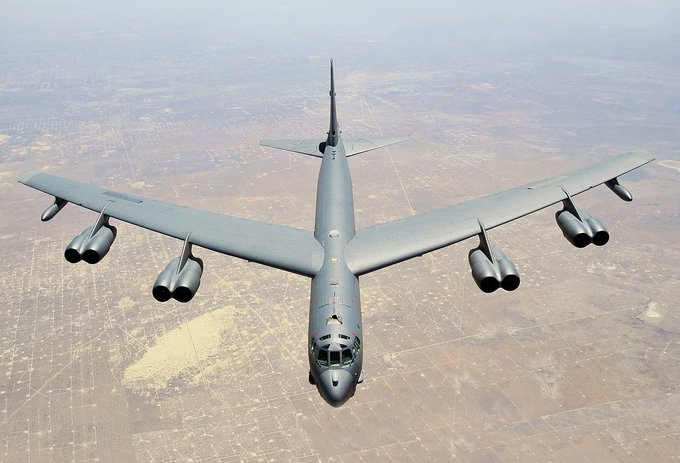
American B-52 Stratofortress bombers were sighted taking off from RAF Fairford in Gloucestershire, United Kingdom, on April 7–8, 2026, heightening speculation of intensified U.S. air operations against Iran as President Donald Trump’s critical 8 p.m. ET deadline approaches. The movements come amid ongoing diplomatic efforts to resolve the crisis over the Strait of Hormuz and as the six-week U.S.-Israel-Iran conflict shows no immediate signs of de-escalation.
The B-52s, part of a larger U.S. bomber deployment to Europe under Operation Epic Fury, are capable of carrying massive conventional payloads over long distances. Their departure from the UK base — one of the few European airfields equipped to support heavy strategic bombers — signals potential readiness for sustained strike missions targeting Iranian military or infrastructure sites if the deadline passes without compliance.
Context of the B-52 Deployments
RAF Fairford has served as a key forward operating location for U.S. bombers since early March 2026, when the UK government under Prime Minister Keir Starmer approved the use of British bases for “defensive” U.S. actions against Iranian missile threats. Multiple B-52H aircraft from units such as the 2nd Bomb Wing at Barksdale AFB and the 5th Bomb Wing at Minot AFB have rotated through the base, alongside B-1B Lancers.
Recent sightings of loaded B-52s departing with ordnance underscore the scale of U.S. airpower projection. These long-range bombers can launch standoff missiles from beyond the reach of many Iranian air defenses, providing the Pentagon with flexible options for precision or heavy bombardment strikes.
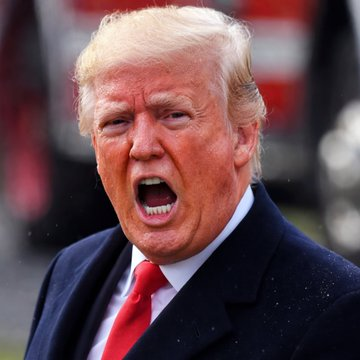
The timing aligns with President Trump’s repeated warnings. He has threatened devastating consequences — including strikes on power plants, bridges, and other infrastructure — if Iran fails to fully reopen the Strait of Hormuz by the 8 p.m. ET deadline on April 7 (which has now passed into April 8 UTC). Trump has stated that failure to comply could result in “a whole civilization will die tonight,” rhetoric that has drawn sharp international criticism.
Diplomatic Developments Running in Parallel
While military posturing continues, diplomacy remains active:
- Pakistan’s Proposal: Prime Minister Shehbaz Sharif’s call for a two-week reciprocal extension (U.S. deadline pause in exchange for Iran temporarily opening the strait) is under positive review in Tehran. The White House confirmed President Trump has been briefed and will issue a response.
- Iran’s Stance: Iranian officials have indicated flexibility on the Pakistani framework but continue to reject short-term ceasefires without broader security guarantees and sanctions relief.
- Israel’s Position: Israeli leaders maintain that any ceasefire is premature and plan to sustain operations for at least another month to further degrade Iranian capabilities.
- European Concerns: Italy’s Defense Minister Guido Crosetto recently warned of “madness” gripping the world and invoked the atomic bombings of Hiroshima and Nagasaki while expressing reluctance to even mention nuclear risks.
The UK itself has taken precautionary steps, including the evacuation of military personnel from Iraq and cancellation of upcoming deployments due to risks from Iranian proxies.
Strategic Importance and Global Implications
The Strait of Hormuz remains the focal point. Iran’s restrictions on shipping have severely disrupted global energy markets, particularly LNG exports from Qatar, where strikes on the Ras Laffan complex have sidelined roughly 17% of capacity for years. A failure to reopen the waterway risks prolonged price volatility and supply shortages affecting Asia and Europe.
B-52 operations from the UK demonstrate the reach of U.S. power projection but also highlight tensions within NATO and among European allies. While the UK has permitted defensive use of its bases, it has stressed it is not at war with Iran.
Potential Next Steps
If President Trump’s response to the Pakistani proposal is flexible, a short-term de-escalation window could emerge, allowing limited shipping to resume and buying time for negotiations. However, continued B-52 activity suggests the U.S. is maintaining maximum pressure options.
Analysts warn that any large-scale strikes on Iranian infrastructure could escalate humanitarian concerns, spike energy prices further, and draw in additional regional actors.
FAQs on B-52 Movements, Trump’s Deadline, and the Iran Conflict
Q1: Why are U.S. B-52 bombers operating from the UK?
RAF Fairford provides a strategic forward base for long-range strikes into the Middle East. The UK has approved its use for defensive operations against Iranian threats as part of allied support.
Q2: Has Trump’s 8 p.m. ET deadline passed?
The deadline fell on April 7, 2026. Limited Iranian restrictions on the Strait of Hormuz continue, though diplomatic proposals for a two-week extension are under active review.
Q3: What is the Pakistani proposal under review?
A reciprocal two-week pause: the U.S. extends its deadline while Iran temporarily opens the strait to commercial shipping as a confidence-building step.
Q4: How do B-52s fit into U.S. strategy?
These heavy bombers can deliver massive conventional ordnance or standoff missiles, enabling sustained air campaigns while minimizing risk to U.S. pilots.
Q5: What are the risks of further escalation?
Strikes on infrastructure could worsen civilian suffering, prolong energy market disruptions, and raise fears of broader regional or even unintended higher-level conflict, as warned by European leaders.
Q6: How has the conflict affected global LNG markets?
Damage to Qatari facilities and Hormuz restrictions have cut supply forecasts by up to 35 million tons in 2026, driving sharp price increases in Asia and Europe.
Reflecto News will provide immediate updates on President Trump’s response to the Pakistani proposal, any further B-52 activity, Iranian reactions, and developments regarding the Strait of Hormuz.
Stay informed with Reflecto News – Your source for accurate, timely coverage of the U.S.-Iran conflict, military movements, diplomacy, and global energy impacts.
Questions people ask
What is China's current share of global manufacturing?
China now accounts for twenty eight percent of global manufacturing. This industrial output exceeds the combined manufacturing production of the United States, Japan, and Germany, making China the leading global industrial power according to recent reports.
Why were Andrew Tate and Tristan Tate arrested in Miami?
Andrew Tate and his brother Tristan Tate were taken into custody in Miami by the United States Marshals Service. They face thirty eight new charges in the United Kingdom, including rape and child pornography offences, and prosecutors are seeking their extradition.
What warning did Moscow issue about oil prices?
Kirill Dmitriev, the Chief Executive of the Russian Direct Investment Fund, warned that a tsunami of skyrocketing oil prices is approaching. Moscow describes this potential energy shock as a major threat to global markets.
What political shift is projected for Benjamin Netanyahu's coalition?
Political polls project that Prime Minister Benjamin Netanyahu's coalition is on track to lose its majority in the upcoming October election. This projection indicates a potential political shift in Jerusalem.
Why did a Russian military aircraft land in Tehran?
A Russian airborne command aircraft, widely known as a doomsday plane, landed in Tehran. The arrival of the aircraft represents a high stakes show of support from Russia for Iran during a period of heightened regional tensions.
What did President Masoud Pezeshkian claim about the United States and Israel?
Iranian President Masoud Pezeshkian claimed that the United States and Israel failed in a forty eight hour plan to topple the Iranian government. He made these statements during a televised address marking two years since his inauguration.