Reflecto News is an online news platform covering major international political events, global economic developments, and security conflicts. The site provides updates on topics such as Chinese manufacturing dominance, Middle Eastern political tensions, and high profile legal arrests. Readers can access current articles organized by categories like World News, Iran, and USA.
Published on Reflecto News | World News | Energy Security & Geopolitics
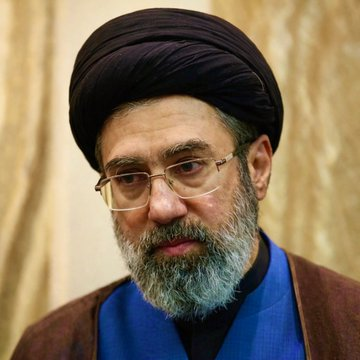
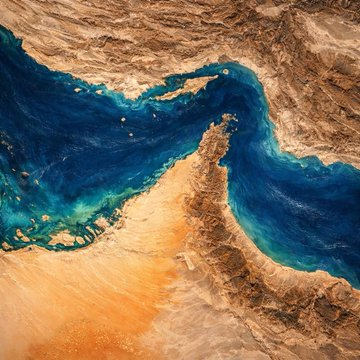
In a stark warning that threatens to upend the fragile two-week ceasefire with the United States, Iranian Supreme Leader Ayatollah Mojtaba Khamenei has announced that Iran will move the management of the strategic Strait of Hormuz into a “new phase.” The declaration, made Thursday in a statement read out on Iranian state television, signals Tehran’s intention to fundamentally restructure access to the waterway through which approximately one-fifth of the world’s oil passes .
Khamenei’s threat comes just days before high-stakes peace talks are set to begin in Islamabad, Pakistan, where US and Iranian delegations are scheduled to meet for direct negotiations . The timing appears designed to strengthen Tehran’s negotiating position by demonstrating that Iran retains effective control over the world’s most critical energy chokepoint.
“Iran is not seeking war but will not forfeit its rights and considers all resistance fronts as a unified entity,” Khamenei said in the statement, which was read aloud on state television .
‘New Phase’ of Management: What It Means
The Supreme Leader’s declaration of a “new phase” in Hormuz management builds on changes that have already been implemented since the conflict began. While the ceasefire agreement—brokered by Pakistan and announced on April 7—was conditioned on Iran’s agreement to reopen the strait, the reality on the water has been far more restricted .
| Aspect | Pre-War Status | Current Status | Khamenei’s ‘New Phase’ |
|---|---|---|---|
| Daily transits | 130-140 vessels | ~15 vessels/day (with IRGC approval) | Further restrictions expected |
| Control regime | International norms | IRGC supervision | Permanent Iranian management |
| Shipping lanes | Standard commercial routes | Northern corridor near Larak Island | Redefined maritime boundaries |
| Foreign presence | US Navy 5th Fleet (Bahrain) | Regional states only | Exclusion of extra-regional powers |
The Islamic Revolutionary Guard Corps (IRGC) Navy has already declared that Hormuz has undergone “irreversible strategic changes” and “will never return to its former state, especially for the US and Israel” . This signals that the era of unfettered Western naval dominance in the Gulf may be over.
The Alternative Routes: Larak Island Corridor
Iran has already announced alternative routes for ships traveling through the Strait of Hormuz, citing the risk of sea mines in the main zone of the vital waterway. The IRGC has suggested an area near Larak Island, with instructions released Thursday for an alternative entry and exit route through the strait .
Maritime intelligence confirms that this system is already operational. According to shipping data, vessels approved for transit are being routed through a managed corridor along Iranian territorial waters, primarily north of Larak Island . These movements are not occurring through standard commercial lanes, but through a controlled system where approved vessels are allowed to transit based on cargo type and alignment .
This system prioritizes:
- Outbound energy exports from Iran
- Inbound essential goods such as food and agricultural cargo
- Vessels with prior IRGC approval
- Ships demonstrating “non-hostile” status
The IRGC has warned that “ships attempting to pass without permission may be destroyed” .
‘War Is Not Over’: Khamenei’s Broader Message
Khamenei’s threat regarding the Strait of Hormuz must be understood within the context of his broader messaging about the conflict. Hours after the ceasefire was announced, the Supreme Leader issued a statement clarifying that “this is not the end of the war” .
In that statement, carried by Iran’s state-run Islamic Republic of Iran Broadcasting (IRIB), Khamenei ordered all military branches to “cease their fire” but emphasized that “this does not signify the termination of the war” . Iran’s Supreme National Security Council added that “our hands remain upon the trigger, and should the slightest error be committed by the enemy, it shall be met with full force” .
The “new phase” of Hormuz management appears to be a key element of this ongoing posture—a way for Iran to maintain strategic leverage even as direct military hostilities with the United States have been paused.
Iran’s 10-Point Proposal: Institutionalizing Control
The “new phase” of Hormuz management aligns with Iran’s formal negotiating position. Tehran has presented a 10-point peace proposal to the United States, which explicitly calls for “continued Iranian control over the Strait of Hormuz” as a condition for any lasting agreement .
Other key elements of Iran’s proposal include:
- Lifting of all primary and secondary sanctions
- Complete withdrawal of all American forces from West Asia
- Full compensation for war damages
- A UN Security Council resolution making any deal binding
President Trump has described Iran’s 10-point proposal as “negotiable and workable” and believes it represents a “workable basis on which to negotiate” . However, the US position has consistently demanded “complete, immediate, and safe opening” of the strait—language that appears to conflict with Iran’s vision of continued control .
Current Hormuz Status: Limited, Controlled Reopening
Despite the ceasefire announcement and the diplomatic progress, the Strait of Hormuz remains largely restricted. According to shipping data, only approximately 15 ships per day are being allowed to transit with Tehran’s permission—a tiny trickle compared to pre-war levels of 130-140 vessels daily .
The current transit regime is characterized by:
- Prior IRGC Approval: All vessels must obtain permission from Iranian forces before attempting passage
- Designated Corridor: Ships must use the northern route near Larak Island rather than standard commercial lanes
- Cargo Screening: Iran is assessing each vessel’s cargo on a case-by-case basis
- Exclusion Policy: Vessels linked to the US, Israel, or their allies are effectively barred
Khamenei’s “new phase” threat suggests that even this limited reopening may be temporary or subject to further Iranian-imposed conditions.
Trump’s Response: ‘Zero Tolerance’ and Military Posture
President Trump has responded to Iran’s posture with characteristic强硬 rhetoric. Through Truth Social, he has demanded that the Strait of Hormuz be “unconditionally reopened” and reiterated “zero tolerance for nuclear weapons,” threatening “unprecedented military action” if the current truce is violated .
Trump has also confirmed that American military assets will remain deployed around Iran until a final agreement is fully reached . The president has previously warned that “the entire country can be taken out in one night,” threatening to decimate “every bridge and power plant” in Iran if Tehran does not comply with US demands .
The White House has made clear that the current ceasefire is contingent on Iran allowing the strait to reopen. Press Secretary Karoline Leavitt has called any continued disruption “completely unacceptable” and reiterated that Trump expects the waterway to “reopen immediately, quickly and safely” .
The Lebanon Factor: A Complicating Variable
Khamenei’s threat regarding the Strait of Hormuz is closely linked to events on the Lebanese front. Iranian state media reported that Tehran closed the strait in response to Israel’s continued military operations in Lebanon, where Israeli strikes have killed over 250 people in a single 24-hour period .
The IRGC announced the closure following Israeli strikes on Lebanese territory, which Tehran considers a violation of the ceasefire’s intended scope. While Washington and Tel Aviv maintain that the ceasefire agreement does not cover Lebanon—where Israel says it is targeting Hezbollah—Iran has made clear that it views the Lebanese front as integral to any comprehensive peace .
This linkage means that the “new phase” of Hormuz management could be implemented or intensified based on events outside the direct US-Iran bilateral negotiations.
Strategic Implications: A Permanent Shift?
Analysts suggest that Khamenei’s “new phase” may represent an attempt to permanently alter the status quo in the Gulf, regardless of the outcome of the Islamabad talks. The IRGC has already declared that Hormuz has undergone “irreversible strategic changes” and that the waterway “will never return to its former state, especially for the US and Israel” .
Key elements of this potential permanent shift include:
| Element | Description |
|---|---|
| Regional Control | Gulf security managed by regional states alone, excluding extra-regional powers |
| IRGC Supervision | Permanent Iranian military oversight of all transits |
| Managed Access | Selective approval based on cargo and alignment, not open passage |
| Alternative Infrastructure | Forced development of overland routes and alternative ports |
If this vision is realized, the Strait of Hormuz would no longer function as an international waterway under the United Nations Convention on the Law of the Sea (UNCLOS), but rather as a chokepoint controlled by Tehran—with profound implications for global energy security.
The Islamabad Talks: A Test of Resolve
The “new phase” threat sets the stage for high-stakes negotiations in Islamabad, where US and Iranian delegations are scheduled to meet for direct talks. The American delegation will be led by Vice President JD Vance, accompanied by Jared Kushner and Special Envoy Steve Witkoff. The Iranian delegation will be headed by Parliament Speaker Mohammad Bagher Ghalibaf and Foreign Minister Abbas Araghchi .
The talks are expected to address:
- The status of the Strait of Hormuz and shipping restrictions
- Sanctions relief and the unfreezing of Iranian assets
- Iran’s nuclear program and enrichment activities
- The inclusion of Lebanon in any broader ceasefire framework
Khamenei’s “new phase” threat suggests that Iran will approach these negotiations from a position of perceived strength, demanding recognition of its right to manage the strait as a condition for any lasting agreement.
Global Implications: Energy Markets on Edge
The threat of a “new phase” of Iranian control over the Strait of Hormuz has already rattled global energy markets. Brent crude, the international standard, remains elevated near $100 per barrel—significantly above pre-conflict levels .
A permanent shift in Hormuz management would have profound implications:
- Oil Prices: Sustained restrictions could keep prices elevated indefinitely, with projections of $150-200 per barrel in a worst-case scenario
- Supply Chains: The rerouting of vessels around the Cape of Good Hope has already reduced effective global tanker capacity by 10-12%
- Insurance Premiums: War-risk insurance remains elevated, adding costs to all maritime trade
- Alternative Infrastructure: Countries are already investing in overland routes and alternative ports, with Oman emerging as the primary logistics hub
As one maritime intelligence analysis concluded, “the system is not stabilizing. It is reorganizing around controlled access, rerouted logistics, and persistent multi-theater risk” .
Conclusion: A Fundamental Challenge to Global Order
Supreme Leader Mojtaba Khamenei’s threat to move the management of the Strait of Hormuz into a “new phase” represents a fundamental challenge to the rules-based international order that has governed global shipping for decades. By asserting that the waterway “will never return to its former state,” Iran is signaling that even a successful diplomatic agreement may not restore pre-war conditions .
The coming days will be critical. The Islamabad talks will determine whether the United States can persuade Iran to accept a more traditional regime of free navigation—or whether Khamenei’s “new phase” becomes the new normal for the world’s most important energy chokepoint.
As one Iranian official warned, “Gulf security must now be run by regional states alone, with extra‑regional powers no longer allowed to dictate terms in its backyard” . Whether the United States and its allies accept this fundamental shift—or resist it—will shape the Middle East’s geopolitical landscape for years to come.
Frequently Asked Questions (FAQs)
1. What did Iranian Supreme Leader Khamenei say about the Strait of Hormuz?
Khamenei announced that Iran will move the management of the strategic Strait of Hormuz into a “new phase.” He stated that “Iran is not seeking war but will not forfeit its rights and considers all resistance fronts as a unified entity” .
2. What does a “new phase” of control mean in practice?
The “new phase” appears to involve permanent Iranian management of the strait, including IRGC supervision of all transits, selective approval based on cargo type and alignment, and the exclusion of US and Israeli vessels. The IRGC has declared that Hormuz “will never return to its former state” .
3. Is the Strait of Hormuz currently open?
The strait remains largely restricted. While a limited number of vessels (approximately 15 per day) are being allowed to transit with IRGC approval, this represents a fraction of pre-war traffic levels of 130-140 vessels daily .
4. What alternative routes has Iran established?
Iran has announced alternative routes near Larak Island, with instructions for an alternative entry and exit route through the strait. Ships must use this northern corridor rather than standard commercial lanes .
5. How has President Trump responded to Iran’s posture?
Trump has demanded that the Strait of Hormuz be “unconditionally reopened” and reiterated “zero tolerance for nuclear weapons.” He has also confirmed that American military assets will remain deployed around Iran until a final agreement is reached .
6. Does the ceasefire apply to Lebanon?
This remains disputed. Iran and Pakistan maintain that the ceasefire includes Lebanon, while the United States and Israel have explicitly denied this. Iran has linked its Hormuz posture to events in Lebanon .
7. What is Iran’s official position in the upcoming Islamabad talks?
Iran has presented a 10-point peace proposal that explicitly calls for “continued Iranian control over the Strait of Hormuz,” along with sanctions relief, US military withdrawal, and war reparations .
8. When are the Islamabad talks scheduled?
The talks are scheduled to begin shortly, with the US delegation led by Vice President JD Vance and the Iranian delegation led by Parliament Speaker Mohammad Bagher Ghalibaf and Foreign Minister Abbas Araghchi .
9. How has Khamenei characterized the ceasefire?
Khamenei has stated that “this is not the end of the war” and ordered all military branches to “cease their fire” while emphasizing that this “does not signify the termination of the war” .
10. What are the global implications of a “new phase” of Iranian control?
A permanent shift could keep oil prices elevated indefinitely, disrupt global supply chains, increase insurance costs, and force countries to invest in alternative infrastructure—fundamentally altering global energy security .
Stay informed with Reflecto News – Your trusted source for breaking energy security and geopolitical intelligence. Subscribe for real-time updates on the Islamabad peace talks and the future of the Strait of Hormuz.
Questions people ask
What is China's current share of global manufacturing?
China now accounts for twenty eight percent of global manufacturing. This industrial output exceeds the combined manufacturing production of the United States, Japan, and Germany, making China the leading global industrial power according to recent reports.
Why were Andrew Tate and Tristan Tate arrested in Miami?
Andrew Tate and his brother Tristan Tate were taken into custody in Miami by the United States Marshals Service. They face thirty eight new charges in the United Kingdom, including rape and child pornography offences, and prosecutors are seeking their extradition.
What warning did Moscow issue about oil prices?
Kirill Dmitriev, the Chief Executive of the Russian Direct Investment Fund, warned that a tsunami of skyrocketing oil prices is approaching. Moscow describes this potential energy shock as a major threat to global markets.
What political shift is projected for Benjamin Netanyahu's coalition?
Political polls project that Prime Minister Benjamin Netanyahu's coalition is on track to lose its majority in the upcoming October election. This projection indicates a potential political shift in Jerusalem.
Why did a Russian military aircraft land in Tehran?
A Russian airborne command aircraft, widely known as a doomsday plane, landed in Tehran. The arrival of the aircraft represents a high stakes show of support from Russia for Iran during a period of heightened regional tensions.
What did President Masoud Pezeshkian claim about the United States and Israel?
Iranian President Masoud Pezeshkian claimed that the United States and Israel failed in a forty eight hour plan to topple the Iranian government. He made these statements during a televised address marking two years since his inauguration.