Reflecto News is an online news platform covering major international political events, global economic developments, and security conflicts. The site provides updates on topics such as Chinese manufacturing dominance, Middle Eastern political tensions, and high profile legal arrests. Readers can access current articles organized by categories like World News, Iran, and USA.
Published on Reflecto News | World News | Diplomacy & Conflict
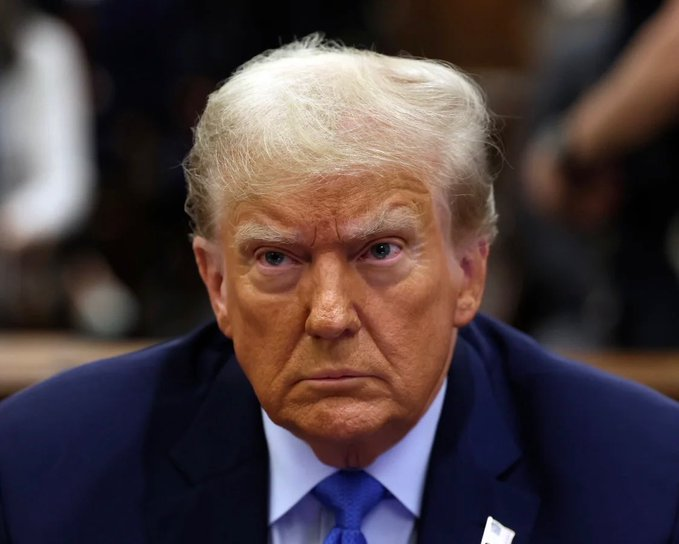
In a characteristically blunt assessment delivered just hours before high-stakes peace talks are set to begin in Islamabad, President Donald Trump declared that Iran’s leaders are alive today for only one reason: “to negotiate.” The statement, posted on his Truth Social platform, sought to frame Tehran’s negotiating position as one of desperation rather than strength, asserting that Iran’s only remaining leverage is its control over the Strait of Hormuz .
“The Iranians don’t seem to realize they have no cards, other than a short term extortion of the World by using International Waterways. The only reason they are alive today is to negotiate!” — President Donald Trump, Truth Social
The president’s remarks came as Vice President JD Vance departed for Islamabad to lead the American delegation in talks aimed at transforming a fragile two-week ceasefire into a lasting peace agreement .
‘No Cards, Other Than Short Term Extortion’
Trump’s latest social media broadside continues a pattern of rhetorical escalation designed to pressure Tehran ahead of critical negotiations. The president specifically targeted Iran’s control of the Strait of Hormuz — the strategic waterway through which approximately 20% of global oil passes — dismissing it as a form of “short term extortion” rather than legitimate leverage .
“The Iranians are better at handling the fake news media, and ‘public relations,’ than they are at fighting!” Trump added in a separate post, seeking to diminish the perceived threat posed by Iran’s military capabilities .
The comments come just one day after Trump told the New York Post that American warships were being reloaded with “the best ammunition, the best weapons ever made” in preparation for potential military action if negotiations fail . “If we don’t have a deal, we will be using them, and we will be using them very effectively,” Trump warned .
The ’24-Hour Window’
The president has set an aggressive timeline for the diplomatic process, telling the New York Post that the outcome of the talks would become clear within approximately 24 hours .
“We’re going to find out in about 24 hours. We’re going to know soon,” Trump said, suggesting that the administration expects a definitive answer from Tehran regarding a potential peace deal .
This compressed timeline reflects the president’s characteristic approach to diplomacy — using hard deadlines and the threat of force to compel concessions. The current two-week ceasefire, brokered by Pakistan and announced on April 7, was itself agreed less than two hours before a Trump-imposed deadline for Iran to reopen the Strait of Hormuz or face “complete decimation” .
Vance Departs for Islamabad
Vice President JD Vance departed Washington on Friday for Islamabad, where he is scheduled to lead the American delegation in direct talks with Iranian officials . Vance is expected to be accompanied by special envoy Steve Witkoff and Jared Kushner .
Speaking to reporters before boarding Air Force Two, Vance struck a cautiously optimistic tone. “We’re looking forward to the negotiation. I think it’s going to be positive. We’ll, of course, see,” Vance said .
However, the vice president also issued a warning, stating that the United States would not be “receptive” if the Iranians attempted to “play us” . “If the Iranians are willing to negotiate in good faith, we’re certainly willing to extend the open hand. If they’re going to try to play us, then they’re going to find that the negotiating team is not that receptive,” Vance added .
Iran’s Counter-Demands
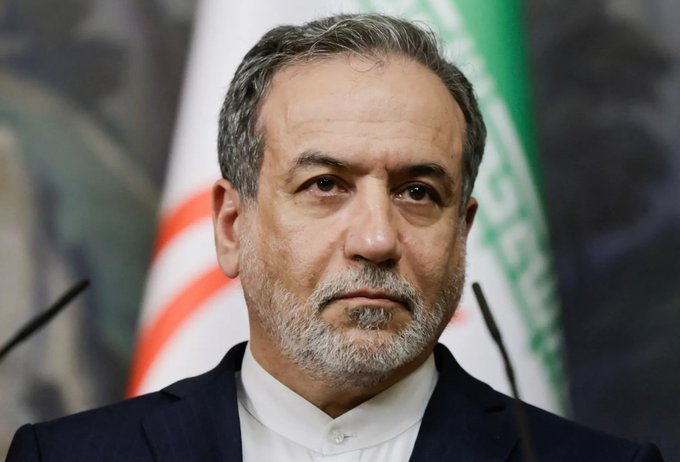
Despite Trump’s assertion that Iran has “no cards,” Tehran has laid out its own conditions for successful negotiations. Iranian Parliament Speaker Mohammad Bagher Ghalibaf, who is expected to lead the Iranian delegation, stated Friday that two key measures must be implemented before talks can proceed: a ceasefire in Lebanon and the release of Iran’s blocked assets .
“Two of the measures mutually agreed upon between the parties have yet to be implemented: a ceasefire in Lebanon and the release of Iran’s blocked assets prior to the commencement of negotiations,” Ghalibaf said on X. “These two matters must be fulfilled before negotiations begin” .
This demand directly challenges the Trump administration’s position. The United States and Israel have repeatedly stated that the ceasefire does not apply to Lebanon, with President Trump describing the conflict there as “a separate skirmish” . However, Pakistan’s Prime Minister Shehbaz Sharif — the key mediator who brokered the original truce — has maintained that the ceasefire applies “everywhere including Lebanon” .
The Lebanon Factor
The dispute over Lebanon’s inclusion in the ceasefire framework has emerged as the most significant obstacle to the Islamabad talks. Iran has made clear that it views Hezbollah as an “inseparable part” of any ceasefire agreement, while the United States and Israel have rejected this interpretation .
President Trump acknowledged the tension on Thursday, revealing that he had urged Israeli Prime Minister Benjamin Netanyahu to “be sort of a little more low-key” in Lebanon to avoid derailing the broader diplomatic process . US and Israeli officials described the phone call as “tense,” according to CNN .
Netanyahu, following the call, announced that Israel would engage in direct peace talks with Lebanese authorities — a significant diplomatic development. However, Israeli officials have made clear that there is currently “no ceasefire in Lebanon” and that military operations will continue alongside negotiations .
The Nuclear Question
Beyond the immediate issues of Lebanon and frozen assets, the two sides remain far apart on the core question of Iran’s nuclear program. Trump has claimed that Iran has agreed to stop enriching uranium — “everything’s gone” — while Iranian officials have publicly insisted that the country retains the right to enrich under any agreement .
Trump acknowledged this discrepancy in his New York Post interview, stating: “To our face, they’re getting rid of all nuclear weapons, everything’s gone. And then they go out to the press and say, ‘No, we’d like to enrich.’ So we’ll find out” .
The upcoming talks are expected to focus on Trump’s demands that Iran surrender its stockpile of enriched uranium — estimated at approximately 1,000 pounds — and fully reopen the Strait of Hormuz to international shipping .
Military Posture: ‘Stay Ready, Stay Vigilant’
While pursuing a diplomatic solution, the Trump administration has made clear that military force remains an option. Pentagon Chief Pete Hegseth confirmed that US forces remain deployed near Iran and are prepared to resume operations at a moment’s notice .
“We’ll be hanging around. We’re not going anywhere. We’re going to make sure Iran complies with this ceasefire and then ultimately comes to the table and makes a deal. We’ll stay put, stay ready, stay vigilant,” Hegseth said .
Trump has stated that American military assets will remain in and around Iran “until such time as the Real Agreement reached is fully complied with.” If compliance is not forthcoming, Trump warned, “then the ‘Shootin Starts,’ bigger, and better, and stronger than anyone has ever seen before” .
What Comes Next
As Vice President Vance arrives in Islamabad and the 24-hour window Trump described begins to close, several critical questions remain unanswered:
| Factor | Status | Impact |
|---|---|---|
| Iran’s conditions | Lebanon ceasefire, asset release unmet | Potential Iranian boycott |
| US military posture | Warships rearmed; forces deployed | Leverage/pressure |
| Strait of Hormuz | Remains largely restricted | Central to any deal |
| Nuclear enrichment | Trump claims Iran agreed to stop; Iran denies | Major obstacle |
The coming hours will determine whether Ghalibaf’s conditions can be resolved through diplomacy — or whether Trump’s assertion that Iran’s leaders are alive only “to negotiate” becomes a self-fulfilling prophecy, followed by a return to military action.
Frequently Asked Questions (FAQs)
1. What exactly did President Trump say about Iran’s leaders?
Trump posted on Truth Social that “the only reason they are alive today is to negotiate,” asserting that Iran has “no cards” other than its control of the Strait of Hormuz, which he described as “short term extortion” .
2. When are the US-Iran talks scheduled to take place?
The talks are scheduled to begin Saturday, April 11, in Islamabad, Pakistan. Vice President JD Vance is leading the US delegation .
3. What conditions has Iran set for negotiations?
Iranian Parliament Speaker Mohammad Bagher Ghalibaf stated that a ceasefire in Lebanon and the release of Iran’s blocked assets must be ensured prior to the commencement of negotiations .
4. Does the current ceasefire apply to Lebanon?
This remains disputed. Pakistan maintains that the ceasefire applies “everywhere including Lebanon,” while the United States and Israel have stated that Lebanon is not covered by the agreement .
5. What has President Trump said about potential military action?
Trump told the New York Post that US warships are being reloaded with ammunition and warned that “if we don’t have a deal, we will be using them, and we will be using them very effectively” .
6. How has Vice President Vance responded to Iran’s conditions?
Vance stated that he expects the talks to be positive but warned that the US will not be “receptive” if Iran tries to “play us.” He reiterated that the negotiating team has “pretty clear guidelines” from President Trump .
Stay informed with Reflecto News – Your trusted source for breaking diplomatic and geopolitical intelligence. Subscribe for real-time updates on the Islamabad peace talks and the future of US-Iran relations.
Questions people ask
What is China's current share of global manufacturing?
China now accounts for twenty eight percent of global manufacturing. This industrial output exceeds the combined manufacturing production of the United States, Japan, and Germany, making China the leading global industrial power according to recent reports.
Why were Andrew Tate and Tristan Tate arrested in Miami?
Andrew Tate and his brother Tristan Tate were taken into custody in Miami by the United States Marshals Service. They face thirty eight new charges in the United Kingdom, including rape and child pornography offences, and prosecutors are seeking their extradition.
What warning did Moscow issue about oil prices?
Kirill Dmitriev, the Chief Executive of the Russian Direct Investment Fund, warned that a tsunami of skyrocketing oil prices is approaching. Moscow describes this potential energy shock as a major threat to global markets.
What political shift is projected for Benjamin Netanyahu's coalition?
Political polls project that Prime Minister Benjamin Netanyahu's coalition is on track to lose its majority in the upcoming October election. This projection indicates a potential political shift in Jerusalem.
Why did a Russian military aircraft land in Tehran?
A Russian airborne command aircraft, widely known as a doomsday plane, landed in Tehran. The arrival of the aircraft represents a high stakes show of support from Russia for Iran during a period of heightened regional tensions.
What did President Masoud Pezeshkian claim about the United States and Israel?
Iranian President Masoud Pezeshkian claimed that the United States and Israel failed in a forty eight hour plan to topple the Iranian government. He made these statements during a televised address marking two years since his inauguration.