Reflecto News is an online news platform covering major international political events, global economic developments, and security conflicts. The site provides updates on topics such as Chinese manufacturing dominance, Middle Eastern political tensions, and high profile legal arrests. Readers can access current articles organized by categories like World News, Iran, and USA.
Published on Reflecto News | World News | Diplomacy & Conflict
In a sweeping declaration of strategic success, Iranian Supreme Leader Ayatollah Mojtaba Khamenei has proclaimed that “Iran is the definite victor” of the six-week war against the United States and Israel. The statement, delivered just days before high-stakes peace talks are set to begin in Islamabad, represents Tehran’s most confident public assessment of the conflict’s outcome and signals the framework within which Iranian negotiators will approach the upcoming diplomatic engagement.
The Supreme Leader’s declaration comes as a fragile two-week ceasefire holds between the United States and Iran, with negotiations scheduled to determine whether the temporary truce can be transformed into a lasting peace .
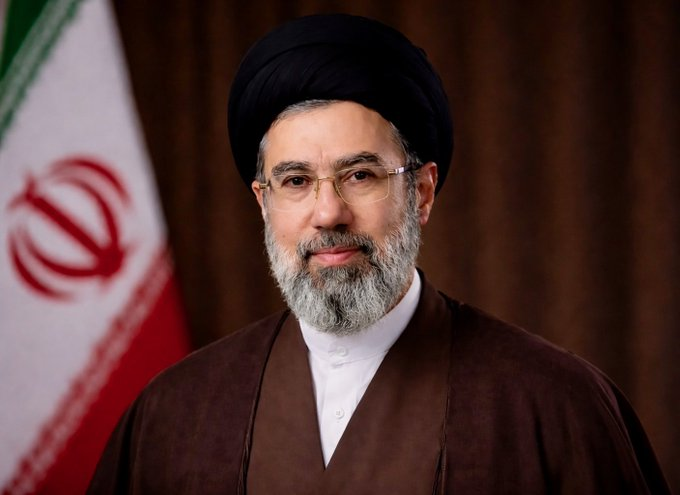
Khamenei’s Victory Declaration: A Strategic Assessment
Ayatollah Mojtaba Khamenei, who has served as Iran’s Supreme Leader since June 2025 following the death of his father, Ayatollah Ali Khamenei, framed the conflict’s outcome in unequivocal terms. The young Supreme Leader has been the central authority guiding Iran’s wartime strategy and diplomatic positioning throughout the crisis.
“Iran is the definite victor of this war,” Khamenei declared in a statement carried by Iranian state media. “The enemy sought to destroy the Islamic Republic, to break the resistance, and to humiliate the Iranian nation. They have failed in all three objectives.”
The Supreme Leader’s victory declaration rests on several claimed achievements:
| Claimed Victory | Iranian Justification |
|---|---|
| Military Survival | Iran’s military command structure remains intact and operational |
| Nuclear Program | Enrichment capabilities preserved despite US-Israeli strikes |
| Regional Alliances | Hezbollah, Houthis, and Iraqi militias remain active and aligned |
| Strait of Hormuz | Iran maintains effective control over global energy chokepoint |
| Diplomatic Standing | Direct negotiations achieved with US on Iranian terms |
The timing of the declaration—days before the Islamabad talks—appears designed to strengthen the Iranian negotiating position by signaling that Tehran does not view itself as coming to the table from a position of weakness.
The ‘Axis of Resistance’: A Victory for the Region
Khamenei expanded his victory declaration beyond Iran’s borders, framing the outcome as a triumph for the entire “Axis of Resistance”—the network of Iran-aligned forces across the Middle East.
“The resistance has proven that it cannot be defeated,” the Supreme Leader stated. “Hezbollah in Lebanon, the Houthis in Yemen, the resistance forces in Iraq and Syria—all have stood firm against the aggression. This is a victory for the entire region of resistance.”
This framing serves multiple strategic purposes:
- Reinforcing Alliances: By sharing credit with regional proxies, Khamenei strengthens their commitment to Tehran’s leadership.
- Countering Israeli Narratives: Israel has claimed significant successes against Hezbollah, including the reported deaths of key commanders. Khamenei’s declaration rejects those claims.
- Projecting Regional Leadership: The statement positions Iran as the leader of a victorious regional bloc, enhancing its influence across the Middle East.
- Domestic Messaging: For Iranian audiences, the declaration reinforces the regime’s legitimacy and the value of its regional commitments.
The Human and Economic Cost: A Complex Victory
While Khamenei’s victory declaration is politically significant, the war has imposed substantial costs on Iran that complicate any straightforward narrative of triumph.
Military Casualties: Iran has acknowledged significant military losses, including senior commanders in the Islamic Revolutionary Guard Corps (IRGC). While precise figures remain classified, Western intelligence estimates suggest hundreds of IRGC personnel have been killed .
Infrastructure Damage: US-Israeli strikes have targeted Iranian nuclear facilities, missile production sites, and military command centers. While Iran has claimed these strikes caused limited damage, satellite imagery suggests significant destruction at several key sites .
Economic Strain: The war has exacerbated Iran’s already strained economy. The Strait of Hormuz closure, while economically damaging to the US and its allies, has also hurt Iran by preventing its own oil exports. Additionally, the conflict has disrupted trade routes and increased insurance costs for all shipping .
Civilian Impact: While the majority of strikes have targeted military sites, civilian areas have also been affected. Reports indicate civilian casualties from both Iranian missile defense operations and US-Israeli strikes .
The Nuclear Program: A Central Claim of Victory
A central element of Khamenei’s victory declaration is the preservation and advancement of Iran’s nuclear program—the original casus belli for the US-Israeli strikes that began the war on February 28.
Iran’s nuclear status has been a point of significant contention throughout the conflict. The Trump administration has demanded that Iran not only cease enrichment but also “give up the nuclear fuel” and transfer its stockpile of enriched uranium to the United States .
Vice President JD Vance elaborated on the US position: “We don’t want Iran enriching towards a nuclear weapon, and we want Iran to give up the nuclear fuel. Those are going to be our demands during the negotiation” .
However, Iranian officials have consistently rejected any demand to abandon enrichment. Parliament Speaker Mohammad Bagher Ghalibaf has insisted that Iran is allowed to continue enrichment under the terms of the ceasefire .
Khamenei’s victory declaration suggests that Iran’s nuclear program has not only survived but been strengthened by the conflict. This position will be a central point of contention in the upcoming Islamabad talks.
The Ceasefire: Victory or Survival?
The Supreme Leader’s declaration of victory must be understood in the context of the fragile two-week ceasefire that has paused direct US-Iran hostilities. The ceasefire, brokered by Pakistan and announced on April 7, was welcomed by both sides but has been interpreted differently by each.
| Interpretation | US Position | Iranian Position |
|---|---|---|
| Military Outcome | Iran has been “conquered” (Trump) | Iran is the “definite victor” (Khamenei) |
| Nuclear Terms | Iran must give up nuclear fuel | Iran may continue enrichment |
| Strait of Hormuz | Complete, unconditional reopening | Regulated opening with IRGC oversight |
| Lebanon | Not included in ceasefire | Must be included in any peace |
These competing interpretations reflect fundamentally different assessments of who won and who lost. Khamenei’s victory declaration signals that Iran will approach the Islamabad talks from a position of perceived strength, not weakness.
The Islamabad Talks: Testing the Victory Claim
The true test of Khamenei’s victory declaration will come in the Islamabad talks, where US and Iranian delegations are scheduled to meet for direct negotiations. The Iranian delegation will be led by Parliament Speaker Mohammad Bagher Ghalibaf and Foreign Minister Abbas Araghchi .
The talks will address the core issues that Khamenei’s victory declaration claims Iran has already won:
- The Strait of Hormuz: Iran has imposed a strict limit of 15 ships per day, requiring prior IRGC approval. Will this become the new normal, or will the US force a return to pre-war traffic levels?
- Nuclear Enrichment: Iran insists on its right to continue enrichment. Will the US accept this, or will the demand to “give up the nuclear fuel” remain non-negotiable?
- Sanctions and Assets: Iran demands the unfreezing of its blocked assets and the lifting of sanctions. Will the US agree, and on what terms?
- Lebanon: Iran insists that any peace must include a cessation of Israeli strikes on Hezbollah. Will the US pressure Israel to comply?
Khamenei’s victory declaration suggests that Iran expects to achieve its objectives in these negotiations. The coming days will reveal whether the US shares that assessment.
Domestic Messaging: A Regime Strengthened
Khamenei’s victory declaration also serves important domestic political purposes. The Iranian regime has faced significant internal challenges in recent years, including widespread protests and economic hardship. A declared victory in a war against the United States and Israel—Iran’s primary external adversaries—provides powerful legitimacy.
For the Iranian public, the declaration reinforces several key messages:
- Regime Resilience: The Islamic Republic survived and prevailed against the world’s most powerful military alliance.
- Strategic Wisdom: The leadership’s decisions, including the controversial decision to engage in direct conflict, have been vindicated.
- Sacrifice Justified: The human and economic costs of the war have been worth it because Iran has emerged victorious.
- Future Confidence: A regime that defeated the United States can handle any future challenge.
The timing of the declaration—ahead of the Islamabad talks—also signals to the Iranian public that their negotiators will not accept a “bad deal” that undermines the claimed victory.
International Reactions: Skepticism and Scrutiny
The international community has responded to Khamenei’s victory declaration with a mixture of skepticism and analytical scrutiny.
United States: The White House has not issued a formal response to Khamenei’s declaration. However, President Trump has consistently characterized Iran as “conquered” and “having no military” —a direct contradiction of the Supreme Leader’s claims .
Israel: Prime Minister Netanyahu’s office declined direct comment, but Israeli officials have privately expressed that Iran’s claims of victory are “delusional” given the damage inflicted on its nuclear and military infrastructure .
United Nations: Secretary-General Antonio Guterres has called for all parties to “avoid triumphalism” and focus on the urgent need for a lasting peace agreement .
European Union: EU officials have expressed concern that victory declarations on either side could complicate the diplomatic process and reduce the chances of a successful negotiation .
Gulf States: Saudi Arabia and the UAE, which have been targeted by Iranian missile and drone attacks throughout the conflict, have rejected Iran’s claims of victory, noting the significant damage inflicted on Iranian military infrastructure .
The Father-Son Legacy: Mojtaba’s First War
Khamenei’s victory declaration is particularly significant given that this conflict represents his first major war since assuming the Supreme Leadership following his father’s death in June 2025. Ayatollah Ali Khamenei led Iran through decades of confrontation with the West, including the Iran-Iraq War, the nuclear negotiations, and numerous proxy conflicts.
For Mojtaba Khamenei, the outcome of this war—and the perception of that outcome—will shape his leadership for years to come. A declared victory strengthens his position both domestically and regionally. A perception of defeat, even if masked by diplomatic language, could undermine his authority.
The Supreme Leader’s decision to declare victory before the Islamabad talks suggests confidence that the final diplomatic outcome will not contradict his framing. It also signals to both the Iranian public and the international community that he does not view the upcoming negotiations as a forum for concession.
The ‘Pain’ Question: Who Can Endure Longer?
The war has been characterized as a contest of “who can take the pain the longest” —a test of endurance between the world’s largest economy and a sanctions-weary Islamic Republic .
President Trump has warned that failure to reach a deal will be “very painful” for Iran. He has threatened to decimate “every bridge and power plant” in the country and has claimed that the “entire country could be taken out in one night” .
Khamenei’s victory declaration is, in part, a response to these threats. By declaring victory now, the Supreme Leader is signaling that Iran has already endured the worst of the pain and emerged triumphant—and that further US threats will not produce Iranian capitulation.
Iranian Foreign Ministry official Kazem Gharibabadi has previously boasted of Iran’s economic leverage, stating: “Just look at the state of the global economy and energy markets — it has been very painful for them” .
The Islamabad talks will determine which side’s assessment of “pain endurance” is more accurate.
What Comes Next: Negotiations Under a Victory Declaration
The Islamabad talks will now proceed under the shadow of Khamenei’s victory declaration. The Iranian delegation will enter the negotiations with instructions to secure outcomes consistent with the Supreme Leader’s framing—outcomes that demonstrate Iran’s victory, not its defeat.
Key questions for the talks include:
- Will Iran accept any limits on its nuclear program? Khamenei’s victory declaration suggests that Iran’s nuclear capabilities have been preserved and strengthened. Any agreement that rolls back those capabilities would contradict the victory narrative.
- Will Iran agree to unconditional reopening of the Strait of Hormuz? Iran has established a new regulatory framework giving the IRGC control over transits. Surrendering that control would be difficult to frame as victory.
- Will Iran abandon Hezbollah? Khamenei’s declaration explicitly included Lebanon in Iran’s victory. Abandoning Hezbollah would directly contradict the Supreme Leader’s framing.
- Will Iran accept US military presence in the region? The victory declaration implies that Iran has successfully resisted US military pressure. Accepting continued US presence would undermine that claim.
These questions suggest that the Islamabad talks will be challenging. Khamenei’s victory declaration has raised the stakes for Iranian negotiators, making compromise more difficult to justify domestically.
Conclusion: A Defining Moment
Supreme Leader Mojtaba Khamenei’s declaration that “Iran is the definite victor” of the war represents a defining moment in the conflict—and a signal of how Tehran will approach the upcoming Islamabad talks. By framing the war’s outcome as an Iranian victory, the Supreme Leader has established a benchmark against which any diplomatic agreement will be measured.
The declaration serves multiple purposes: reinforcing domestic legitimacy, strengthening regional alliances, countering US and Israeli narratives, and positioning Iranian negotiators from a posture of strength.
Whether this framing matches reality—or whether it is a strategic posture designed to extract concessions while preparing for compromise—will become clear in the coming days. The Islamabad talks will determine whether Khamenei’s victory declaration becomes self-fulfilling prophecy or empty rhetoric.
For now, the world watches as the United States and Iran prepare to sit down across the negotiating table—one side claiming to have conquered, the other claiming to have won.
Frequently Asked Questions (FAQs)
1. What did Iranian Supreme Leader Mojtaba Khamenei declare about the war?
Khamenei declared that “Iran is the definite victor” of the six-week war against the United States and Israel. He claimed that the enemy sought to destroy the Islamic Republic, break the resistance, and humiliate the Iranian nation—and failed in all three objectives .
2. Who is Mojtaba Khamenei?
Mojtaba Khamenei became Iran’s Supreme Leader in June 2025 following the death of his father, Ayatollah Ali Khamenei, who led Iran for decades. This conflict represents his first major war as Supreme Leader .
3. What evidence does Iran cite for its victory?
Iran points to its military survival, the preservation of its nuclear program, the continued activity of its regional allies (Hezbollah, Houthis, Iraqi militias), its maintained control over the Strait of Hormuz, and the achievement of direct negotiations with the United States .
4. How does this declaration affect the upcoming Islamabad talks?
The declaration signals that Iran will approach negotiations from a position of perceived strength. It establishes benchmarks that any agreement must meet to be framed as consistent with Iran’s victory—making compromise more difficult .
5. What has been the human and economic cost of the war for Iran?
While precise figures remain classified, Iran has acknowledged significant military losses including senior IRGC commanders. The country’s economy has been strained further, and infrastructure has been damaged by US-Israeli strikes .
6. What is Iran’s position on its nuclear program?
Iran insists on its right to continue uranium enrichment. Khamenei’s victory declaration suggests that Iran’s nuclear capabilities have not only survived but been strengthened by the conflict. This directly contradicts US demands that Iran “give up the nuclear fuel” .
7. Does Iran consider Lebanon part of its victory?
Yes. Khamenei explicitly included Hezbollah in Lebanon as part of the “Axis of Resistance” that he claims has emerged victorious. He stated that “the resistance has proven that it cannot be defeated” .
8. How has the United States responded to Khamenei’s declaration?
The White House has not issued a formal response. However, President Trump has consistently characterized Iran as “conquered” and “having no military”—directly contradicting Khamenei’s victory framing .
9. What is the status of the ceasefire?
A fragile two-week ceasefire remains in place, brokered by Pakistan. However, Israeli strikes on Lebanon continue, and the Strait of Hormuz remains largely restricted. The Islamabad talks will determine whether the truce becomes permanent .
10. When are the Islamabad talks scheduled?
The talks are scheduled to begin Saturday morning in Islamabad, Pakistan. The US delegation is led by Vice President JD Vance, while the Iranian delegation is led by Parliament Speaker Mohammad Bagher Ghalibaf and Foreign Minister Abbas Araghchi .
Stay informed with Reflecto News – Your trusted source for breaking geopolitical and diplomatic intelligence. Subscribe for real-time updates from the Islamabad peace talks and analysis of the conflict’s outcome.
Questions people ask
What is China's current share of global manufacturing?
China now accounts for twenty eight percent of global manufacturing. This industrial output exceeds the combined manufacturing production of the United States, Japan, and Germany, making China the leading global industrial power according to recent reports.
Why were Andrew Tate and Tristan Tate arrested in Miami?
Andrew Tate and his brother Tristan Tate were taken into custody in Miami by the United States Marshals Service. They face thirty eight new charges in the United Kingdom, including rape and child pornography offences, and prosecutors are seeking their extradition.
What warning did Moscow issue about oil prices?
Kirill Dmitriev, the Chief Executive of the Russian Direct Investment Fund, warned that a tsunami of skyrocketing oil prices is approaching. Moscow describes this potential energy shock as a major threat to global markets.
What political shift is projected for Benjamin Netanyahu's coalition?
Political polls project that Prime Minister Benjamin Netanyahu's coalition is on track to lose its majority in the upcoming October election. This projection indicates a potential political shift in Jerusalem.
Why did a Russian military aircraft land in Tehran?
A Russian airborne command aircraft, widely known as a doomsday plane, landed in Tehran. The arrival of the aircraft represents a high stakes show of support from Russia for Iran during a period of heightened regional tensions.
What did President Masoud Pezeshkian claim about the United States and Israel?
Iranian President Masoud Pezeshkian claimed that the United States and Israel failed in a forty eight hour plan to topple the Iranian government. He made these statements during a televised address marking two years since his inauguration.