By Reflecto News Desk
April 7, 2026
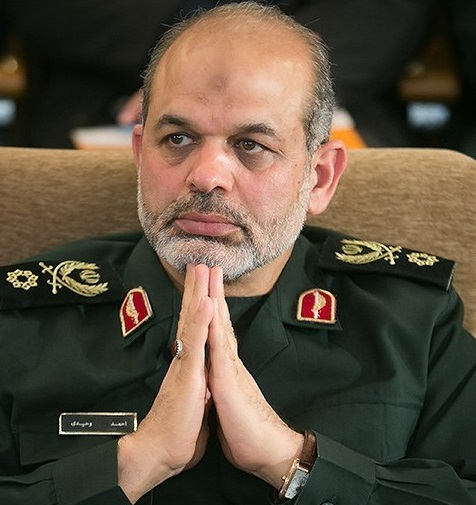
Iran’s Islamic Revolutionary Guard Corps (IRGC) has announced the start of a “new phase” of retaliatory attacks against what it calls “aggressors,” escalating tensions just hours before President Donald Trump’s self-imposed 8:00 PM ET deadline for Iran to reopen the Strait of Hormuz. The declaration comes amid a series of diplomatic failures at the United Nations, including the recent Russia-China veto of a Bahrain-sponsored resolution and Bahrain’s subsequent accusation that the Security Council has failed to act against Iran.
The IRGC’s statement signals a potential intensification of missile, drone, and asymmetric operations targeting U.S., Israeli, and allied assets across the region, further complicating efforts to de-escalate the ongoing conflict that has already disrupted global energy markets.
IRGC’s Declaration of a “New Phase”
According to Iranian state-affiliated media and IRGC-linked statements, senior commanders have described the shift as a response to continued U.S. and Israeli strikes on Iranian infrastructure and leadership. The “new phase” reportedly involves expanded operations, including more frequent and widespread reprisals using advanced ballistic missiles such as the Fateh and Kheibar Shekan series, as well as heightened naval activities in and around the Strait of Hormuz.
IRGC officials have warned that attacks will now be “more crushing and extensive,” targeting not only military sites but potentially economic and commercial infrastructure linked to the “aggressors.” This builds on prior waves of retaliation under operations like “True Promise,” which have already struck U.S. and Israeli-linked targets in the Gulf region. The declaration emphasizes that Iran will not hesitate to defend its sovereignty and that the era of unrestricted foreign influence in the Persian Gulf is over.
The timing aligns closely with Trump’s ultimatum, which threatens unprecedented strikes—including on power plants and bridges—if Iran does not agree to a deal reopening the strait to safe international shipping.
Link to the Strait of Hormuz Crisis
The IRGC Navy has separately reiterated that the Strait of Hormuz “will never return to its previous status, especially for the US and Israel.” Iranian forces claim to be in the final stages of enforcing a “new order” in the Persian Gulf, which includes restrictions on vessels associated with adversaries and potential imposition of transit fees.
This stance directly challenges Trump’s demands and follows the failed UN Security Council resolution, where Russia and China vetoed efforts to promote safe navigation. Bahrain has accused the Council of inaction, highlighting Gulf states’ frustration with the deadlock. The continued closure of the strait—handling roughly 20-30% of global seaborne oil trade—has driven oil prices higher and raised concerns about prolonged supply disruptions.
Background: Escalation in the U.S.-Iran Conflict
The current crisis stems from U.S. and Israeli military operations launched in late February 2026, which targeted Iranian nuclear-related sites, missile facilities, and senior leadership. Iran has responded with waves of missile and drone attacks on regional bases and infrastructure, while maintaining the Hormuz closure as leverage.
Recent developments include:
- Multiple extensions of Trump’s deadlines, with the latest set for 8:00 PM ET on April 7.
- IRGC threats against U.S.-linked companies and commercial assets in the region.
- Diplomatic isolation at the UN, with permanent members Russia and China blocking resolutions perceived as favoring Western intervention.
The IRGC, as Iran’s most powerful military and ideological force, plays a central role in both defense and asymmetric warfare strategies, including support for regional proxies.
Potential Implications
Analysts warn that a “new phase” of IRGC attacks could broaden the conflict beyond direct military targets, increasing risks to shipping, energy facilities, and civilian areas in the Gulf. This might trigger further U.S. or Israeli responses, potentially leading to a cycle of escalation with severe global economic consequences, including higher fuel prices and supply chain instability.
Gulf states remain on high alert, while international observers call for renewed diplomacy to prevent a wider war. The coming hours will be critical as the deadline approaches and any new Iranian operations unfold.
FAQs: IRGC “New Phase” Declaration and the Ongoing Crisis
What does the IRGC mean by a “new phase” of attacks?
It refers to an escalation in retaliatory operations against U.S., Israeli, and allied targets, potentially involving more intense missile and drone strikes, expanded targeting of economic assets, and tighter control over the Strait of Hormuz.
How does this relate to Trump’s deadline?
The declaration comes as the 8:00 PM ET cutoff for Iran to reopen the strait nears. Iran views the deadline as aggressive posturing and is using the announcement to signal resolve rather than concession.
What is the status of the Strait of Hormuz?
Iran maintains effective control and has kept it largely closed to vessels linked to adversaries since late February 2026. The IRGC has stated it will never revert to its prior open status for the U.S. and Israel.
Has the UN been able to intervene?
No. A recent Bahrain-sponsored resolution was vetoed by Russia and China. Bahrain has accused the Security Council of failing to act, leaving multilateral options limited.
What are the risks to global energy markets?
Prolonged closure or new attacks could cause further spikes in oil and gas prices, supply shortages, and inflationary pressures worldwide, especially for import-dependent economies in Asia and Europe.
Could this lead to direct confrontation with the U.S.?
Yes. Any new IRGC attacks risk provoking stronger U.S. or Israeli responses, including the large-scale strikes Trump has threatened on Iranian infrastructure.
Reflecto News will continue monitoring this fast-developing situation with live updates on military movements, diplomatic responses, and market impacts. The stakes remain extraordinarily high as the deadline passes and the conflict enters what Iran describes as a more determined phase of resistance.