Reflecto News is an online news platform covering major international political events, global economic developments, and security conflicts. The site provides updates on topics such as Chinese manufacturing dominance, Middle Eastern political tensions, and high profile legal arrests. Readers can access current articles organized by categories like World News, Iran, and USA.
Iran’s Parliament Speaker has strongly accused the United States and Israel of violating the newly announced 2-week ceasefire, stating that “in such a situation, a bilateral ceasefire or negotiations is unreasonable.” The remarks represent a sharp escalation in rhetoric and cast fresh doubt on the viability of the truce, just as U.S. Vice President JD Vance and Steve Witkoff prepare to travel to Pakistan for talks with Iranian representatives.
By Reflecto News Desk
April 8, 2026 | Tehran / Washington / Jerusalem
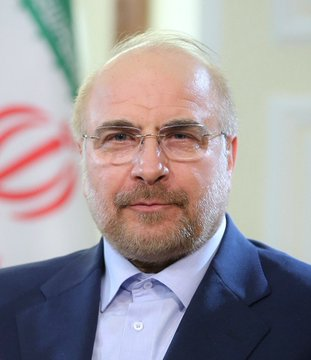
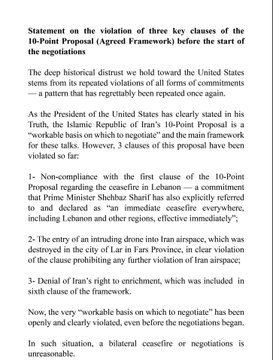
The Parliament Speaker’s statement directly challenges the foundations of the ceasefire agreement, claiming that continued Israeli actions — particularly strikes in Lebanon and against Iranian-linked targets — amount to a breach by the U.S. side. He argued that meaningful bilateral negotiations cannot proceed while violations persist.
This comes amid a series of rapid developments that have already tested the truce:
- Iran launched missiles toward Israel just 10 minutes after President Trump announced the ceasefire.
- Israeli Prime Minister Benjamin Netanyahu declared that “this is not the end of the battle” and that Israel is on its way to achieving its goals, including the removal of Iran’s enriched uranium “by agreement or by war.”
- Recent U.S.-Israeli strikes targeted Iranian industrial and logistical sites, including IRALCO (aluminum producer), IRGC-linked railways and bridges, Kharg Island, and Mehrabad Airport.
Impact on Upcoming Pakistan Talks
The Speaker’s comments place immediate pressure on the high-level U.S. delegation led by Vice President JD Vance and Steve Witkoff, scheduled to meet Iranian representatives in Pakistan this weekend. Key issues expected to dominate the agenda — enforcement of the ceasefire, the Strait of Hormuz, and the enriched uranium question — now face heightened skepticism from Tehran.
Iran continues to maintain selective control over the Strait of Hormuz, while threats regarding the Bab al-Mandab Strait remain a lingering risk.
Broader Context and Humanitarian Concerns
The breakdown in trust adds to growing international anxiety:
- Civilian mobilization inside Iran, including human chains on Ahvaz’s White Bridge, reflects public fear of renewed infrastructure attacks.
- Italian Prime Minister Giorgia Meloni recently emphasized that ordinary Iranian citizens should not “pay for the sins of their rulers,” highlighting the human cost of prolonged confrontation.
- The recent France-Iran prisoner exchange (freeing Cécile Kohler and Jacques Paris) showed that limited humanitarian diplomacy is still possible, but core security disputes are proving far more difficult to resolve.
Reflecto News will continue monitoring any U.S. or Israeli responses to the Iranian accusations, updates on the Vance-Witkoff mission to Pakistan, statements from the IRGC or Iranian leadership, and the status of the 2-week ceasefire.
FAQs: Iran’s Parliament Speaker Accuses U.S. and Israel of Ceasefire Violation
Q1: What exactly did the Parliament Speaker say?
He accused the U.S. and Israel of violating the ceasefire and stated that bilateral ceasefire or negotiations are “unreasonable” under current conditions.
Q2: What violations is Iran citing?
Primarily continued Israeli strikes in Lebanon and perceived U.S. tolerance of Israeli actions against Iranian interests.
Q3: How does this affect the Pakistan talks?
It significantly raises the stakes; the Vance-Witkoff delegation will now need to address enforcement and trust issues before any substantive progress can be made.
Q4: Is the 2-week ceasefire still in effect?
Formally yes, but mutual accusations and the early Iranian missile launch have severely undermined confidence in its durability.
Q5: What are the risks moving forward?
Renewed missile exchanges, further strikes on infrastructure (including industrial sites like IRALCO), and potential collapse of the truce before the weekend talks even begin.
Sources: Statement by Iran’s Parliament Speaker, cross-referenced reporting from U.S., Israeli, and Iranian sources as of April 8, 2026. Accusations of ceasefire violations in active conflicts can quickly unravel diplomatic efforts; the situation remains extremely fluid and high-risk.
Questions people ask
What is China's current share of global manufacturing?
China now accounts for twenty eight percent of global manufacturing. This industrial output exceeds the combined manufacturing production of the United States, Japan, and Germany, making China the leading global industrial power according to recent reports.
Why were Andrew Tate and Tristan Tate arrested in Miami?
Andrew Tate and his brother Tristan Tate were taken into custody in Miami by the United States Marshals Service. They face thirty eight new charges in the United Kingdom, including rape and child pornography offences, and prosecutors are seeking their extradition.
What warning did Moscow issue about oil prices?
Kirill Dmitriev, the Chief Executive of the Russian Direct Investment Fund, warned that a tsunami of skyrocketing oil prices is approaching. Moscow describes this potential energy shock as a major threat to global markets.
What political shift is projected for Benjamin Netanyahu's coalition?
Political polls project that Prime Minister Benjamin Netanyahu's coalition is on track to lose its majority in the upcoming October election. This projection indicates a potential political shift in Jerusalem.
Why did a Russian military aircraft land in Tehran?
A Russian airborne command aircraft, widely known as a doomsday plane, landed in Tehran. The arrival of the aircraft represents a high stakes show of support from Russia for Iran during a period of heightened regional tensions.
What did President Masoud Pezeshkian claim about the United States and Israel?
Iranian President Masoud Pezeshkian claimed that the United States and Israel failed in a forty eight hour plan to topple the Iranian government. He made these statements during a televised address marking two years since his inauguration.