Reflecto News is an online news platform covering major international political events, global economic developments, and security conflicts. The site provides updates on topics such as Chinese manufacturing dominance, Middle Eastern political tensions, and high profile legal arrests. Readers can access current articles organized by categories like World News, Iran, and USA.
Reflecto News
April 19, 2026
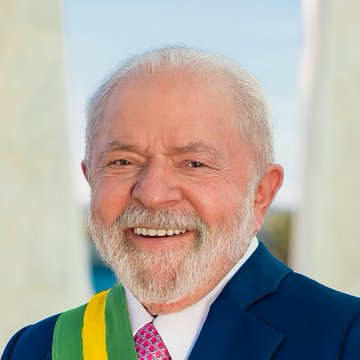
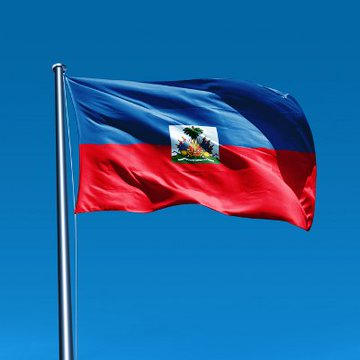
Brazilian President Luiz Inácio Lula da Silva has once again defended Cuba’s socialist system, highlighting the stark contrast with neighboring Haiti’s humanitarian crisis. In recent remarks, Lula stated: “They talk about Cuba being socialist, while Haiti starves next door — and nobody says a word.”
The comment forms part of a broader critique of what Lula sees as inconsistent international attention to poverty and suffering in the Americas. He argued that critics of Cuba’s political and economic model often overlook Haiti, which faces severe food insecurity, political instability, and gang violence despite not having a socialist or communist government. Lula has repeatedly called for an end to the long-standing U.S. embargo on Cuba, describing it as an unjust “blockade” that exacerbates the island’s economic difficulties.
Lula’s Argument in Context
During interviews and speeches, including one with Spain’s El País, Lula emphasized that Cuba’s challenges stem largely from external pressures rather than inherent flaws in its socialist system. He pointed out that Haiti, plagued by decades of instability, extreme poverty, and natural disasters, receives far less sustained global outrage despite similar or worse humanitarian conditions.
Key points from Lula’s position:
- Cuba has faced a U.S. embargo for over six decades, limiting access to food, energy, and essential goods.
- Haiti suffers from chronic hunger, weak institutions, and gang control over large areas, yet draws comparatively less focused criticism regarding its governance model.
- Lula has urged the international community to prioritize humanitarian aid and dialogue over ideological attacks on Cuba.
The remarks align with Lula’s longstanding advocacy for Latin American sovereignty and criticism of unilateral sanctions. He has also linked global military spending (estimated at $2.7 trillion annually) to the persistence of poverty and starvation worldwide.
Reactions and Controversy
Lula’s comments have sparked debate:
- Supporters view them as a call for consistent humanitarian concern and an end to double standards in international discourse.
- Critics argue that Lula downplays Cuba’s documented issues, including political repression, limited freedoms, and economic mismanagement under its one-party system, while Haiti’s problems stem from different historical and structural factors (including corruption, weak governance, and external interventions).
- Cuban exiles and human rights groups have pushed back, noting Cuba’s high number of political prisoners and restrictions on dissent, contrasting this with Lula’s defense.
The statement also comes amid Lula’s engagements with progressive leaders and his broader foreign policy emphasizing South-South cooperation and opposition to certain U.S. policies in the region.
Broader Regional Picture
Haiti continues to grapple with one of the Western Hemisphere’s worst humanitarian crises, with millions facing acute food insecurity. Cuba, meanwhile, struggles with energy shortages, inflation, and emigration, though it maintains strong social indicators in areas like healthcare and education compared to many developing nations.
Lula’s intervention reflects ongoing ideological divides in Latin America over socialism, sanctions, and the role of external actors in regional affairs.
What’s Next?
The Brazilian president’s comments are likely to fuel further discussion on U.S.-Cuba relations, the effectiveness of embargoes, and international responses to humanitarian crises in the Caribbean. Lula is expected to continue advocating for normalized ties with Cuba and increased attention to Haiti’s needs.
Reflecto News will monitor reactions from Washington, Havana, Port-au-Prince, and the broader international community.
Frequently Asked Questions (FAQs)
Q1: What exactly did Lula da Silva say about Cuba and Haiti?
A: Lula stated, “They talk about Cuba being socialist, while Haiti starves next door — and nobody says a word,” using the comparison to argue against selective criticism of Cuba’s system while ignoring Haiti’s severe humanitarian crisis.
Q2: Why did Lula make this comparison?
A: He aims to highlight perceived double standards: intense focus on Cuba’s socialist model versus relative silence on Haiti’s suffering, which occurs without a socialist government. Lula also calls for lifting the U.S. embargo on Cuba.
Q3: What are the main criticisms of Lula’s remarks?
A: Detractors argue he minimizes Cuba’s political repression, human rights issues, and economic failures while oversimplifying Haiti’s complex problems (rooted in governance, history, and instability rather than ideology).
Q4: What is the current situation in Haiti and Cuba?
A: Haiti faces extreme poverty, gang violence, and widespread hunger. Cuba deals with economic hardship, energy shortages, and emigration pressures, partly attributed by its government to the U.S. embargo.
Q5: How has this been received internationally?
A: The statement has drawn support from left-leaning voices advocating for sanctions relief on Cuba and more aid for Haiti, while sparking backlash from those critical of Cuba’s regime and skeptical of Lula’s defense.
Q6: Does this reflect Brazil’s official foreign policy?
A: Yes — Lula has consistently pushed for normalized relations with Cuba and greater regional solidarity on humanitarian issues.
For ongoing coverage of Lula da Silva’s statements, Latin American politics, U.S.-Cuba relations, and humanitarian situations in the Caribbean, bookmark Reflecto News.
This article is based on Lula da Silva’s public remarks, interviews, and verified reporting as of April 19, 2026.
Questions people ask
What is China's current share of global manufacturing?
China now accounts for twenty eight percent of global manufacturing. This industrial output exceeds the combined manufacturing production of the United States, Japan, and Germany, making China the leading global industrial power according to recent reports.
Why were Andrew Tate and Tristan Tate arrested in Miami?
Andrew Tate and his brother Tristan Tate were taken into custody in Miami by the United States Marshals Service. They face thirty eight new charges in the United Kingdom, including rape and child pornography offences, and prosecutors are seeking their extradition.
What warning did Moscow issue about oil prices?
Kirill Dmitriev, the Chief Executive of the Russian Direct Investment Fund, warned that a tsunami of skyrocketing oil prices is approaching. Moscow describes this potential energy shock as a major threat to global markets.
What political shift is projected for Benjamin Netanyahu's coalition?
Political polls project that Prime Minister Benjamin Netanyahu's coalition is on track to lose its majority in the upcoming October election. This projection indicates a potential political shift in Jerusalem.
Why did a Russian military aircraft land in Tehran?
A Russian airborne command aircraft, widely known as a doomsday plane, landed in Tehran. The arrival of the aircraft represents a high stakes show of support from Russia for Iran during a period of heightened regional tensions.
What did President Masoud Pezeshkian claim about the United States and Israel?
Iranian President Masoud Pezeshkian claimed that the United States and Israel failed in a forty eight hour plan to topple the Iranian government. He made these statements during a televised address marking two years since his inauguration.