Reflecto News is an online news platform covering major international political events, global economic developments, and security conflicts. The site provides updates on topics such as Chinese manufacturing dominance, Middle Eastern political tensions, and high profile legal arrests. Readers can access current articles organized by categories like World News, Iran, and USA.
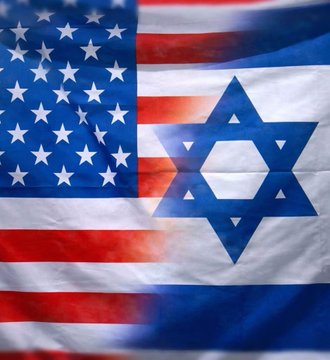
Iran’s Parliament Speaker Mohammad Bagher Ghalibaf has announced that around 7 million Iranians have volunteered to take up arms and defend the country in the event of any U.S. or Israeli ground invasion. The statement, posted on X (formerly Twitter), frames the surge as a spontaneous national campaign and serves as a strong warning amid the ongoing U.S.-Israeli military campaign against Iran.
By Reflecto News Desk
April 2, 2026 | Tehran / Washington
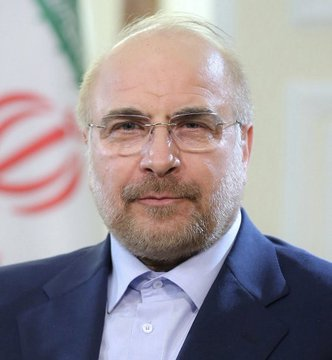
In a post on X, Ghalibaf declared: “Right now, in less than a week, a powerful national campaign sweeping the country has brought forward around 7 million Iranians who have already stepped up and declared they’re ready to pick up arms and stand in defense of our nation.”
The remarks come as the conflict, launched on February 28, 2026, enters its fifth week. While U.S. and Israeli strikes have targeted Iranian military infrastructure, missile sites, and leadership figures, no large-scale ground invasion has been launched. Ghalibaf’s statement appears aimed at deterring any potential escalation to boots-on-the-ground operations, particularly after recent U.S. signals regarding objectives and possible wind-down timelines.
Context and Iranian Rhetoric
Ghalibaf, a former Revolutionary Guard commander and a hardline figure often seen as a potential pragmatic interlocutor in some diplomatic contexts, has used strong language throughout the war. His claim of 7 million volunteers echoes past Iranian mobilization drives (such as the “Janfada” or “Basij” recruitment campaigns) but represents one of the largest numbers cited publicly during the current conflict.
Iranian officials have repeatedly mixed defiance with selective pragmatism:
- IRGC-linked spokespersons, including Ebrahim Zolfaghari, have warned of “stronger, wider, and more destructive” retaliatory attacks and claimed vast, unreachable military capabilities.
- Iran continues to reject formal ceasefire proposals while offering case-by-case safe-transit agreements for the Strait of Hormuz.
U.S. intelligence assessments continue to indicate no signs of regime collapse, with the Islamic Revolutionary Guard Corps (IRGC) maintaining control despite sustained airstrikes.
The Broader Conflict and Energy Fallout
The war has severely disrupted the Strait of Hormuz, a critical chokepoint for roughly 20% of global LNG and a major share of seaborne oil. Pre-war daily flows averaged ~20.3 million barrels of oil/petroleum products and ~290 million cubic meters of LNG, with over 80% destined for Asia.
Damage to Qatar’s LNG facilities and Iranian actions have triggered a sharp rise in Asian spot LNG prices. China has responded by reselling record volumes — 1.31 million metric tons year-to-date — to support buyers in South Korea, Japan, India, Thailand, and the Philippines.
French President Macron recently described any military operation to forcibly reopen the strait as “unrealistic” due to high risks from Iranian coastal defenses and missiles. Russia has positioned itself diplomatically, with President Putin stating readiness to do “whatever is necessary” to restore peace after a call with Saudi Crown Prince Mohammed bin Salman.
Implications
Claims of mass volunteer mobilization are common in Iranian state rhetoric during crises and are often viewed by analysts as tools for domestic morale, psychological deterrence, and signaling resolve to adversaries. Whether the 7 million figure translates into organized, combat-ready forces remains unclear and difficult to independently verify.
The statement risks hardening positions at a time when backchannel efforts (including reported Pakistan-mediated contacts) and selective diplomatic openings on the Hormuz strait have emerged. It also coincides with other developments, such as the serious wounding of former Foreign Minister Kamal Kharazi in a strike on his home.
Reflecto News will continue monitoring Iranian official statements, reactions from Washington and Tel Aviv, any updates on volunteer mobilization, and the evolving military, diplomatic, and energy situation.
Sources: The Times of Israel, Reuters, TASS, Al Arabiya, Mehr News, and statements attributed to Mohammad Bagher Ghalibaf as of April 2, 2026. Information from active conflict zones remains fluid and subject to verification.
Questions people ask
What is China's current share of global manufacturing?
China now accounts for twenty eight percent of global manufacturing. This industrial output exceeds the combined manufacturing production of the United States, Japan, and Germany, making China the leading global industrial power according to recent reports.
Why were Andrew Tate and Tristan Tate arrested in Miami?
Andrew Tate and his brother Tristan Tate were taken into custody in Miami by the United States Marshals Service. They face thirty eight new charges in the United Kingdom, including rape and child pornography offences, and prosecutors are seeking their extradition.
What warning did Moscow issue about oil prices?
Kirill Dmitriev, the Chief Executive of the Russian Direct Investment Fund, warned that a tsunami of skyrocketing oil prices is approaching. Moscow describes this potential energy shock as a major threat to global markets.
What political shift is projected for Benjamin Netanyahu's coalition?
Political polls project that Prime Minister Benjamin Netanyahu's coalition is on track to lose its majority in the upcoming October election. This projection indicates a potential political shift in Jerusalem.
Why did a Russian military aircraft land in Tehran?
A Russian airborne command aircraft, widely known as a doomsday plane, landed in Tehran. The arrival of the aircraft represents a high stakes show of support from Russia for Iran during a period of heightened regional tensions.
What did President Masoud Pezeshkian claim about the United States and Israel?
Iranian President Masoud Pezeshkian claimed that the United States and Israel failed in a forty eight hour plan to topple the Iranian government. He made these statements during a televised address marking two years since his inauguration.