Reflecto News is an online news platform covering major international political events, global economic developments, and security conflicts. The site provides updates on topics such as Chinese manufacturing dominance, Middle Eastern political tensions, and high profile legal arrests. Readers can access current articles organized by categories like World News, Iran, and USA.
By Reflecto News Staff
April 4, 2026
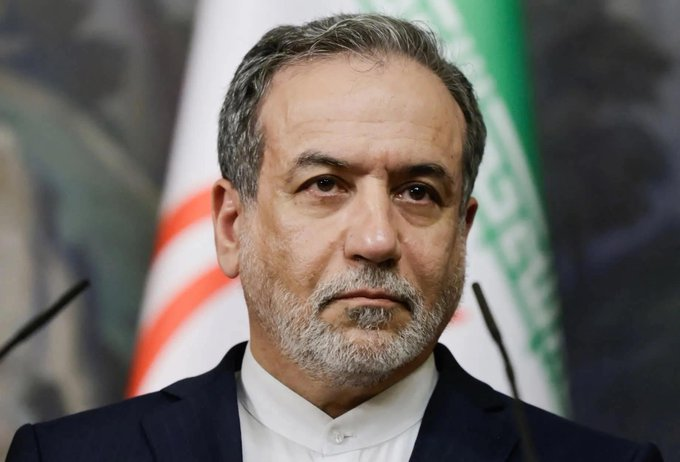
Lahore, Pakistan – Iranian Foreign Minister Seyed Abbas Araghchi has issued a stark warning following a reported U.S.-Israeli projectile strike near Iran’s Bushehr Nuclear Power Plant on the Persian Gulf coast. In a post on X (formerly Twitter), Araghchi stated that continued attacks could trigger radioactive fallout that would “end life in GCC capitals, not Tehran,” while accusing the West of double standards compared to international outrage over incidents near Ukraine’s Zaporizhzhia plant.
Araghchi noted that Bushehr has now been struck four times during the ongoing war, which began in late February 2026. He also highlighted attacks on Iranian petrochemical facilities as evidence of the coalition’s “real objectives.”
“Remember the Western outrage about hostilities near Zaporizhzhia Nuclear Power Plant in Ukraine? Israel-U.S. have bombed our Bushehr plant four times now. Radioactive fallout will end life in GCC capitals, not Tehran. Attacks on our petrochemicals also convey real objectives.”
The statement comes hours after President Donald Trump issued a fresh 48-hour ultimatum demanding Iran reach a deal or fully reopen the Strait of Hormuz, warning that failure would bring severe consequences.
Details of the Latest Incident at Bushehr
Iranian state media reported that a projectile struck an auxiliary building near the plant’s perimeter, killing one security personnel and causing limited damage. The main reactor was not hit, and no radiation leak has been confirmed so far. The International Atomic Energy Agency (IAEA) was notified by Iran and has urged restraint, emphasizing that any attack on nuclear facilities risks major safety consequences.
Russia’s state nuclear firm Rosatom, which operates the plant, has been evacuating non-essential personnel amid escalating threats. Bushehr, Iran’s only operational nuclear power plant (with Russian assistance), sits directly on the Gulf coast—placing it in close proximity to the shared waters and populations of Gulf Cooperation Council (GCC) states including Saudi Arabia, the UAE, Qatar, Kuwait, Bahrain, and Oman.
Aerial/satellite view of Iran’s Bushehr Nuclear Power Plant on the Persian Gulf coast. (Representative image)
Another view of the Bushehr facility, highlighting its coastal location. (Image: Satellite imagery sources)
Strategic and Environmental Risks
Bushehr’s location makes any radiological release particularly dangerous for the region. Prevailing winds and ocean currents in the Persian Gulf could carry fallout toward densely populated GCC coastal cities and critical infrastructure, including desalination plants that supply much of the drinking water for Gulf nations. Araghchi’s warning underscores this transboundary threat, arguing that Tehran itself (hundreds of kilometers inland) would be less directly affected than Gulf capitals.
The IAEA has repeatedly stressed that strikes near nuclear sites violate international norms and risk catastrophic accidents. Earlier incidents near Bushehr in March 2026 prompted similar concerns, with no confirmed reactor damage but growing alarm over cumulative risks.
Map and infographic showing the location of Bushehr Nuclear Power Plant relative to the Persian Gulf and regional capitals. (Adapted from analytical sources)
The Strait of Hormuz, a critical chokepoint just south of Bushehr, remains a focal point of the conflict. (Map: Britannica-style overview)
Context Within the Broader Iran War
This development occurs as:
- President Trump’s 48-hour deadline looms for Iran to open the Strait of Hormuz or face escalated strikes.
- Iran’s Khatam al-Anbiya claims its missile production and air defenses remain largely intact.
- Hezbollah rocket attacks continue on northern Israel, including recent damage to civilian sites like a McDonald’s branch.
- U.S. approval ratings for Trump remain under pressure due to economic fallout from disrupted oil flows and higher energy prices.
Araghchi’s remarks also signal Iran’s continued openness to diplomacy (e.g., via back channels or third parties like Oman or Pakistan) while maintaining a defiant posture. He emphasized that Iran seeks a “conclusive and lasting end” to the war on acceptable terms.
Reactions and Implications
- Gulf States: GCC countries, many of which host U.S. bases and have normalized or improved ties with Israel in recent years, face heightened risks. Some, like Kuwait, have already begun monitoring radiation levels.
- International Community: The contrast with Western reactions to Zaporizhzhia highlights accusations of selective outrage. Russia, a key partner at Bushehr, has expressed concern over safety.
- U.S./Israel: Officials have not immediately responded to Araghchi’s statement, but the administration continues to emphasize degradation of Iranian military capabilities while pushing for reopening of the strait.
Analysts warn that further strikes near Bushehr could escalate the conflict into an environmental and humanitarian crisis, potentially drawing in more regional actors and complicating any diplomatic off-ramps.
Reflecto News is closely monitoring the situation at Bushehr, developments around Trump’s ultimatum, and any IAEA updates. With the 48-hour clock ticking and tensions at a boiling point, the risk of miscalculation remains high.
This is a rapidly developing story. Updates will follow as more details emerge from Tehran, Washington, and international monitors.
Questions people ask
What is China's current share of global manufacturing?
China now accounts for twenty eight percent of global manufacturing. This industrial output exceeds the combined manufacturing production of the United States, Japan, and Germany, making China the leading global industrial power according to recent reports.
Why were Andrew Tate and Tristan Tate arrested in Miami?
Andrew Tate and his brother Tristan Tate were taken into custody in Miami by the United States Marshals Service. They face thirty eight new charges in the United Kingdom, including rape and child pornography offences, and prosecutors are seeking their extradition.
What warning did Moscow issue about oil prices?
Kirill Dmitriev, the Chief Executive of the Russian Direct Investment Fund, warned that a tsunami of skyrocketing oil prices is approaching. Moscow describes this potential energy shock as a major threat to global markets.
What political shift is projected for Benjamin Netanyahu's coalition?
Political polls project that Prime Minister Benjamin Netanyahu's coalition is on track to lose its majority in the upcoming October election. This projection indicates a potential political shift in Jerusalem.
Why did a Russian military aircraft land in Tehran?
A Russian airborne command aircraft, widely known as a doomsday plane, landed in Tehran. The arrival of the aircraft represents a high stakes show of support from Russia for Iran during a period of heightened regional tensions.
What did President Masoud Pezeshkian claim about the United States and Israel?
Iranian President Masoud Pezeshkian claimed that the United States and Israel failed in a forty eight hour plan to topple the Iranian government. He made these statements during a televised address marking two years since his inauguration.