Reflecto News is an online news platform covering major international political events, global economic developments, and security conflicts. The site provides updates on topics such as Chinese manufacturing dominance, Middle Eastern political tensions, and high profile legal arrests. Readers can access current articles organized by categories like World News, Iran, and USA.
Iran has threatened that its allies could shut down the Bab al-Mandab Strait if the current conflict with the United States and Israel escalates further, according to Reuters. The narrow chokepoint at the southern entrance to the Red Sea handles approximately 10–12% of global maritime trade, including significant oil shipments, making any closure a potential second major blow to international shipping and energy supplies after disruptions in the Strait of Hormuz.
By Reflecto News Desk
April 7, 2026 | Tehran / Washington
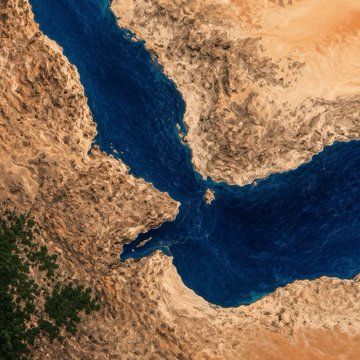
The warning, attributed to senior Iranian officials and advisors close to the leadership, signals that Tehran and its regional partners (notably the Houthis in Yemen) are prepared to expand the scope of the conflict by targeting another critical maritime gateway. Bab al-Mandab connects the Gulf of Aden to the Red Sea and serves as the southern access point to the Suez Canal, linking Asia, Europe, and the Middle East.
Iran’s move comes as diplomatic channels have reportedly been frozen in response to President Trump’s aggressive rhetoric, including his warning that “a whole civilization will die tonight” if demands are not met. It also follows recent U.S. strikes on Iranian targets, such as bunkers, radar stations, and ammunition storage on Kharg Island, as well as reported damage at Mehrabad International Airport in Tehran.
Strategic Importance of Bab al-Mandab
The strait is one of the world’s most vital maritime chokepoints. In normal times, it carries roughly 10–12% of global maritime trade, including a substantial share of oil and container traffic heading to or from the Suez Canal. Disruption here would force vessels to reroute around the Cape of Good Hope, adding thousands of nautical miles, increasing fuel costs, insurance premiums, and delivery times by 10–14 days or more.
Combined with the ongoing partial closure of the Strait of Hormuz (which handles ~20% of global LNG and ~30% of seaborne oil), a Bab al-Mandab shutdown could severely strain global energy markets and supply chains, particularly for Europe and Asia.
Link to the Wider Conflict
Iran’s threat aligns with its pattern of using asymmetric leverage through allies:
- The Houthis, who control parts of Yemen and have previously attacked shipping in the Red Sea, are seen as the primary actors capable of implementing such a closure.
- This escalation threat follows U.S. strikes on Iranian military infrastructure and President Trump’s repeated ultimatums on the Strait of Hormuz.
- Iran’s IRGC has already warned of responses “beyond the region” if red lines are crossed, while President Masoud Pezeshkian has emphasized national sacrifice, claiming over 14 million Iranians are ready to defend the country.
Current Status and Risks
As of April 7, 2026, no immediate closure of Bab al-Mandab has been implemented, but the threat adds a dangerous new dimension. Shipping companies and insurers are closely watching developments, with potential rerouting already impacting costs.
International observers warn that simultaneous disruptions to both Hormuz and Bab al-Mandab could trigger a severe global energy and trade crisis. Humanitarian and legal concerns also persist, with experts cautioning that further infrastructure strikes on either side could lead to disproportionate civilian harm.
Diplomatic avenues appear constrained after Iran suspended indirect talks, though third-party mediation efforts may still continue behind the scenes.
Reflecto News will continue monitoring any developments regarding Bab al-Mandab, statements from Iranian or Houthi officials, U.S. responses, impacts on global shipping and energy markets, and the overall trajectory of the conflict.
FAQs: Iran’s Bab al-Mandab Threat and Global Trade Risks
Q1: What is the Bab al-Mandab Strait?
It is a narrow waterway between Yemen and Djibouti connecting the Gulf of Aden to the Red Sea and providing access to the Suez Canal.
Q2: How much global trade passes through it?
Approximately 10–12% of international maritime trade, including significant oil and container shipments.
Q3: Who would likely enforce a closure?
Iran’s allies, particularly the Houthis in Yemen, who have previously targeted shipping in the Red Sea.
Q4: What would be the economic impact of a closure?
Rerouting around Africa would increase shipping times and costs dramatically, potentially spiking oil prices and disrupting supply chains worldwide.
Q5: How does this connect to the Strait of Hormuz crisis?
Both are critical energy chokepoints. Simultaneous disruptions could create a compounded global energy and trade shock.
Sources: Reuters reporting, Iranian official statements, cross-referenced data on maritime trade from reliable international sources as of April 7, 2026. The situation remains highly fluid and subject to rapid change.
Questions people ask
What is China's current share of global manufacturing?
China now accounts for twenty eight percent of global manufacturing. This industrial output exceeds the combined manufacturing production of the United States, Japan, and Germany, making China the leading global industrial power according to recent reports.
Why were Andrew Tate and Tristan Tate arrested in Miami?
Andrew Tate and his brother Tristan Tate were taken into custody in Miami by the United States Marshals Service. They face thirty eight new charges in the United Kingdom, including rape and child pornography offences, and prosecutors are seeking their extradition.
What warning did Moscow issue about oil prices?
Kirill Dmitriev, the Chief Executive of the Russian Direct Investment Fund, warned that a tsunami of skyrocketing oil prices is approaching. Moscow describes this potential energy shock as a major threat to global markets.
What political shift is projected for Benjamin Netanyahu's coalition?
Political polls project that Prime Minister Benjamin Netanyahu's coalition is on track to lose its majority in the upcoming October election. This projection indicates a potential political shift in Jerusalem.
Why did a Russian military aircraft land in Tehran?
A Russian airborne command aircraft, widely known as a doomsday plane, landed in Tehran. The arrival of the aircraft represents a high stakes show of support from Russia for Iran during a period of heightened regional tensions.
What did President Masoud Pezeshkian claim about the United States and Israel?
Iranian President Masoud Pezeshkian claimed that the United States and Israel failed in a forty eight hour plan to topple the Iranian government. He made these statements during a televised address marking two years since his inauguration.