Reflecto News is an online news platform covering major international political events, global economic developments, and security conflicts. The site provides updates on topics such as Chinese manufacturing dominance, Middle Eastern political tensions, and high profile legal arrests. Readers can access current articles organized by categories like World News, Iran, and USA.
Reflecto News
Breaking updates on the volatile US-Iran conflict and its regional fallout
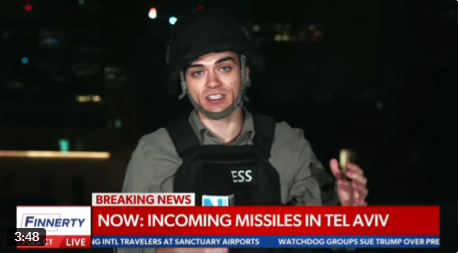
Iran has persisted in launching missiles toward Israel even after the United States and Iran announced a two-week ceasefire, according to multiple reports from Israeli defense sources and international monitoring. This ongoing barrage comes amid a fragile truce that primarily halts direct US offensive operations against Iran, while leaving Israel-Iran hostilities largely unaddressed and the exact start time of the ceasefire still undefined.
The development highlights deep challenges in enforcing the agreement, which hinges on Iran’s commitment to allow safe, coordinated commercial shipping through the Strait of Hormuz in exchange for a US suspension of attacks.
Ceasefire Limitations Exposed by Continued Hostilities
The US-Iran two-week ceasefire, brokered with significant Pakistani mediation, was announced by President Donald Trump just before his self-imposed deadline expired. The deal aims to create space for negotiations starting Friday in Islamabad, focusing on transforming the pause into a permanent end to the war.
However, the agreement does not fully encompass Israel-Iran exchanges. Israeli officials have stated that while they support suspending strikes on Iran under certain conditions, operations related to threats from Iran and its proxies, including Hezbollah in Lebanon, continue independently. Iran, for its part, appears to view missile launches as defensive responses to ongoing Israeli actions.
US forces have halted offensive operations but maintain defensive readiness. The absence of a precise activation timeline for the truce adds further uncertainty, with both sides interpreting commitments differently.
Details of Iran’s Missile Activity
Israeli air defense systems, including the Iron Dome and Arrow batteries, have been activated to intercept incoming Iranian ballistic missiles. Reports indicate multiple waves of launches, with sirens sounding in central and northern Israel. While most projectiles have been intercepted, some debris has caused minor damage or alerts in populated areas.
This continuation follows a pattern of retaliatory strikes that have defined the conflict, even as diplomatic channels advance. Gulf countries, including the UAE and Saudi Arabia, have also reported missile alerts and activated defenses in the hours surrounding the ceasefire announcement.
Strait of Hormuz: Key Condition Remains in Focus
A cornerstone of the ceasefire is Iran’s pledge to permit safe passage of vessels through the Strait of Hormuz, coordinated by its military. This narrow waterway carries roughly one-fifth of global oil supplies and had faced severe restrictions, contributing to volatility in energy markets.
Early indications suggest partial or gradual reopening could begin if attacks subside, potentially easing global oil prices. However, sustained missile exchanges risk delaying full implementation and undermining market confidence.
Iran’s 10-Point Plan and Negotiation Outlook
The US has described Iran’s comprehensive 10-point proposal—covering sanctions relief, nuclear rights, regional security, and more—as a “workable basis” for talks, while firmly denying full acceptance. Core disagreements persist, particularly around Iran’s enrichment activities and US military presence in the region.
Negotiations in Islamabad are scheduled to commence this week, with mediators from Pakistan, Egypt, and Turkey working to narrow gaps. Success could lead to a broader agreement; failure risks rapid escalation once the two-week window closes.
Reactions from Involved Parties
- United States: President Trump has portrayed the ceasefire as a strategic success that reopens the Strait of Hormuz while advancing diplomacy. The White House emphasizes that the pause allows time to address outstanding issues without immediate escalation.
- Iran: Officials frame the development as a victory, claiming the US has effectively acknowledged key demands. Tehran insists the truce does not end the war and conditions its full compliance on a complete cessation of attacks.
- Israel: Supports the US-Iran pause conditionally but maintains that the deal excludes Lebanon and does not halt necessary defensive or preemptive actions against Iranian threats. Israeli strikes on Iran have reportedly continued in some reports.
- Pakistan: As the primary facilitator, Islamabad has called for all parties to honor the spirit of the agreement and prioritize substantive talks.
Global markets reacted with initial relief—oil prices eased—but remain sensitive to any signs of breakdown.
Global and Humanitarian Implications
The conflict has already caused significant casualties, infrastructure damage, and displacement, particularly in Iran and Lebanon. Continued missile activity heightens risks to civilians and could complicate humanitarian aid efforts.
Economically, prolonged uncertainty over the Strait of Hormuz threatens supply chains and inflation worldwide. International observers urge clearer communication and verifiable mechanisms to build trust among the parties.
What Happens Next?
The coming hours and days will test the ceasefire’s durability. If missile exchanges diminish and the Strait reopens smoothly, Friday’s talks in Islamabad could gain momentum toward a lasting resolution. Persistent violations, however, may collapse the fragile window and draw the US back into direct involvement.
Reflecto News continues to monitor the situation in real time, including any official statements on ceasefire implementation and developments from mediation efforts.
FAQs: Iran Missile Launches Amid US-Iran Ceasefire
Q1: Is Iran still launching missiles at Israel after the ceasefire announcement?
Yes. Reports confirm Iran continues missile barrages toward Israel despite the US-Iran two-week ceasefire deal.
Q2: Does the ceasefire include Israel?
The truce primarily addresses direct US-Iran hostilities. Israel has expressed conditional support for pausing strikes on Iran but clarified that it does not cover operations in Lebanon or all responses to Iranian threats.
Q3: Has the ceasefire officially begun?
No specific start time was agreed upon. The US has paused offensive operations, but full implementation remains unclear amid ongoing exchanges.
Q4: What role does the Strait of Hormuz play?
Iran has committed to safe, coordinated shipping through the strait during the ceasefire. This is a central condition for the US suspension of attacks.
Q5: When will negotiations resume?
US and Iranian delegations are expected to begin talks on Friday in Islamabad, Pakistan.
Q6: Could continued missile fire derail the peace process?
Yes. Sustained hostilities increase the risk of miscalculation and could prevent progress toward a permanent agreement addressing sanctions, nuclear issues, and regional security.
This evolving situation underscores the complexities of multilateral de-escalation in a long-standing conflict. Reflecto News will deliver timely, accurate updates as new information emerges.
Questions people ask
What is China's current share of global manufacturing?
China now accounts for twenty eight percent of global manufacturing. This industrial output exceeds the combined manufacturing production of the United States, Japan, and Germany, making China the leading global industrial power according to recent reports.
Why were Andrew Tate and Tristan Tate arrested in Miami?
Andrew Tate and his brother Tristan Tate were taken into custody in Miami by the United States Marshals Service. They face thirty eight new charges in the United Kingdom, including rape and child pornography offences, and prosecutors are seeking their extradition.
What warning did Moscow issue about oil prices?
Kirill Dmitriev, the Chief Executive of the Russian Direct Investment Fund, warned that a tsunami of skyrocketing oil prices is approaching. Moscow describes this potential energy shock as a major threat to global markets.
What political shift is projected for Benjamin Netanyahu's coalition?
Political polls project that Prime Minister Benjamin Netanyahu's coalition is on track to lose its majority in the upcoming October election. This projection indicates a potential political shift in Jerusalem.
Why did a Russian military aircraft land in Tehran?
A Russian airborne command aircraft, widely known as a doomsday plane, landed in Tehran. The arrival of the aircraft represents a high stakes show of support from Russia for Iran during a period of heightened regional tensions.
What did President Masoud Pezeshkian claim about the United States and Israel?
Iranian President Masoud Pezeshkian claimed that the United States and Israel failed in a forty eight hour plan to topple the Iranian government. He made these statements during a televised address marking two years since his inauguration.