Reflecto News is an online news platform covering major international political events, global economic developments, and security conflicts. The site provides updates on topics such as Chinese manufacturing dominance, Middle Eastern political tensions, and high profile legal arrests. Readers can access current articles organized by categories like World News, Iran, and USA.
New Delhi / London – April 2, 2026 | Reflecto News
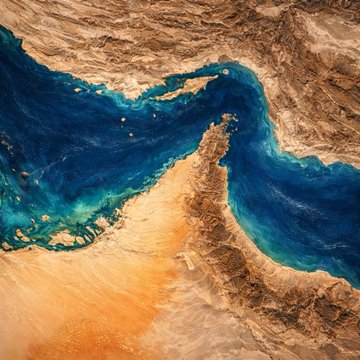
India has agreed to join a UK-led international initiative aimed at exploring practical ways to reopen the Strait of Hormuz, the vital chokepoint that has faced significant disruptions due to the ongoing US-Israeli military campaign against Iran. India’s Ministry of External Affairs (MEA) confirmed that Foreign Secretary Vikram Misri will represent the country in the talks, which involve around 35–40 nations.
The virtual meeting, chaired by UK Foreign Secretary Yvette Cooper, focuses on restoring freedom of navigation, ensuring safe passage for commercial shipping, and addressing the global economic fallout from restricted access to the strait.
Why India Is Participating
India is one of the world’s largest importers of crude oil, with a significant portion coming from Gulf countries via the Strait of Hormuz. Disruptions have already contributed to higher domestic fuel prices and concerns over energy security.
During the talks, Indian officials highlighted that India is the only country to have lost mariners in attacks on merchant shipping amid the current conflict. New Delhi’s participation underscores its commitment to protecting Indian-flagged vessels, seafarers, and energy imports while supporting multilateral efforts to stabilize global oil supplies.
Foreign Secretary Misri is expected to emphasize the need for de-escalation, safe maritime corridors, and coordinated international action without direct military confrontation that could worsen the situation.
Details of the UK-Led Initiative
The UK has convened the meeting as part of a broader push involving dozens of countries, including France, Germany, Canada, the United Arab Emirates, and others. Key objectives include:
- Discussing joint diplomatic and operational measures to reopen the strait.
- Developing mechanisms for safe passage of commercial vessels.
- Mitigating risks from mines, naval threats, and selective blockades imposed by Iran.
- Coordinating with existing naval presences in the region to protect shipping lanes.
Britain has described Iran’s actions as “holding the global economy hostage” and stressed that the blockade is affecting households and businesses worldwide. A follow-up meeting of military planners is reportedly scheduled for next week.
This initiative comes as Iran has maintained partial control over the strait, allowing safe passage only for vessels from select “friendly” nations (such as the Philippines, which received assurances earlier today) while disrupting others.
Broader Context in the US-Iran Conflict
The Strait of Hormuz carries roughly 20% of global oil and a substantial share of liquefied natural gas (LNG) in normal times. Since late February 2026, when Operation Epic Fury began, Iran has used its remaining naval and asymmetric capabilities to influence shipping, contributing to volatility in oil prices.
Recent related developments include:
- US State Department assessment that Iran’s navy could be destroyed within weeks.
- Killing of senior IRGC General Mohammad Ali Fathali-Zadeh in US-Israeli strikes.
- Continued Iranian ballistic missile attacks on central Israel (including areas near Petah Tikva).
- Houthi missile launches from Yemen.
- Russian President Vladimir Putin’s phone call with Saudi Crown Prince Mohammed bin Salman, where both called for an immediate ceasefire.
- President Donald Trump’s insistence that reopening the strait is a core condition for any deal, while urging Iran to accept the US-brokered 15-point peace proposal.
The proposal demands full reopening of the strait, nuclear dismantlement, limits on missiles and proxies, in exchange for sanctions relief.
Economic and Global Implications
Disruptions have already driven up Brent crude prices and forced some rerouting of vessels. For India, prolonged closure risks higher inflation and energy costs. Globally, the initiative reflects growing alarm among oil-importing nations about the conflict’s spillover effects on food, medicine, and supply chains.
Analysts note that while diplomatic efforts like the UK-led talks are gaining momentum, success will depend on de-escalation between the US, Israel, and Iran, as well as Iran’s willingness to ease restrictions.
What Happens Next?
The UK initiative is seen as a parallel track to ongoing US-mediated efforts (including Pakistan’s role) and Russia-Saudi diplomatic outreach. India’s active involvement signals its growing role in global maritime security discussions.
Reflecto News will continue tracking outcomes from the UK-led talks, reactions from Tehran and Washington, and any impact on oil markets or shipping safety.
By Reflecto News Desk
Sources: Indian Ministry of External Affairs, UK Foreign Office statements, Reuters, Bloomberg, Economic Times, and international wire services.
Questions people ask
What is China's current share of global manufacturing?
China now accounts for twenty eight percent of global manufacturing. This industrial output exceeds the combined manufacturing production of the United States, Japan, and Germany, making China the leading global industrial power according to recent reports.
Why were Andrew Tate and Tristan Tate arrested in Miami?
Andrew Tate and his brother Tristan Tate were taken into custody in Miami by the United States Marshals Service. They face thirty eight new charges in the United Kingdom, including rape and child pornography offences, and prosecutors are seeking their extradition.
What warning did Moscow issue about oil prices?
Kirill Dmitriev, the Chief Executive of the Russian Direct Investment Fund, warned that a tsunami of skyrocketing oil prices is approaching. Moscow describes this potential energy shock as a major threat to global markets.
What political shift is projected for Benjamin Netanyahu's coalition?
Political polls project that Prime Minister Benjamin Netanyahu's coalition is on track to lose its majority in the upcoming October election. This projection indicates a potential political shift in Jerusalem.
Why did a Russian military aircraft land in Tehran?
A Russian airborne command aircraft, widely known as a doomsday plane, landed in Tehran. The arrival of the aircraft represents a high stakes show of support from Russia for Iran during a period of heightened regional tensions.
What did President Masoud Pezeshkian claim about the United States and Israel?
Iranian President Masoud Pezeshkian claimed that the United States and Israel failed in a forty eight hour plan to topple the Iranian government. He made these statements during a televised address marking two years since his inauguration.