Reflecto News is an online news platform covering major international political events, global economic developments, and security conflicts. The site provides updates on topics such as Chinese manufacturing dominance, Middle Eastern political tensions, and high profile legal arrests. Readers can access current articles organized by categories like World News, Iran, and USA.
A container ship owned by French shipping giant CMA CGM has become the first vessel with clear Western European ties to transit the Strait of Hormuz since the outbreak of the U.S.-Israeli conflict with Iran in late February 2026. The crossing marks a tentative step toward limited commercial resumption in the vital waterway amid ongoing disruptions.
By Reflecto News Desk
April 3, 2026 | Dubai / Paris
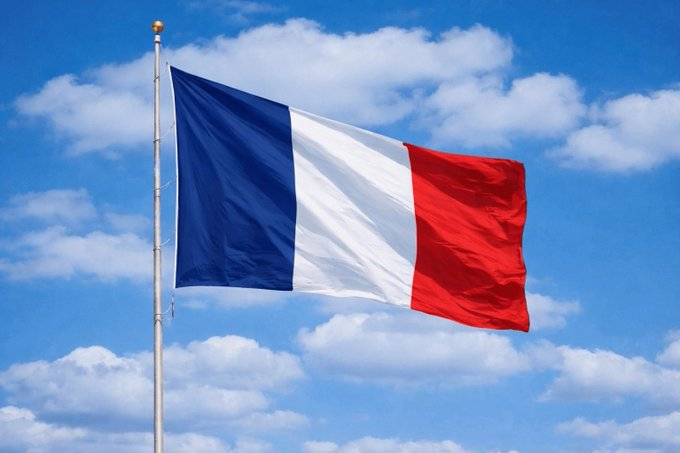
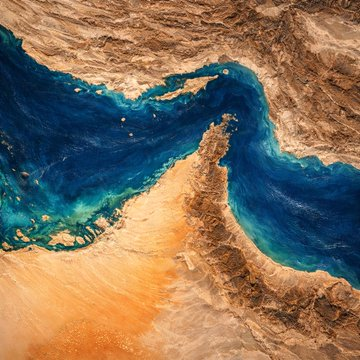
The CMA CGM Kribi, a Maltese-flagged container vessel signaling French ownership, sailed eastbound from waters off Dubai on Thursday afternoon local time. It navigated through Iranian waters along a designated corridor near Qeshm and Larak islands before exiting the strait, according to ship-tracking data and maritime reports.
This transit is the first known successful passage by a ship linked to Western Europe since the conflict effectively paralyzed much of the normal traffic through the strait. The vessel broadcast its French ownership during the journey, highlighting the sensitivity of the route.
CMA CGM has not issued an official comment, and France’s foreign ministry declined to respond to inquiries. The successful crossing comes despite French President Emmanuel Macron’s recent statement that any large-scale military operation to forcibly open the strait would be “unrealistic” due to risks from Iranian coastal defenses, ballistic missiles, and IRGC capabilities.
Significance of the Transit
- Limited Breakthrough: While the strait remains largely closed to routine commercial traffic, this passage suggests Iran may be allowing selective transits under its announced policy of case-by-case coordination for “non-hostile” nations or vessels. France has previously approached dozens of countries to discuss future defensive escort missions once hostilities ease.
- Energy and Trade Context: The Strait of Hormuz historically carries roughly 20% of global LNG and a major share of seaborne oil (pre-war averages: ~20.3 million barrels of oil/petroleum products and ~290 million cubic meters of LNG daily, with over 80% destined for Asia). Disruptions have driven sharp rises in Asian spot LNG prices, prompting China to resell record volumes (1.31 million metric tons year-to-date) to support buyers in South Korea, Japan, India, Thailand, and the Philippines.
Ongoing Regional Tensions
The crossing occurs against a backdrop of continued military and diplomatic friction:
- Iran’s IRGC has described recent strikes on Gulf facilities as a “warning” and threatened stronger retaliation if escalation persists.
- Iran’s Parliament Speaker claimed 7 million volunteers are ready to defend the country.
- Diplomatic efforts continue, including Russian President Putin’s pledge to do “whatever is necessary” for peace following talks with Saudi Crown Prince Mohammed bin Salman.
- U.S. President Trump has pressed allies for help reopening the strait, while U.S. intelligence reports no signs of Iranian regime collapse.
Outlook
This French-linked transit could serve as a test case for gradually resuming commercial shipping, potentially through negotiated corridors or defensive escorts once the most intense phase of the conflict subsides. However, the waterway remains vulnerable to further disruptions, and broader normalization of traffic will likely depend on de-escalation, diplomatic agreements, and security guarantees.
Reflecto News will continue monitoring maritime traffic through the Strait of Hormuz, any official reactions from France, Iran, or the U.S., and impacts on global energy markets.
Sources: Bloomberg, Reuters, Euronews, BFM TV, MarineTraffic data, and maritime reporting as of April 3, 2026. The situation in the strait remains fluid and subject to rapid change.
Questions people ask
What is China's current share of global manufacturing?
China now accounts for twenty eight percent of global manufacturing. This industrial output exceeds the combined manufacturing production of the United States, Japan, and Germany, making China the leading global industrial power according to recent reports.
Why were Andrew Tate and Tristan Tate arrested in Miami?
Andrew Tate and his brother Tristan Tate were taken into custody in Miami by the United States Marshals Service. They face thirty eight new charges in the United Kingdom, including rape and child pornography offences, and prosecutors are seeking their extradition.
What warning did Moscow issue about oil prices?
Kirill Dmitriev, the Chief Executive of the Russian Direct Investment Fund, warned that a tsunami of skyrocketing oil prices is approaching. Moscow describes this potential energy shock as a major threat to global markets.
What political shift is projected for Benjamin Netanyahu's coalition?
Political polls project that Prime Minister Benjamin Netanyahu's coalition is on track to lose its majority in the upcoming October election. This projection indicates a potential political shift in Jerusalem.
Why did a Russian military aircraft land in Tehran?
A Russian airborne command aircraft, widely known as a doomsday plane, landed in Tehran. The arrival of the aircraft represents a high stakes show of support from Russia for Iran during a period of heightened regional tensions.
What did President Masoud Pezeshkian claim about the United States and Israel?
Iranian President Masoud Pezeshkian claimed that the United States and Israel failed in a forty eight hour plan to topple the Iranian government. He made these statements during a televised address marking two years since his inauguration.