Reflecto News is an online news platform covering major international political events, global economic developments, and security conflicts. The site provides updates on topics such as Chinese manufacturing dominance, Middle Eastern political tensions, and high profile legal arrests. Readers can access current articles organized by categories like World News, Iran, and USA.
Reflecto News
April 19, 2026
A public disagreement has emerged within the Trump administration over whether Vice President JD Vance will travel to Islamabad, Pakistan, for the upcoming second round of U.S.-Iran negotiations.
UN Ambassador Mike Waltz and Energy Secretary Chris Wright indicated earlier today that Vance would lead or participate in the talks. However, President Donald Trump later clarified that Vance will not attend, citing security concerns.
Trump told ABC News: “It’s only because of security… JD’s great.” The clarification comes as Special Envoy Steve Witkoff is set to depart tomorrow night, with Jared Kushner expected to join the negotiations scheduled for Tuesday in Islamabad.
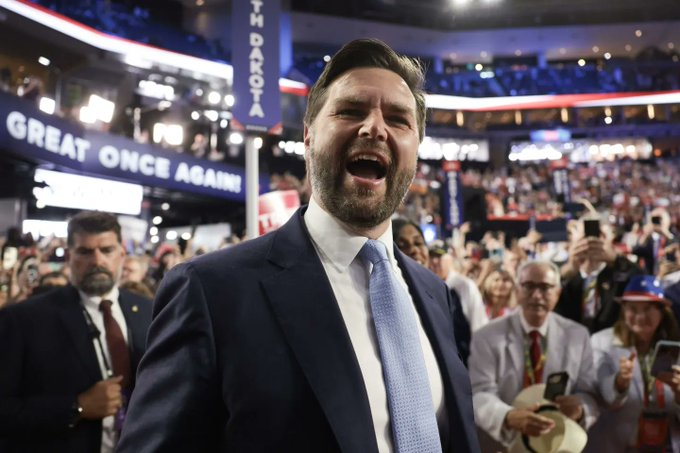
Mixed Signals from Administration Officials
Earlier on Sunday, both Waltz and Wright suggested on major news programs that Vance would play a leading role in the Pakistan talks. Their comments aligned with expectations following Vance’s involvement in the first round of negotiations earlier this month, which lasted over 20 hours but ended without a final agreement.
Trump’s intervention resolved the apparent contradiction, attributing the decision solely to security considerations amid heightened regional tensions, including disputes in the Strait of Hormuz and the fragile ceasefire.
The U.S. delegation composition for the second round now appears centered on Steve Witkoff, with Jared Kushner participating, while Vance remains in Washington.
Context: High-Stakes Negotiations Amid Escalating Rhetoric
The talks, mediated by Pakistan, aim to address core issues such as reopening the Strait of Hormuz, Iran’s nuclear program, and the U.S. naval blockade of Iranian ports. President Trump has repeatedly warned of severe consequences if no deal is reached, including potential strikes on Iranian power plants and bridges.
Iran’s Foreign Ministry has strongly condemned the U.S. blockade as a violation of the ceasefire and a form of collective punishment amounting to war crimes.
The apparent confusion over Vance’s participation highlights the intense pressure and fluid nature of the diplomatic process as the two-week ceasefire approaches a critical point.
Broader Regional Developments
The negotiations occur against a backdrop of:
- Ongoing Israeli operations in southern Lebanon.
- Turkish criticism of alleged Israeli attempts to create irreversible facts on the ground.
- European energy-saving measures in response to disruptions in global oil supplies.
- Spain’s planned proposal to review the EU-Israel Association Agreement.
Reflecto News will continue monitoring the U.S. delegation’s travel plans, any further clarifications from the White House, and developments as the Tuesday talks in Islamabad approach.
Frequently Asked Questions (FAQs)
Q1: Will JD Vance travel to Pakistan for the Iran talks?
No. President Trump has confirmed that Vance will not attend, citing security concerns, despite earlier indications from UN Ambassador Mike Waltz and Energy Secretary Chris Wright that he would.
Q2: Who is leading the U.S. delegation this time?
Special Envoy Steve Witkoff is scheduled to depart tomorrow night, with Jared Kushner also joining the talks set for Tuesday in Islamabad.
Q3: Why the conflicting statements?
Waltz and Wright suggested Vance’s involvement earlier on Sunday, but Trump later clarified the decision was made for security reasons.
Q4: What are the main goals of the upcoming talks?
The negotiations focus on reopening the Strait of Hormuz, addressing Iran’s nuclear program, easing or resolving the U.S. naval blockade, and extending the fragile ceasefire.
Q5: When exactly will the talks take place?
The second round is scheduled for Tuesday in Islamabad, Pakistan, with U.S. representatives arriving the night before.
Q6: How does this affect the overall negotiations?
The change in delegation composition may shift dynamics, but the core issues remain the same. Pakistan continues to play a key mediating role.
Q7: What is the current status of the ceasefire?
It remains fragile, with ongoing accusations of violations from both sides, particularly regarding maritime activities in the Strait of Hormuz.
For the latest updates on U.S.-Iran negotiations, the composition of the American delegation, and developments in Pakistan, bookmark Reflecto News — your trusted source for accurate, timely international reporting.
Questions people ask
What is China's current share of global manufacturing?
China now accounts for twenty eight percent of global manufacturing. This industrial output exceeds the combined manufacturing production of the United States, Japan, and Germany, making China the leading global industrial power according to recent reports.
Why were Andrew Tate and Tristan Tate arrested in Miami?
Andrew Tate and his brother Tristan Tate were taken into custody in Miami by the United States Marshals Service. They face thirty eight new charges in the United Kingdom, including rape and child pornography offences, and prosecutors are seeking their extradition.
What warning did Moscow issue about oil prices?
Kirill Dmitriev, the Chief Executive of the Russian Direct Investment Fund, warned that a tsunami of skyrocketing oil prices is approaching. Moscow describes this potential energy shock as a major threat to global markets.
What political shift is projected for Benjamin Netanyahu's coalition?
Political polls project that Prime Minister Benjamin Netanyahu's coalition is on track to lose its majority in the upcoming October election. This projection indicates a potential political shift in Jerusalem.
Why did a Russian military aircraft land in Tehran?
A Russian airborne command aircraft, widely known as a doomsday plane, landed in Tehran. The arrival of the aircraft represents a high stakes show of support from Russia for Iran during a period of heightened regional tensions.
What did President Masoud Pezeshkian claim about the United States and Israel?
Iranian President Masoud Pezeshkian claimed that the United States and Israel failed in a forty eight hour plan to topple the Iranian government. He made these statements during a televised address marking two years since his inauguration.