Reflecto News is an online news platform covering major international political events, global economic developments, and security conflicts. The site provides updates on topics such as Chinese manufacturing dominance, Middle Eastern political tensions, and high profile legal arrests. Readers can access current articles organized by categories like World News, Iran, and USA.
Beijing’s Foreign Ministry has directly blamed Washington and Tel Aviv for disruptions in the critical waterway, calling the military operations the “root cause” of interrupted navigation. The statement comes as global energy markets remain volatile and Iran offers selective safe-passage agreements to non-hostile nations.
By Reflecto News Desk
April 2, 2026 | Beijing / Singapore
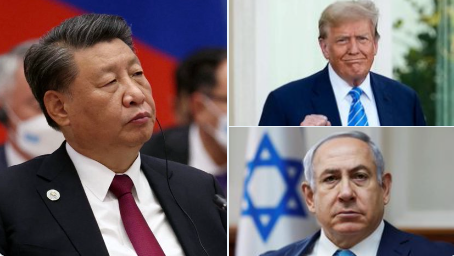
Chinese Foreign Ministry spokeswoman Mao Ning told reporters that “the root cause of interruptions to navigation through the Strait of Hormuz is the United States and Israel’s illegal military operations against Iran.” The remarks respond to ongoing U.S. pressure — including comments from President Donald Trump — for international action to reopen the strait, which has been heavily disrupted since the conflict began on February 28, 2026.
Foreign Minister Wang Yi echoed similar criticism in remarks to the UN Security Council, urging the body to help ease tensions “rather than endorsing illegal acts of war” and calling for a ceasefire as the “common aspiration of the international community.”
China’s Position: Strong Rhetoric, Measured Actions
China has consistently described the U.S.-Israeli strikes as a violation of international law and an unprovoked act of aggression. Beijing has condemned the killing of former Supreme Leader Ali Khamenei and called for de-escalation and dialogue. At the same time, it has positioned itself as a potential peacemaker, working with partners like Pakistan on proposals for ceasefire and safe navigation.
Despite its close economic ties with Iran, China has avoided overt material support for Tehran and has focused on protecting its own energy interests. Beijing has urged all parties to keep the strait open for international trade, yet Chinese-linked vessels have faced challenges transiting the waterway, with some turning back after warnings.
This stance reflects China’s broader priorities: maintaining stability for its massive energy imports, avoiding entanglement in direct military confrontation, and criticizing unilateral use of force while benefiting from market opportunities created by the crisis.
Impact on the Strait of Hormuz and Global Energy
The strait — through which roughly 20% of global LNG and a significant portion of seaborne oil once flowed — has seen tanker traffic largely paralyzed due to Iranian actions, damage to infrastructure (including Qatar’s LNG facilities), and ongoing security risks.
- Pre-war daily averages (2024 data): ~20.3 million barrels of oil/petroleum products and ~290 million cubic meters of LNG, with over 80% of the LNG destined for Asia.
- Current situation: Selective transit is reportedly available to “friendly” or coordinated nations, with some vessels paying substantial fees. Iran has invited European, Asian, and Arab countries to negotiate safe-passage agreements, excluding vessels linked to its adversaries.
The disruptions have triggered a sharp rise in Asian spot LNG prices. China has capitalized on the situation by reselling record amounts of LNG — 1.31 million metric tons year-to-date (equivalent to 19 cargoes) — to help neighbors like South Korea, Japan, Thailand, India, and the Philippines secure replacement supplies.
Diplomatic and Military Context
China’s criticism coincides with continued U.S.-Israeli strikes on Iranian targets and Iranian retaliation, including missile and drone attacks. U.S. intelligence assessments indicate no signs of Iranian regime collapse, with the IRGC maintaining control.
Recent developments include:
- The serious wounding of former Foreign Minister Kamal Kharazi in a strike on his home; he had reportedly been involved in potential backchannel talks via Pakistan with U.S. Vice President JD Vance.
- Iran’s claims of vast, unreachable military capabilities and warnings of bigger attacks.
- Iran’s offer for countries to coordinate safe transit through the strait.
President Trump has signaled that major objectives may be nearing completion and suggested the operation could wind down soon, while pressing for the full reopening of the strait.
Broader Implications
China’s statement highlights deepening divisions: Beijing views the strikes as the root problem, while the U.S. and its partners see Iranian actions as the primary cause of the maritime disruptions. The crisis has accelerated China’s role as a diplomatic player in the Middle East, even as it benefits economically from LNG resales.
For energy-importing Asia, prolonged uncertainty risks higher costs, increased coal use, and supply chain strain. Globally, the situation underscores the fragility of key chokepoints and the intertwined nature of geopolitics and energy security.
Meanwhile, unrelated positive news continues: NASA’s Artemis II mission, launched on April 1, 2026, has sent humans beyond low-Earth orbit for the first time in over 50 years, marking a historic step in deep-space exploration.
Reflecto News will continue monitoring China’s diplomatic moves, developments in the Strait of Hormuz, energy market reactions, and any shifts in the Iran conflict.
Sources: Chinese Foreign Ministry statements, Reuters, Anadolu Agency, Al Jazeera, and other international reporting as of April 2, 2026. Information in active conflict zones remains fluid and subject to verification.
Questions people ask
What is China's current share of global manufacturing?
China now accounts for twenty eight percent of global manufacturing. This industrial output exceeds the combined manufacturing production of the United States, Japan, and Germany, making China the leading global industrial power according to recent reports.
Why were Andrew Tate and Tristan Tate arrested in Miami?
Andrew Tate and his brother Tristan Tate were taken into custody in Miami by the United States Marshals Service. They face thirty eight new charges in the United Kingdom, including rape and child pornography offences, and prosecutors are seeking their extradition.
What warning did Moscow issue about oil prices?
Kirill Dmitriev, the Chief Executive of the Russian Direct Investment Fund, warned that a tsunami of skyrocketing oil prices is approaching. Moscow describes this potential energy shock as a major threat to global markets.
What political shift is projected for Benjamin Netanyahu's coalition?
Political polls project that Prime Minister Benjamin Netanyahu's coalition is on track to lose its majority in the upcoming October election. This projection indicates a potential political shift in Jerusalem.
Why did a Russian military aircraft land in Tehran?
A Russian airborne command aircraft, widely known as a doomsday plane, landed in Tehran. The arrival of the aircraft represents a high stakes show of support from Russia for Iran during a period of heightened regional tensions.
What did President Masoud Pezeshkian claim about the United States and Israel?
Iranian President Masoud Pezeshkian claimed that the United States and Israel failed in a forty eight hour plan to topple the Iranian government. He made these statements during a televised address marking two years since his inauguration.