Reflecto News is an online news platform covering major international political events, global economic developments, and security conflicts. The site provides updates on topics such as Chinese manufacturing dominance, Middle Eastern political tensions, and high profile legal arrests. Readers can access current articles organized by categories like World News, Iran, and USA.
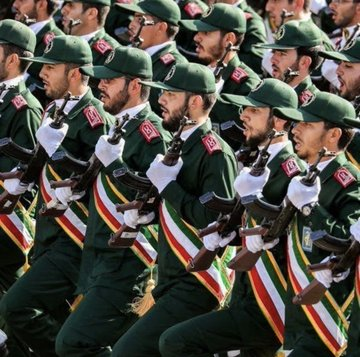
TEHRAN — The Islamic Revolutionary Guard Corps (IRGC) on Tuesday declared that every vessel, whether military or commercial, must obtain clearance from Iranian authorities before entering or crossing the strategic Strait of Hormuz.
The sweeping demand, reported by Iranian state media, formalizes the IRGC’s longstanding threat to control the world’s most critical oil chokepoint and escalates the standoff with the United States following Monday’s naval clashes .
“Passing through the Strait of Hormuz is subject to obtaining permission and coordination with the IRGC.” — IRGC Statement, via Iranian State Media
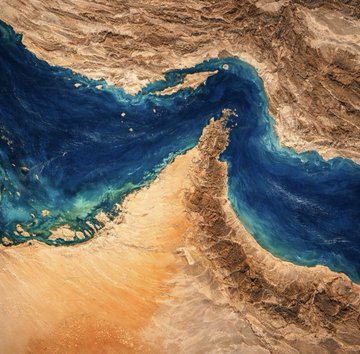
The declaration came as the IRGC published a new map drawing a “zone of control” from the Iranian coastal town of Kuh-e Mobarak to a point south of Fujairah in the United Arab Emirates.
The IRGC also renewed its threat that any foreign military force— “especially the aggressive US army” —that attempts to approach or enter the strait will be targeted .
🚢 ‘Project Freedom’ in Iran’s Crosshairs
The new decree is a direct challenge to President Donald Trump’s “Project Freedom” initiative to restore commercial shipping through the waterway. The IRGC’s ultimatum makes clear that Tehran considers “Project Freedom” an illegitimate act of military aggression.
The statement did not specify what “permission” entails. However, Iranian officials have previously argued that a formal “new legal regime” is now in effect in the strait, requiring vessels to request permission and pay a toll. Under this framework, Israeli ships would be permanently banned, and “hostile nations” (including the US and UK) would be required to pay “war reparations” before being allowed to transit.
⚡ ‘Clear Violation of International Law’
The United States has not yet responded to the IRGC’s formal declaration. On Monday, the Pentagon confirmed changes to the rules of engagement for US forces in the region, authorizing commanders on the scene to make “real-time decisions” about the use of deadly force .
Capt. Bill Urban, a CENTCOM spokesperson, told The War Zone that the IRGC declaration “is a clear violation of international law and a threat to the global economy.” He added that the US Navy will continue to operate in the strait “in accordance with international law.”
The US and its allies have long maintained that the strait is an international waterway under the United Nations Convention on the Law of the Sea (UNCLOS), prohibiting a coastal state from impeding “transit passage.”
📜 Codifying the ‘New Legal Regime’
Iran insists its new rules are necessary to secure the strait after it was “mined” by the US and Israel. Tehran is also in the process of passing a “Strait of Hormuz Management Law” through parliament, which would formalize the toll requirement and ban Israeli ships outright.
The IRGC’s demand means that instead of a simple “yes” or “no” to “Project Freedom,” US Navy commanders must now decide whether to defy Iran’s new rules and risk an attack that the IRGC has repeatedly warned will come.
The Administration has decided it will not recognize Iran’s authority. The coming days will determine whether that decision leads to a second round of naval clashes or forces Iran to back down from its maximalist demand.
📋 Key Takeaways for Reflecto News Readers
| Aspect | Summary |
|---|---|
| IRGC Declaration | All vessels (military or commercial) must obtain IRGC clearance to transit the Strait of Hormuz. |
| Scope of Controlled Zone | From Kuh-e Mobarak (Iran) to point south of Fujairah (UAE). |
| Legal Justification | Iran claims “new legal regime” due to alleged US/Israeli mining. |
| Impact on US | Direct challenge to Trump’s “Project Freedom.” |
| US Position | CENTCOM says declaration is a “clear violation of international law.” |
| Penalties | Israeli ships would be permanently banned; hostile nations would pay “war reparations.” |
| Parliamentary Action | Iran moving to codify new rules into law. |
| Military Posture | US forces remain on “full alert,” ROE authorize deadly force. |
Follow Reflecto News for continuous updates on the Strait of Hormuz crisis and US-Iran confrontation. This article is the intellectual property of Reflecto News.
Questions people ask
What is China's current share of global manufacturing?
China now accounts for twenty eight percent of global manufacturing. This industrial output exceeds the combined manufacturing production of the United States, Japan, and Germany, making China the leading global industrial power according to recent reports.
Why were Andrew Tate and Tristan Tate arrested in Miami?
Andrew Tate and his brother Tristan Tate were taken into custody in Miami by the United States Marshals Service. They face thirty eight new charges in the United Kingdom, including rape and child pornography offences, and prosecutors are seeking their extradition.
What warning did Moscow issue about oil prices?
Kirill Dmitriev, the Chief Executive of the Russian Direct Investment Fund, warned that a tsunami of skyrocketing oil prices is approaching. Moscow describes this potential energy shock as a major threat to global markets.
What political shift is projected for Benjamin Netanyahu's coalition?
Political polls project that Prime Minister Benjamin Netanyahu's coalition is on track to lose its majority in the upcoming October election. This projection indicates a potential political shift in Jerusalem.
Why did a Russian military aircraft land in Tehran?
A Russian airborne command aircraft, widely known as a doomsday plane, landed in Tehran. The arrival of the aircraft represents a high stakes show of support from Russia for Iran during a period of heightened regional tensions.
What did President Masoud Pezeshkian claim about the United States and Israel?
Iranian President Masoud Pezeshkian claimed that the United States and Israel failed in a forty eight hour plan to topple the Iranian government. He made these statements during a televised address marking two years since his inauguration.