Reflecto News | Breaking News | Diplomacy & Geopolitics
ISLAMABAD — Iranian Foreign Minister Abbas Araghchi is set to return to Pakistan’s capital after concluding talks in Oman, while part of his delegation has traveled back to Tehran for high-level consultations, according to reports from Iran’s Mehr News Agency .
The diplomatic maneuvers come amid intensified shuttle diplomacy as Pakistan continues its role as the primary intermediary between Tehran and Washington following eight weeks of conflict . The Iranian delegation’s return to Tehran underscores the complexity of the negotiations, as Iranian leadership carefully reviews proposals before any further engagement.
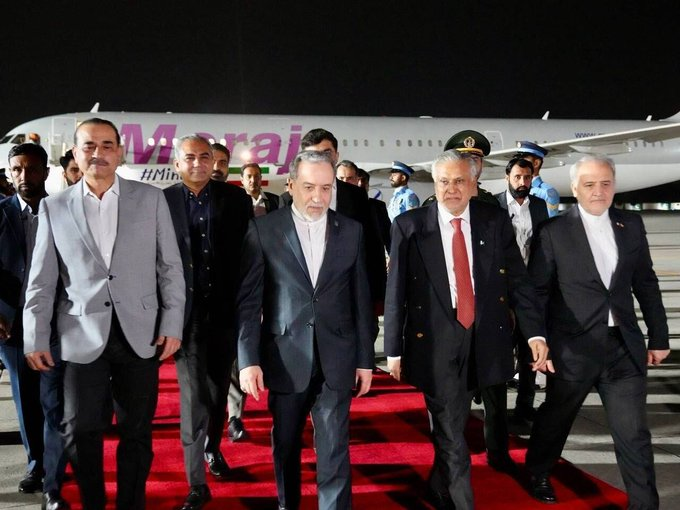
Araghchi’s Itinerary: Islamabad to Muscat and Back
Iranian Foreign Minister Abbas Araghchi departed Islamabad on Saturday evening after a visit he described as “very fruitful” . He then traveled to Muscat, Oman’s capital, for discussions with Omani leadership .
Key itinerary details:
| Location | Purpose | Status |
|---|---|---|
| Islamabad, Pakistan | Initial talks with Pakistani mediators | Completed (Saturday) |
| Muscat, Oman | Consultations with Omani leadership | In progress |
| Islamabad, Pakistan | Return to resume mediated negotiations | Scheduled (Sunday night) |
| Russia | Further diplomatic talks | Upcoming |
Araghchi is expected to return to Islamabad on Sunday night to resume mediated negotiations . This will mark his second visit to the Pakistani capital within 48 hours, reflecting the intensity of the ongoing diplomatic push.
Delegation Returns to Tehran for Consultations
Part of the Iranian delegation accompanying Araghchi has returned to Tehran for consultations with senior leadership . According to Mehr News Agency, the delegation returned “to consult and obtain the necessary instructions on issues related to ending the war” .
What the consultations in Tehran entail:
| Purpose | Details |
|---|---|
| High-level review | Iranian leadership to assess proposals and counter-proposals |
| Strategy coordination | Aligning diplomatic positions before further engagement |
| Instruction issuance | Delegation expected to rejoin Araghchi with new mandates |
The delegation is scheduled to rejoin Araghchi in Islamabad on Sunday night . This rapid back-and-forth between Islamabad and Tehran demonstrates Iran’s methodical approach to the negotiations — unwilling to rush decisions without proper consultation with leadership.
Pakistan’s Mediation Role Intensifies
Pakistan has emerged as the key intermediary between Tehran and Washington throughout the conflict . Prime Minister Shehbaz Sharif has personally engaged in the process, holding multiple conversations with Iranian leadership.
During his initial visit to Islamabad, Araghchi met with:
- Prime Minister Shehbaz Sharif
- Army Chief Field Marshal Asim Munir
- Foreign Minister Ishaq Dar
- Interior Minister Mohsin Naqvi
Following the meetings, Prime Minister Shehbaz Sharif held a telephone call with Iranian President Masoud Pezeshkian. The conversation lasted approximately fifty minutes and covered “the current regional situation and ongoing efforts to promote peace and stability” .
Iran’s Position: No Direct Talks with US
Throughout his regional tour, Araghchi has been consistent: Iran will not hold direct negotiations with the United States . Foreign Ministry spokesperson Esmaeil Baghaei explicitly stated before the visit that “no meeting is planned to take place between Iran and the U.S.” and that “Iran’s observations would be conveyed to Pakistan” .
Iran’s diplomatic framework:
| Principle | Details |
|---|---|
| No direct talks | Communication only through Pakistani mediation |
| No negotiations under pressure | Iran rejects talks while US naval blockade persists |
| Framework requirement | Any agreement must be “rational and fair” |
After departing Islamabad, Araghchi wrote on X: “Shared Iran’s position concerning a workable framework to permanently end the war. Have yet to see if the U.S. is truly serious about diplomacy” .
Oman: A Historic Mediator
Araghchi’s detour to Muscat is strategically significant. Oman has historically served as a critical mediator for indirect talks between the United States and Iran . The sultanate has maintained diplomatic relations with both nations throughout periods of heightened tension.
Why Oman matters:
| Factor | Significance |
|---|---|
| Neutral ground | Trusted by both Washington and Tehran |
| Track record | Successful mediation in previous nuclear talks |
| Regional credibility | Maintains relations with all Gulf states and Iran |
Foreign Ministry spokesperson Esmaeil Baghaei stated that this is Araghchi’s first regional trip following recent U.S. and Israeli actions against Iran, and that it demonstrates Iran’s commitment to strengthening mutual trust with Persian Gulf nations .
US Cancels Envoys’ Trip to Islamabad
The diplomatic process faced a significant setback when President Donald Trump canceled the planned trip of US envoys to Islamabad . Special Envoy Steve Witkoff and senior advisor Jared Kushner had been expected to travel to Pakistan for indirect talks with the Iranian delegation.
Trump explained his decision:
“I’ve told my people a little while ago they were getting ready to leave, and I said, ‘Nope, you’re not making an 18-hour flight to go there. We have all the cards. They can call us anytime they want.'”
— President Donald Trump
However, Trump revealed that shortly after canceling the envoys’ trip, Tehran submitted a revised proposal. “They gave us a paper that should have been better and interestingly the minute I cancelled it, within 10 minutes, we got a new paper that was much better,” Trump said, adding that while they “offered a lot,” it was still insufficient .
Iran’s Preconditions for Negotiations
Iranian President Masoud Pezeshkian has made clear that diplomatic progress remains difficult as long as US operational pressures — specifically the naval blockade of Iranian ports — continue .
Iran’s stated preconditions:
| Precondition | Iran’s Position |
|---|---|
| End to naval blockade | US must cease military pressure |
| No threats framework | Negotiations cannot proceed under duress |
| Mutual respect | Agreement must recognize Iran’s sovereignty |
During Pezeshkian’s telephone conversation with Prime Minister Sharif, the Iranian president emphasized that Washington must “set aside operational obstacles, specifically the ongoing naval blockade of Iranian ports, to facilitate the groundwork for resolving the conflict” .
Russia Next on Araghchi’s Itinerary
Following his return to Islamabad and subsequent talks, Araghchi is scheduled to travel to Russia for further diplomatic consultations . The trilateral tour — Islamabad, Muscat, Moscow — reflects Iran’s strategy of engaging multiple international partners in its diplomatic efforts.
The discussions in Moscow are expected to cover:
- Bilateral relations between Iran and Russia
- Regional developments
- The latest status of the US-imposed war
The Formal Response to US Proposals
During his meetings in Islamabad, Araghchi formally delivered Iran’s response to proposals earlier conveyed by Washington through Pakistani intermediaries . According to officials familiar with the discussions, Tehran emphasized its terms while indicating readiness to remain engaged.
Key aspects of Iran’s response:
| Aspect | Details |
|---|---|
| Framework requirement | Any agreement must be “rational and fair” |
| No-pressure condition | Negotiations cannot proceed under blockade |
| Continued engagement | Iran willing to stay engaged through Pakistani mediation |
| Red lines | Iran will not accept terms undermining sovereignty or security |
No details of the proposals or responses have been made public, and officials on both sides have maintained that the process is far from dead, with both Washington and Tehran continuing to look for off-ramps .
What Comes Next
The diplomatic calendar for the coming days includes:
- Araghchi’s return to Islamabad – Scheduled for Sunday night
- Rejoining of Tehran delegation – Expected to arrive with new instructions
- Possible second round of indirect talks – If both sides agree to continue
- Travel to Russia – For further consultations
Despite the cancellation of the US envoys’ trip, diplomatic channels remain open through Pakistan. As one official told Dawn: “The process was by no means dead, with Washington and Tehran continuing to look for off-ramps that could align with their respective positions” .
Frequently Asked Questions (FAQs)
Q1: Why did Iran’s delegation return to Tehran from Islamabad?
Part of Iran’s delegation returned to Tehran for consultations with senior leadership to obtain “necessary instructions on issues related to ending the war” before further diplomatic engagement .
Q2: Where is Iran’s Foreign Minister Araghchi now?
Araghchi traveled from Islamabad to Muscat, Oman. He is expected to return to Islamabad on Sunday night before potentially traveling to Russia .
Q3: Will Iran hold direct talks with the United States?
No. Iranian officials have repeatedly stated that no direct talks with the United States are planned. Any communication will remain through Pakistani mediation .
Q4: Why did the US cancel its envoys’ trip to Pakistan?
President Trump canceled the trip after Iran’s delegation left Islamabad without waiting for the US team. Trump stated he saw no point in sending envoys on an 18-hour flight to “talk about nothing” .
Q5: What role is Pakistan playing in these negotiations?
Pakistan is serving as the primary intermediary between Tehran and Washington, relaying messages and proposals between the two sides. Prime Minister Shehbaz Sharif and Army Chief Field Marshal Asim Munir have both been directly involved .
Q6: What is Iran’s precondition for negotiations?
Iranian President Pezeshkian has stated that Iran will not negotiate under the duress of the US naval blockade. Washington must set aside operational obstacles before constructive dialogue can occur .
Q7: Did Iran submit a new proposal to the US?
Yes. President Trump revealed that shortly after canceling the envoys’ trip, Tehran submitted a revised proposal. Trump described it as “much better” but said it still “offered a lot” that was insufficient .
Q8: Will negotiations continue despite the US trip cancellation?
Yes. Both sides have indicated that the process is not dead. Pakistan continues to relay messages, and Araghchi’s return to Islamabad suggests further engagement is expected .
Key Takeaways for Reflecto News Readers
| Aspect | Summary |
|---|---|
| Araghchi’s status | Left Islamabad for Muscat; will return Sunday night |
| Delegation movement | Part returned to Tehran for consultations; will rejoin in Islamabad |
| Pakistan’s role | Primary intermediary between Tehran and Washington |
| Direct US-Iran talks | Not planned; communication through Pakistan only |
| US envoys’ trip | Canceled by Trump; new proposal from Iran received afterward |
| Iran’s preconditions | No negotiations under naval blockade |
| Next destination | Russia, after return to Islamabad |
| Diplomatic outlook | Process ongoing; both sides seeking off-ramps |
Sources and Further Reading
Reflecto News has compiled this report from verified sources including Mehr News Agency, The Express Tribune, Dawn, Inter Bellum News, Dunya News, Omid Radio, Kurdistan24, and official statements from Iranian and Pakistani officials. All information is accurate as of publication.
Follow Reflecto News for continuous updates on Iran-US diplomacy, Pakistan’s mediation efforts, and all breaking news from around the world.
This article is the intellectual property of Reflecto News. Redistribution without attribution is prohibited. For syndication or media inquiries, please contact the editorial team.