
Reflecto News is an online news platform covering major international political events, global economic developments, and security conflicts. The site provides updates on topics such as Chinese manufacturing dominance, Middle Eastern political tensions, and high profile legal arrests. Readers can access current articles organized by categories like World News, Iran, and USA.
Spain’s Transport Minister Óscar Puente announced his resignation on Tuesday, November 3, 2026, six days after the October 28 high-speed train collision near Urda killed 69 people. Oscar Puente resigns after most parties demanded he take responsibility for the crash, about 130 km south of Madrid, according to Reuters, The Times and Tribune/Reuters coverage on November 4, 2026.
Puente announced the decision at the close of a four-hour appearance before the Permanent Deputation of the Congress of Deputies, the body that sits while parliament is dissolved. Reports said the announcement followed demands from most parties that he accept responsibility for the crash and for the wider state of the rail system.
The resignation is a major political moment for Spain’s government, because it comes after a second fatal high-speed rail crash in less than a year and only weeks before a general election. It also raises immediate questions about who will lead the transport ministry, what safety changes will follow, and how investigators will explain a collision on one of Spain’s busiest high-speed routes.
Why Oscar Puente resigns now
Puente gave three stated reasons for his decision, according to reports: empathy with the victims, consistency, and political dignity. He said a transport minister in a country like Spain could not remain in office after two accidents of such seriousness in less than a year, whether or not he bore direct responsibility.
His verified words, as reported, were: “A transport minister in a country like Spain cannot remain in office after two accidents of such seriousness in less than a year, whether or not I bear direct responsibility.” The statement framed the resignation as a matter of political responsibility rather than a claim about the direct cause of the Urda collision.
Reports said Puente had decided within minutes of learning of the crash, but stayed on until the emergency response was underway, preliminary investigations had begun, and initial victim-compensation and safety measures were in place. That sequence is important to the debate that followed: supporters of the decision point to the need for continuity during the emergency phase, while critics had argued earlier that he should take responsibility sooner.
The timing also marked a change from his earlier public position. Puente had previously vowed to stay on and fix the system, and reports said he had insisted hours earlier that he would not resign. His appearance before the Permanent Deputation, and the pressure from most parties during it, therefore became the setting in which the earlier position gave way to resignation.
What happened near Urda
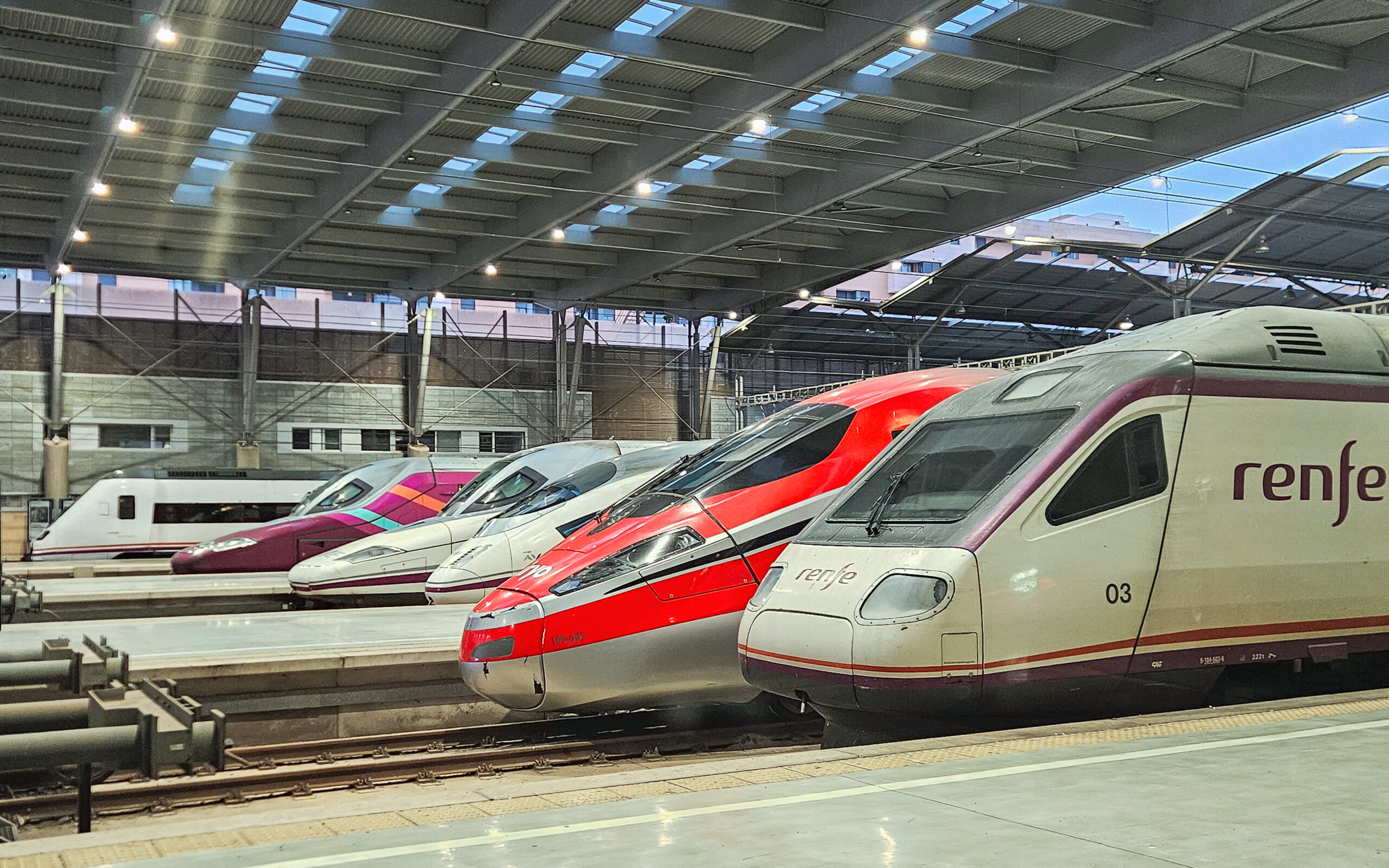
On October 28, 2026, a Renfe AVE high-speed service bound for Seville struck the rear of a stationary Iryo train outside Urda on the Madrid–Seville line, according to reports. The collision killed 69 people. All 69 killed have been identified, including 54 Spanish citizens and 15 foreigners, reports said.
Reports described the sequence in the following terms. An automatic safety system, known as LZB, failed and halted trains on a 63-km stretch of the line. A control centre then authorised the Renfe service to resume. Investigators estimated the impact speed at 160–200 km/h. The investigation cause is not established, and investigators are still establishing how it happened, so no definitive cause should be drawn from those reported facts alone.
The location matters for understanding the scale of the disruption. Urda is about 130 km south of Madrid, on a corridor that links the capital with Seville and serves a large number of passengers. A collision on that route therefore had consequences not only for the people directly involved, but also for services across the Madrid–Seville line in the days that followed.
Two fatal crashes in less than a year
The Urda crash was the second fatal crash on the same line, involving the same companies, in less than a year, according to reports. A crash in Andalusia in January 2026 killed 46 people. Together, the two crashes account for 115 deaths in under a year, a figure that has shaped much of the public and political reaction.
That record is central to the responsibility debate. Puente’s own explanation linked his departure to the seriousness of two accidents in less than a year, rather than to a finding of direct responsibility in either case. At the same time, most parties had demanded that he take responsibility, and his resignation has not, on the facts reported, settled the separate question of what caused either crash.
The debate therefore has two distinct strands. One concerns political accountability: whether a minister should remain in office after repeated fatal failures in a system under his responsibility. The other concerns technical accountability: what failed, what authorisations were given, and what safety systems were in place. Reports make clear that the technical investigation remains open, and that the political resignation should not be treated as a substitute for its findings.
What happens next for the transport ministry
Puente also withdrew as a candidate in the November 29, 2026 general election, where he was the PSOE lead candidate for Valladolid, according to reports. His resignation takes effect once published in the official state gazette, and the exact timeline is unclear. First Deputy Prime Minister Carlos Cuervo will temporarily assume responsibility for the transport ministry.
The government announced €30 million in aid for victims and families, including advance compensation payments and increased compulsory passenger insurance, reports said. Madrid–Seville services were reduced until the Railway Safety Agency reviews the line’s safety system and the delayed ERTMS rollout is completed. Those measures, as reported, are initial steps; they do not by themselves answer the questions raised by the investigation.
The decision that Oscar Puente resigns also comes within a wider Spanish political context. The government is led by Prime Minister Pedro Sánchez, and Reflecto News has previously reported on Sánchez and Spain’s position on the EU-Israel agreement. Reflecto News has also reported on Spain and the Gaza ceasefire coordination hub. Those stories are separate from the rail investigation, but they underline that the resignation arrives at a moment of intense political attention on the Spanish government.
Until investigators publish their findings, reporting should keep those questions separate. The facts established so far are the date and place of the crash, the number of people killed and identified, the reported sequence involving the LZB failure and the authorisation to resume, and the estimated impact speed. The cause itself remains under investigation, and the minister’s resignation is a political decision explained in his own stated terms of empathy, consistency and political dignity.
Frequently asked questions
When did Spain’s transport minister announce his resignation?
Óscar Puente announced his resignation on Tuesday, November 3, 2026, six days after the October 28, 2026 collision near Urda. He announced it at the close of a four-hour appearance before the Permanent Deputation of the Congress of Deputies, the body that sits while parliament is dissolved.
Why did Oscar Puente resign?
According to reports, Oscar Puente resigns for reasons of empathy with the victims, consistency and political dignity. He said a transport minister in a country like Spain could not remain in office after two accidents of such seriousness in less than a year, whether or not he bore direct responsibility. Most parties had also demanded that he take responsibility.
What happened in the Urda train crash?
A Renfe AVE high-speed service bound for Seville struck the rear of a stationary Iryo train outside Urda on the Madrid–Seville line on October 28, 2026. Reports said an automatic safety system (LZB) failure halted trains on a 63-km stretch, a control centre then authorised the Renfe service to resume, and investigators estimated impact speed at 160–200 km/h. The crash killed 69 people, including 54 Spanish citizens and 15 foreigners, all of whom have been identified. Investigators are still establishing how it happened, and the cause is not established.
Who will temporarily lead the transport ministry?
First Deputy Prime Minister Carlos Cuervo will temporarily assume responsibility for the transport ministry, according to reports. Puente’s resignation takes effect once published in the official state gazette, and the exact timeline is unclear. The government also announced €30 million in aid for victims and families, including advance compensation payments and increased compulsory passenger insurance.