Reflecto News is an online news platform covering major international political events, global economic developments, and security conflicts. The site provides updates on topics such as Chinese manufacturing dominance, Middle Eastern political tensions, and high profile legal arrests. Readers can access current articles organized by categories like World News, Iran, and USA.
Iranian media report a sanctioned tanker successfully evaded American naval patrols and delivered its cargo, as Tehran formalizes a new authority to manage the strategic waterway.
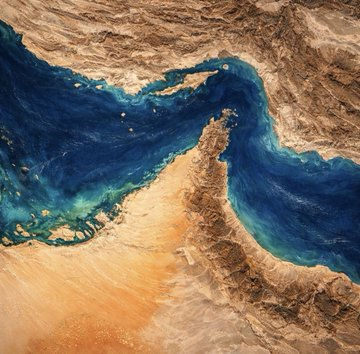
TEHRAN / DUBAI — Iran has declared that one of its vessels successfully passed through the United States naval blockade in the Strait of Hormuz, directly challenging Washington’s “wall of steel” and the effectiveness of the month-long maritime embargo .
According to a report on Monday by Iran’s state-affiliated Fars News Agency, an Iranian oil tanker carrying liquefied petroleum gas (LPG) managed to evade U.S. naval monitoring operations in the strategic waterway without being intercepted . The report stated that the vessel had been observed off the coast of India roughly two weeks ago before proceeding toward Iran and is now anchored at Kharg Island port, the country’s main oil export terminal in the Persian Gulf .
The announcement comes as Tehran formally escalates its challenge to American military dominance in the region. On Monday, Iran’s Supreme National Security Council officially announced the formation of the Persian Gulf Strait Authority (PGSA) , a new body designed to manage traffic and potentially charge tolls for passage through the waterway .
“Real‑time updates on the #Hormuz_Strait operations and latest developments will be provided,” the council posted on its official X account, signaling Tehran’s intent to assert administrative—and sovereign—control over the vital chokepoint .
A Test of the ‘Wall of Steel’
The reported breach is a direct test of the U.S. naval blockade implemented on April 13, which President Donald Trump previously described as an impenetrable “wall of steel” . The blockade was imposed to choke off Iran’s oil revenues and force Tehran to the negotiating table following the outbreak of the US-Israeli war with Iran on February 28 .
Iran’s success, if confirmed, would highlight the inherent difficulties of sealing the narrow waterway, which in peacetime handles approximately one-fifth of the world’s oil and liquefied natural gas supply . Washington maintains it has redirected 84 commercial vessels attempting to breach the embargo, but Tehran asserts that the tanker’s transit was a symbolic act of defiance against “sanctions and threats” .
The development comes just days after the US military disclosed that it had disabled an Iranian-flagged tanker attempting to breach the blockade in the Gulf of Oman . Analysts suggest that while the US has significant firepower, Iran’s strategy of operating from ports outside the main choke point—such as Jask and Chabahar near the Pakistani border—allows some vessels to slip through via the Gulf of Oman .
Iran’s New ‘Rules of the Road’
The launch of the PGSA represents a calculated escalation in Iran’s strategy. Rather than simply enforcing a chaotic closure, Tehran is attempting to create a structured framework that legitimizes its control.
Senior Iranian lawmaker Ebrahim Azizi, head of the parliament’s national security commission, stated on Saturday that Iran has prepared a “professional mechanism” to manage traffic . He added that the new system would impose fees for “specialized services” and that “only commercial vessels and parties cooperating with Iran will benefit from it” .
This mechanism reportedly includes controversial proposals for ship insurance. According to reports, Tehran is offering insurance for maritime cargoes passing through the strait, with transactions expected to be conducted using cryptocurrencies like Bitcoin to circumvent international sanctions .
“This route will remain closed to the operators of the so‑called ‘freedom project,’” Azizi warned, referring to the temporary US military operation to escort commercial vessels .
The United States has rejected these claims, warning companies that payments to Iran for safe passage could expose them to sanctions, and insisting that international waterways must remain open to global shipping .
Broader Context: A Fragile Ceasefire
The maritime confrontation is unfolding amid a fragile ceasefire brokered through Pakistani mediation that took effect on April 8 . While major hostilities have paused, peace talks have largely stalled, with the US demanding Iran dismantle its nuclear program and Tehran demanding reparations and an end to sanctions .
On Monday, Iran also announced it had submitted its response to a new US peace proposal. However, Iranian Foreign Ministry spokesperson Esmaeil Baqaei reiterated Tehran’s firm demands, including the removal of long-standing sanctions and payment of war reparations by the US, which Washington has dismissed .
Iranian officials have repeatedly warned that the situation in the Strait “will not return to pre-war conditions,” using their stranglehold over the energy corridor as their primary leverage in negotiations .
Frequently Asked Questions (FAQs)
Q1: What exactly happened in the Strait of Hormuz?
A: Iranian state media (Fars News Agency) reported on May 18 that a sanctioned Iranian oil tanker carrying liquefied petroleum gas successfully evaded the US naval blockade in the Strait of Hormuz and delivered its cargo to Kharg Island port without being intercepted .
Q2: What is the Persian Gulf Strait Authority (PGSA)?
A: It is a new body announced by Iran’s Supreme National Security Council on May 18 to manage traffic in the Strait of Hormuz. It is part of Tehran’s effort to assert control over the waterway, potentially charge tolls for passage, and provide “real‑time updates” on strait operations .
Q3: Has the US responded to Iran’s claims?
A: While the US maintains its blockade is “fully in effect” and that it has redirected 84 commercial vessels , it has not yet officially confirmed or denied the specific claim regarding the LPG tanker. The US has previously warned that paying transit fees to Iran could lead to sanctions .
Q4: Why is the Strait of Hormuz so important?
A: It is the world’s most critical oil transit chokepoint. In peacetime, roughly 20 percent of the world’s oil and liquefied natural gas passes through it. Iran’s effective closure of the strait since February 28 has rattled global energy markets and sent fuel prices soaring .
Q5: Is the ceasefire still in place?
A: Yes, a fragile ceasefire brokered by Pakistan has been in place since April 8. However, talks to reach a permanent agreement have stalled, and both sides continue to jockey for position militarily and economically, particularly regarding control of the strait .
This is a developing story. Reflecto News will continue to provide updates on the situation in the Strait of Hormuz, the US naval blockade, and the ongoing diplomatic efforts to end the war.
Questions people ask
What is China's current share of global manufacturing?
China now accounts for twenty eight percent of global manufacturing. This industrial output exceeds the combined manufacturing production of the United States, Japan, and Germany, making China the leading global industrial power according to recent reports.
Why were Andrew Tate and Tristan Tate arrested in Miami?
Andrew Tate and his brother Tristan Tate were taken into custody in Miami by the United States Marshals Service. They face thirty eight new charges in the United Kingdom, including rape and child pornography offences, and prosecutors are seeking their extradition.
What warning did Moscow issue about oil prices?
Kirill Dmitriev, the Chief Executive of the Russian Direct Investment Fund, warned that a tsunami of skyrocketing oil prices is approaching. Moscow describes this potential energy shock as a major threat to global markets.
What political shift is projected for Benjamin Netanyahu's coalition?
Political polls project that Prime Minister Benjamin Netanyahu's coalition is on track to lose its majority in the upcoming October election. This projection indicates a potential political shift in Jerusalem.
Why did a Russian military aircraft land in Tehran?
A Russian airborne command aircraft, widely known as a doomsday plane, landed in Tehran. The arrival of the aircraft represents a high stakes show of support from Russia for Iran during a period of heightened regional tensions.
What did President Masoud Pezeshkian claim about the United States and Israel?
Iranian President Masoud Pezeshkian claimed that the United States and Israel failed in a forty eight hour plan to topple the Iranian government. He made these statements during a televised address marking two years since his inauguration.