Reflecto News is an online news platform covering major international political events, global economic developments, and security conflicts. The site provides updates on topics such as Chinese manufacturing dominance, Middle Eastern political tensions, and high profile legal arrests. Readers can access current articles organized by categories like World News, Iran, and USA.
Major deployment underscores Islamabad’s dual role as both military partner and diplomatic mediator amid escalating Iran war tensions.
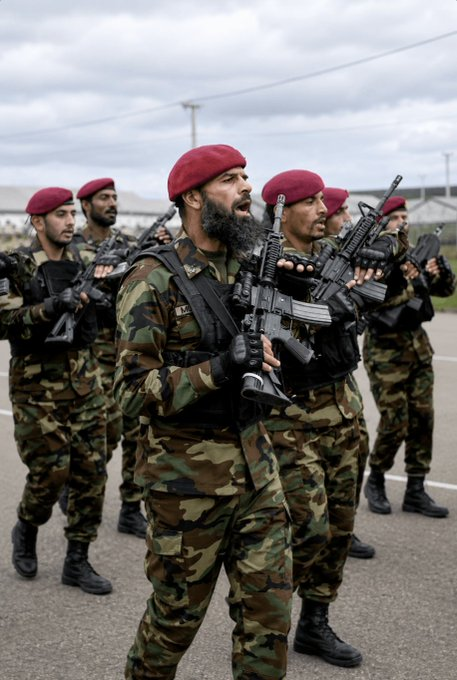
ISLAMABAD / RIYADH — Pakistan has deployed approximately 8,000 troops, a full squadron of fighter jets, two drone squadrons, and a Chinese-made air defense system to Saudi Arabia under a mutual defense pact, significantly ramping up military cooperation between the two allies even as Islamabad serves as the principal mediator in the ongoing US-Iran war .
The deployment, first reported in detail by Reuters on May 18, 2026, was confirmed by three Pakistani security officials and two government sources, all of whom described it as a substantial, combat-capable force intended to support Saudi Arabia’s military if the kingdom comes under further attack .
The development comes as the fragile US-Iran ceasefire—brokered by Pakistan last month—remains under strain, with President Donald Trump warning on Sunday that “the clock is ticking” for Tehran to reach a diplomatic resolution .
Deployment Details: What Pakistan Sent
The Pakistani military assets deployed to Saudi Arabia represent a significant expansion of Islamabad’s military footprint in the Gulf kingdom:
| Asset Category | Details |
|---|---|
| Troops | Approximately 8,000 personnel (with pledge to send up to 80,000 if needed under the defense pact) |
| Fighter Jets | Full squadron of ~16 aircraft, mostly JF-17 “Thunder” jets (co-produced by Pakistan and China) |
| Drones | Two squadrons of unmanned aerial vehicles |
| Air Defense System | Chinese HQ-9 surface-to-air missile system (operated by Pakistani personnel, financed by Saudi Arabia) |
| Naval Assets | Deployment also reportedly covers warships (presence unconfirmed as of May 18) |
The equipment is operated by Pakistani personnel and financed by Saudi Arabia, according to the sources . The first elements of the deployment—including the JF-17 fighter squadron—were sent to Saudi Arabia in early April, following Iranian strikes that hit key Saudi energy infrastructure and killed a Saudi national .
The Defense Pact: A Mutual Commitment
The deployment is being carried out under a Strategic Mutual Defense Agreement signed between Pakistan and Saudi Arabia in September 2025 . While the full terms of the agreement remain confidential, both sides have publicly stated that it requires Pakistan and Saudi Arabia to come to each other’s defense in the event of an attack on either nation.
One of the government sources who has seen the text of the confidential defense pact told Reuters that the agreement provides for the possibility of up to 80,000 Pakistani troops being deployed to Saudi Arabia to help secure the kingdom’s borders alongside Saudi forces .
Pakistan’s Defense Minister Khawaja Asif has previously implied that the agreement places Saudi Arabia under Pakistan’s nuclear umbrella, though analysts note that the official framework focuses on conventional defense cooperation .
Purpose: Advisory and Training Role
According to two security officials who spoke to Reuters, the Pakistani military and air force personnel deployed during the Iran conflict will primarily serve an advisory and training role . However, the scale and composition of the deployment—combat aircraft, air defenses, and thousands of troops—mean Pakistan has sent far more than a symbolic or advisory mission, the sources said .
The deployment adds to thousands of Pakistani troops with a combat role that were already stationed in the kingdom under previous agreements, the security officials confirmed .
Pakistan’s Dual Role: Military Partner and Diplomatic Mediator
The deployment underscores Pakistan’s complex position in the ongoing US-Iran war. While Islamabad strengthens its military cooperation with Saudi Arabia—a key US ally in the Gulf—it is also serving as the principal mediator between Washington and Tehran.
In April, Pakistan brokered a ceasefire between the United States and Iran that has held for over six weeks . Islamabad hosted the only round of direct US-Iranian peace talks so far, though planned further rounds were called off due to major disagreements over Iran’s nuclear program, the reopening of the Strait of Hormuz, and war reparations .
The ceasefire now appears increasingly fragile. President Trump described it last week as effectively a “favor to Pakistan,” while warning that the US could resume strikes if negotiations collapse . Iran, meanwhile, has submitted a revised peace proposal through Pakistani channels, but major gaps remain between the two sides .
Pakistani Security Sources Push Back on Narrative
Following the Reuters report, Pakistani security sources pushed back on what they described as a “selective” and “misrepresentative” framing of the deployment .
The security sources argued that Pakistan-Saudi defense cooperation is “not episodic or reactionary” but rather part of a “structured and enduring partnership framework that has evolved over several decades” . They stressed that attempts to link routine deployments and joint arrangements to shifting regional tensions present an “incomplete and distorted narrative” .
“Pakistan-Saudi military ties are not ad hoc or driven by immediate regional developments, but are part of a structured and continuing framework built over many years,” the sources told Pakistan Today .
The sources also highlighted the “spiritual and emotional dimension” of the partnership, particularly regarding the protection of the Harmain Shareefain (the holy mosques) in Makkah and Madinah. “The people of Pakistan and its armed forces regard their historic association with the security of the holy sites with pride, and see it as a responsibility extending beyond conventional military cooperation,” they said .
Strategic Implications
The deployment carries several significant strategic implications:
1. Gulf Security Reinforcement
With the UAE having been targeted by over 2,800 Iranian projectiles during the war, and Saudi Arabia also coming under attack, the deployment of Pakistani troops and air defense systems bolsters the defensive capabilities of US-allied Gulf states . The HQ-9 air defense system, operated by experienced Pakistani personnel, provides an additional layer of protection against Iranian drone and missile attacks.
2. Pakistan’s Balancing Act
Pakistan is walking a diplomatic tightrope. By deploying combat-capable forces to Saudi Arabia, Islamabad is solidifying its ties with Riyadh and, indirectly, with Washington. Simultaneously, by serving as the principal mediator with Tehran, Pakistan is positioning itself as an indispensable diplomatic partner to Iran .
3. Potential for Escalation
The deployment comes amid reports that Saudi Arabia launched numerous unpublicized strikes on Iran in retaliation for attacks carried out inside the kingdom . With Pakistani forces now more deeply embedded in Saudi Arabia’s defense architecture, any wider regional escalation could draw Pakistan more directly into the conflict.
4. Nuclear Umbrella Question
While the defense pact is formally focused on conventional cooperation, Defense Minister Asif’s suggestion that it places Saudi Arabia under Pakistan’s nuclear umbrella adds a significant strategic dimension. Pakistan is the only Muslim-majority nation with nuclear weapons capability, and any extension of that deterrent to Saudi Arabia would represent a major shift in regional power dynamics .
Historical Context: A Longstanding Partnership
Pakistan and Saudi Arabia have maintained close economic and military ties for decades. Pakistan has long provided military support to Saudi Arabia, including training and advisory deployments, while Riyadh has repeatedly stepped in to support Islamabad financially during periods of economic stress .
In April 2026, Saudi Arabia agreed to extend a $5 billion deposit facility for Pakistan and pledged an additional $3 billion in aid, underscoring the financial dimension of the partnership .
The relationship is also deeply rooted in religious and cultural ties. Saudi Arabia is home to Islam’s holiest sites, and Pakistan has historically committed to their defense—a commitment reiterated by Pakistani security sources in response to the recent deployment reports .
What Comes Next
Several developments are worth watching in the coming days and weeks:
- Ceasefire Negotiations: With the US-Iran ceasefire increasingly fragile, Pakistan’s role as mediator may come under renewed pressure. Any collapse of the truce could escalate regional hostilities and potentially draw Pakistani forces into a more active role.
- Further Deployments: The defense pact allows for up to 80,000 Pakistani troops to be deployed to Saudi Arabia. Whether Islamabad exercises that option will depend on the trajectory of the conflict.
- Naval Deployment: The status of any Pakistani warship deployment to Saudi waters remains unconfirmed but bears watching as an indicator of the full scale of the military partnership.
- Diplomatic Fallout: Iran has not publicly commented on the Pakistani deployment, but any perception that Islamabad is taking sides militarily could complicate its mediator role.
Frequently Asked Questions (FAQs)
Q1: How many troops has Pakistan deployed to Saudi Arabia?
A: Pakistan has deployed approximately 8,000 troops to Saudi Arabia under a mutual defense pact, with a pledge to send more if needed. One government source familiar with the pact’s text said it provides for the possibility of up to 80,000 Pakistani troops being deployed to help secure the kingdom’s borders .
Q2: What military assets have been deployed?
A: The deployment includes a full squadron of around 16 JF-17 fighter jets (co-produced by Pakistan and China), two squadrons of drones, a Chinese HQ-9 air defense system, and potentially naval assets. The equipment is operated by Pakistani personnel and financed by Saudi Arabia .
Q3: When did the deployment begin?
A: The first elements of the deployment—including the JF-17 fighter squadron—were sent to Saudi Arabia in early April 2026, following Iranian strikes on Saudi energy infrastructure. The full scale of the deployment was reported on May 18, 2026 .
Q4: What is the legal basis for this deployment?
A: The deployment is being carried out under a Strategic Mutual Defense Agreement signed between Pakistan and Saudi Arabia in September 2025. The agreement requires both nations to come to each other’s defense in the event of an attack on either country .
Q5: Does this mean Pakistan is entering the war against Iran?
A: Pakistani officials describe the deployed personnel as serving primarily in advisory and training roles. However, the scale and composition of the deployment—combat aircraft, air defenses, and thousands of troops—mean Pakistan has sent far more than a symbolic or advisory mission, according to sources familiar with the deployment .
Q6: How does this affect Pakistan’s role as mediator between the US and Iran?
A: Pakistan is pursuing a dual-track strategy. While deploying combat-capable forces to Saudi Arabia (a US ally), Islamabad continues to serve as the principal mediator between Washington and Tehran. Pakistan brokered the April 8 ceasefire and hosted the only round of direct US-Iranian peace talks to date. This balancing act is diplomatically delicate but reflects Pakistan’s unique position in the region .
Q7: What has been Pakistan’s official response to reports of the deployment?
A: Pakistan’s military and foreign office have not officially responded to requests for comment on the deployment. However, security sources have pushed back on Western media framing, describing the cooperation as part of a “long-standing, institutional” partnership rather than an “episodic or reactionary” response to current tensions .
Q8: Does the defense pact extend Pakistan’s nuclear umbrella to Saudi Arabia?
A: Pakistan’s Defense Minister Khawaja Asif has previously implied that the agreement places Saudi Arabia under Pakistan’s nuclear umbrella. However, the official framework of the pact focuses on conventional defense cooperation. Analysts note that while Pakistan’s nuclear status adds strategic weight to the partnership, the agreement does not explicitly include nuclear guarantees .
This is a developing story. Reflecto News will continue to provide updates on the Pakistan-Saudi defense deployment, the status of the US-Iran ceasefire, and Islamabad’s continued role as a regional mediator.
Questions people ask
What is China's current share of global manufacturing?
China now accounts for twenty eight percent of global manufacturing. This industrial output exceeds the combined manufacturing production of the United States, Japan, and Germany, making China the leading global industrial power according to recent reports.
Why were Andrew Tate and Tristan Tate arrested in Miami?
Andrew Tate and his brother Tristan Tate were taken into custody in Miami by the United States Marshals Service. They face thirty eight new charges in the United Kingdom, including rape and child pornography offences, and prosecutors are seeking their extradition.
What warning did Moscow issue about oil prices?
Kirill Dmitriev, the Chief Executive of the Russian Direct Investment Fund, warned that a tsunami of skyrocketing oil prices is approaching. Moscow describes this potential energy shock as a major threat to global markets.
What political shift is projected for Benjamin Netanyahu's coalition?
Political polls project that Prime Minister Benjamin Netanyahu's coalition is on track to lose its majority in the upcoming October election. This projection indicates a potential political shift in Jerusalem.
Why did a Russian military aircraft land in Tehran?
A Russian airborne command aircraft, widely known as a doomsday plane, landed in Tehran. The arrival of the aircraft represents a high stakes show of support from Russia for Iran during a period of heightened regional tensions.
What did President Masoud Pezeshkian claim about the United States and Israel?
Iranian President Masoud Pezeshkian claimed that the United States and Israel failed in a forty eight hour plan to topple the Iranian government. He made these statements during a televised address marking two years since his inauguration.