Reflecto News is an online news platform covering major international political events, global economic developments, and security conflicts. The site provides updates on topics such as Chinese manufacturing dominance, Middle Eastern political tensions, and high profile legal arrests. Readers can access current articles organized by categories like World News, Iran, and USA.
Published on Reflecto News | World News | Defense & Geopolitics
Iran has inflicted significantly more damage on U.S. military bases in the Middle East than has been publicly disclosed, with repair costs potentially reaching billions of dollars, according to an NBC News investigation published Saturday . U.S. installations and equipment across Gulf countries were repeatedly attacked, including an Iranian F-5 fighter that penetrated American air defenses, officials told the network .
The damage — far more extensive than the “minimal damage” initially reported by U.S. Central Command (CENTCOM) — has forced the Pentagon to shift personnel and reassess its defensive posture in the region. The NBC report offers the most detailed accounting yet of the toll exacted by Iranian retaliatory strikes during the six-week war.
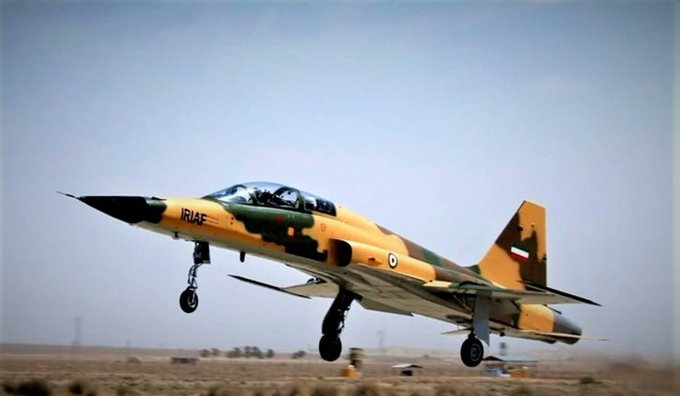
The F-5 Penetration: An Iranian Jet Pierced U.S. Air Defenses
In one of the most striking revelations, NBC reports that an Iranian F-5 fighter jet successfully penetrated U.S. air defenses during the conflict, forcing a last-second scramble of American aircraft. The F-5, a light supersonic fighter first produced in the 1960s, is not normally considered a major threat to U.S. air superiority. But Iranian pilots flying the aging platform were able to exploit gaps in American coverage.
The incident underscores the challenge of defending a sprawling network of bases across multiple countries against a determined adversary employing varied tactics — from ballistic missiles and drones to crewed aircraft.
‘Substantial’ Damage Across the Region
The NBC investigation found that U.S. installations and equipment in Gulf countries were repeatedly attacked, and the damage is described as “substantial.” The network did not provide a comprehensive list of damaged sites, but multiple locations have been affected.
Reported damage to U.S. assets:
| Asset/Installation | Location | Reported Damage |
|---|---|---|
| AN/TPY-2 radar (THAAD system) | Jordan | Destroyed (~$485 million) |
| AN/FPS-132 early warning radar | Qatar | Damaged (~$1.1 billion) |
| E-3 Sentry AWACS aircraft | Saudi Arabia | Badly damaged (>$700 million) |
| Multiple MQ-9 Reaper drones | Various | At least 10 lost (~$30 million each) |
| Navy Fifth Fleet HQ | Bahrain | Approximately $200 million damage |
Sources: NBC News, The Irish Times/Financial Times, multiple reports
The Pentagon has acknowledged some of these losses but had previously characterized overall damage as minimal.
Why the Discrepancy?
CENTCOM’s initial statements emphasized that damage was “minimal” and that operations had not been affected. Several factors may explain the gap:
- Operational security: Acknowledging the full extent of damage could provide strategic intelligence to Iran about the effectiveness of its targeting.
- Morale: Downplaying losses is standard practice during active hostilities.
- Delayed assessments: Comprehensive battle damage assessments take time, particularly for infrastructure damage.
But the NBC report suggests that the gap between public statements and private assessments is substantial.
Cost of Repairs: ‘Billions of Dollars’
The financial toll of repairing damaged installations and replacing destroyed equipment is expected to be “billions of dollars,” according to officials cited by NBC . The Pentagon is already seeking an additional $200 billion from Congress to cover operations and reconstruction.
Selected replacement costs:
| Equipment | Unit Cost |
|---|---|
| AN/TPY-2 radar | ~$485 million |
| AN/FPS-132 radar | ~$1.1 billion |
| E-3 Sentry AWACS | >$700 million |
| F-15E Strike Eagle | ~$100 million |
| MQ-9 Reaper | ~$30 million |
Sources: Multiple reports
These figures do not include repairs to infrastructure — runways, hangars, barracks, command centers — many of which sustained significant damage.
Implications for U.S. Readiness
The extensive damage has operational consequences. The destruction of AN/TPY-2 radars creates gaps in missile defense coverage. The loss of AWACS aircraft reduces command and control capabilities. Damaged airfields slow the pace of sorties.
The long-term strategic impact may be even more significant. The war has consumed munitions at a pace not seen since the Cold War, depleted missile defense interceptors, and damaged or destroyed high-value assets that require years to replace. Some analysts have warned that the attrition could affect America’s ability to deter China in the Pacific.
What Comes Next
The Pentagon has not yet released a comprehensive battle damage assessment. The NBC report suggests that when it does, the toll will be significant. Congress will likely hold hearings on the matter, and the administration will face questions about why the damage was downplayed.
For now, the public has a fuller — though still incomplete — picture of the cost of the Iran war.
Frequently Asked Questions (FAQs)
Q1: How extensive was the damage to U.S. bases?
The damage was “substantial,” with repair costs potentially reaching billions of dollars, according to NBC News . Multiple bases in Gulf countries were repeatedly attacked.
Q2: Did an Iranian fighter penetrate U.S. air defenses?
Yes. An Iranian F-5 fighter jet successfully penetrated American air defenses, forcing U.S. aircraft to scramble.
Q3: Why did the U.S. downplay the damage initially?
CENTCOM initially said damage was “minimal” for operational security reasons and because comprehensive battle damage assessments take time.
Q4: What is the most expensive U.S. asset damaged in the war?
An AN/FPS-132 early warning radar in Qatar, valued at approximately $1.1 billion, was damaged. An AN/TPY-2 radar in Jordan was also destroyed.
Q5: How will this affect U.S. military readiness?
The damage has degraded missile defense capabilities, reduced airborne command and control, and consumed munitions at an unsustainable pace. Some analysts warn it could affect deterrence against China.
Q6: Is the ceasefire still in effect?
Yes. President Trump extended the ceasefire at Pakistan’s request. It now has no fixed expiration date but remains fragile
Stay informed with Reflecto News – Your trusted source for breaking defense and geopolitical intelligence. Subscribe for real-time updates on the US-Iran war, military assessments, and global security developments.
Questions people ask
What is China's current share of global manufacturing?
China now accounts for twenty eight percent of global manufacturing. This industrial output exceeds the combined manufacturing production of the United States, Japan, and Germany, making China the leading global industrial power according to recent reports.
Why were Andrew Tate and Tristan Tate arrested in Miami?
Andrew Tate and his brother Tristan Tate were taken into custody in Miami by the United States Marshals Service. They face thirty eight new charges in the United Kingdom, including rape and child pornography offences, and prosecutors are seeking their extradition.
What warning did Moscow issue about oil prices?
Kirill Dmitriev, the Chief Executive of the Russian Direct Investment Fund, warned that a tsunami of skyrocketing oil prices is approaching. Moscow describes this potential energy shock as a major threat to global markets.
What political shift is projected for Benjamin Netanyahu's coalition?
Political polls project that Prime Minister Benjamin Netanyahu's coalition is on track to lose its majority in the upcoming October election. This projection indicates a potential political shift in Jerusalem.
Why did a Russian military aircraft land in Tehran?
A Russian airborne command aircraft, widely known as a doomsday plane, landed in Tehran. The arrival of the aircraft represents a high stakes show of support from Russia for Iran during a period of heightened regional tensions.
What did President Masoud Pezeshkian claim about the United States and Israel?
Iranian President Masoud Pezeshkian claimed that the United States and Israel failed in a forty eight hour plan to topple the Iranian government. He made these statements during a televised address marking two years since his inauguration.