Reflecto News is an online news platform covering major international political events, global economic developments, and security conflicts. The site provides updates on topics such as Chinese manufacturing dominance, Middle Eastern political tensions, and high profile legal arrests. Readers can access current articles organized by categories like World News, Iran, and USA.
JUST IN: Official Cites Diversified Sources, Geographic Spread, and Grid Interconnections as Buffers Against Widespread Outages Amid Trump’s Ultimatum
Reflecto News – Iran has signaled confidence in its electricity grid’s resilience, stating it does not anticipate a complete nationwide blackout even if the United States carries out threats to target power plants. An official speaking to Islamic Republic of Iran Broadcasting (IRIB) emphasized the country’s “highly diversified energy production sources,” combined with the grid’s “geographic dispersion” and “interconnectedness,” would enable continued partial power supply to key areas.
The remarks come as President Donald Trump has warned of potential strikes on Iranian power plants and other infrastructure if the Strait of Hormuz is not reopened by his Tuesday deadline, escalating tensions in the ongoing conflict.
Iran’s Assessment of Grid Resilience
According to the IRIB report, Iranian energy officials believe the national power system is robust enough to absorb significant damage without collapsing entirely. Key factors cited include:
- Diversified Energy Mix: Iran’s electricity generation relies heavily on natural gas-fired plants (around 80% of output in recent years), but also includes hydroelectric, oil-fired, nuclear, and growing renewable contributions from solar and wind. This mix reduces reliance on any single fuel or plant type.
- Geographic Dispersion: Power plants and substations are spread across the country rather than concentrated in a few vulnerable locations. Major facilities exist in different provinces, making it difficult for limited strikes to disable the entire system.
- Interconnected Grid: A vast transmission and distribution network (over 133,000 km of high-voltage lines and more than 1.3 million km including lower-voltage segments) allows power to be rerouted from unaffected regions to impacted ones, limiting localized outages from spreading nationally.
Officials noted that even substantial damage to several plants would likely result in temporary, regional disruptions rather than a total collapse, with the grid designed to isolate faults and maintain supply to critical infrastructure such as hospitals, military sites, and essential services.
Background on Iran’s Power Sector
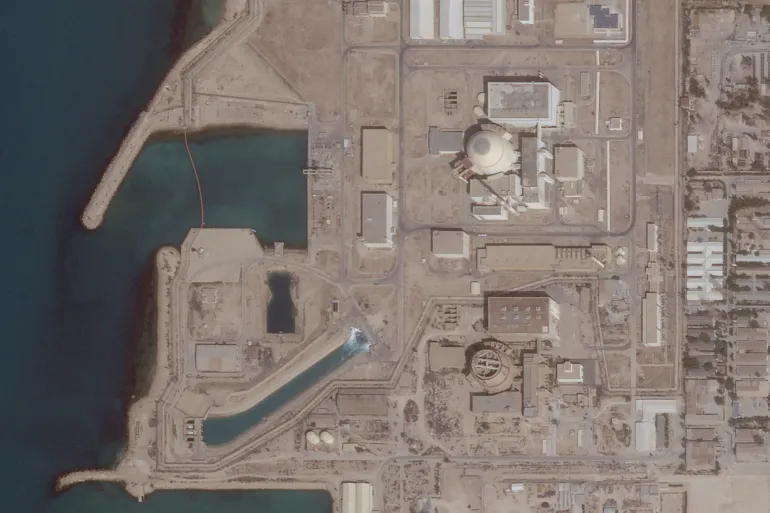
Iran’s installed electricity capacity has been approaching or exceeding 90–100 GW in recent years, with ongoing efforts to expand renewables. By late 2025, renewable capacity (primarily solar and wind) had grown significantly — reaching over 3,000 MW in some reports — as part of efforts to address chronic summer shortages and diversify away from gas. The country also operates the Bushehr nuclear power plant, adding a small but stable baseload component.
However, the system faces challenges, including aging infrastructure, high summer demand from air conditioning, and occasional blackouts even in peacetime due to fuel shortages or maintenance issues. Natural gas dominates generation, tying much of the grid to gas fields that could themselves become targets in a wider conflict.
Context Within the Current Crisis
Trump’s threats target energy infrastructure as leverage to force reopening of the Strait of Hormuz, which has been effectively blockaded by Iran since late February 2026. Previous extensions of deadlines and backchannel mediation (including via Pakistan) have delayed action, but the latest ultimatum has renewed focus on potential strikes.
Iran has previously warned of retaliation against energy targets in the Gulf region if its own facilities are hit, raising the specter of mutual infrastructure attacks that could ripple through global energy markets.
Implications and Expert Views
Analysts have long noted that Iran’s decentralized grid makes a total blackout difficult to achieve through conventional airstrikes alone, though precision attacks on key generation or transmission nodes could cause serious localized blackouts, water shortages, and disruptions to industry and daily life. Humanitarian concerns have been raised internationally, with some experts arguing that deliberate targeting of civilian power infrastructure could violate international humanitarian law.
Even partial outages could exacerbate existing strains on the Iranian economy and population, particularly amid the broader conflict’s impacts on fuel supplies and sanctions.
What Happens Next?
With Trump’s Tuesday deadline approaching, attention remains on whether Iran will make any concessions on the strait or if mediators can broker a breakthrough. Iran’s public confidence in grid resilience serves both as reassurance to its domestic audience and as a deterrent signal to the US.
Key developments to monitor:
- Any official Iranian response to the latest threats.
- Progress in Pakistan-led or other ceasefire talks.
- Actual shipping activity (or continued restrictions) in the Strait of Hormuz.
- Potential shifts in global energy prices if escalation appears imminent.
Reflecto News will continue tracking statements from both sides, the status of diplomatic efforts, and any developments regarding critical infrastructure in the region. The interplay between military threats and energy resilience underscores the high stakes in the ongoing US-Iran confrontation.
Questions people ask
What is China's current share of global manufacturing?
China now accounts for twenty eight percent of global manufacturing. This industrial output exceeds the combined manufacturing production of the United States, Japan, and Germany, making China the leading global industrial power according to recent reports.
Why were Andrew Tate and Tristan Tate arrested in Miami?
Andrew Tate and his brother Tristan Tate were taken into custody in Miami by the United States Marshals Service. They face thirty eight new charges in the United Kingdom, including rape and child pornography offences, and prosecutors are seeking their extradition.
What warning did Moscow issue about oil prices?
Kirill Dmitriev, the Chief Executive of the Russian Direct Investment Fund, warned that a tsunami of skyrocketing oil prices is approaching. Moscow describes this potential energy shock as a major threat to global markets.
What political shift is projected for Benjamin Netanyahu's coalition?
Political polls project that Prime Minister Benjamin Netanyahu's coalition is on track to lose its majority in the upcoming October election. This projection indicates a potential political shift in Jerusalem.
Why did a Russian military aircraft land in Tehran?
A Russian airborne command aircraft, widely known as a doomsday plane, landed in Tehran. The arrival of the aircraft represents a high stakes show of support from Russia for Iran during a period of heightened regional tensions.
What did President Masoud Pezeshkian claim about the United States and Israel?
Iranian President Masoud Pezeshkian claimed that the United States and Israel failed in a forty eight hour plan to topple the Iranian government. He made these statements during a televised address marking two years since his inauguration.