Reflecto News is an online news platform covering major international political events, global economic developments, and security conflicts. The site provides updates on topics such as Chinese manufacturing dominance, Middle Eastern political tensions, and high profile legal arrests. Readers can access current articles organized by categories like World News, Iran, and USA.
Published on Reflecto News | World News | Defense & Energy Security
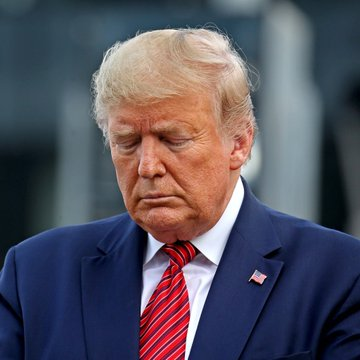
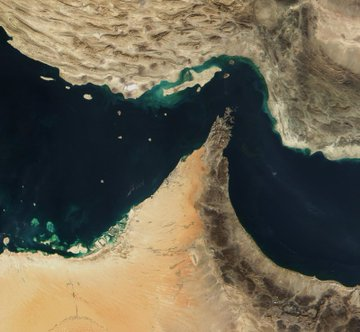
The United States naval blockade of Iranian ports and the strategic Strait of Hormuz has officially commenced as of 10:00 AM Eastern Standard Time, Monday, April 13, 2026. The operation, ordered by President Donald Trump following the collapse of weekend peace talks in Islamabad, marks a dramatic escalation in the six-week war and represents the most aggressive US military action against Iran since the conflict began on February 28 .
The Pentagon confirmed the start of the blockade, with US Central Command (CENTCOM) announcing it would be enforced “impartially against vessels of all nations entering or departing Iranian ports and coastal areas, including all Iranian ports on the Arabian Gulf and Gulf of Oman” .
The Blockade: Rules of Engagement
US naval forces are now authorized to stop, inspect, divert, and if necessary, capture vessels attempting to enter or leave Iranian ports without prior authorization.
Key enforcement rules:
- Authorization: All vessels entering or departing the blockaded area must obtain prior authorization
- Right of visit and search: US Navy personnel can board and inspect vessels to determine the presence of contraband cargo
- Humanitarian exceptions: Food, medical supplies, and other essential goods will be permitted, subject to inspection
- Neutral vessel transit: Vessels transiting the strait to non-Iranian ports will not be impeded
- Consequences: Unauthorized vessels will be intercepted, diverted, and captured
President Trump has also ordered the Navy to “seek and interdict every vessel in International Waters that has paid a toll to Iran,” declaring that “no one who pays an illegal toll will have safe passage on the high seas” . He further warned that “any Iranian who fires at us, or at peaceful vessels, will be BLOWN TO HELL” .
The Strategic Goal: Cutting Off Iran’s Oil Revenues
The primary objective of the blockade is to cripple Iran’s economy by cutting off its ability to export oil—the regime’s primary source of foreign revenue.
| Iranian Oil Export Metric | Pre-War | Current |
|---|---|---|
| Daily exports | ~1.5 million barrels | Blockade aims to reduce to zero |
| Oil revenue (March) | ~$115 million/day | ~$139 million/day (surged during war) |
| Primary customers | China, India, Turkey, Syria, Venezuela | All now blockaded |
Before the war, oil exports accounted for approximately 60-70 percent of Iran’s foreign revenue. The blockade is designed to choke off this financial lifeline, forcing Tehran back to the negotiating table on US terms .
Naval Assets Deployed
The US Navy has deployed significant assets to the region to enforce the blockade. These include:
- Carrier strike groups: Multiple carriers in the region
- Destroyers: Equipped with advanced radar and missile systems
- Littoral combat ships: Designed for shallow-water operations
- Marine Expeditionary Units: Ready for potential boarding operations
- P-8 Poseidon aircraft: Maritime surveillance and patrol
CENTCOM has stated that the blockade will be enforced “impartially,” meaning US forces will stop and inspect vessels from all nations—including allies and China—without exception .
Iran’s Response: Defiance and Threats
Iranian officials have dismissed the blockade as “ridiculous” while warning of severe consequences for any attempted enforcement.
“The threats of the US president to blockade Iran at sea … are very ridiculous and funny.” — Shahram Irani, Iranian Naval Commander
The Islamic Revolutionary Guard Corps (IRGC) Navy declared that the Strait of Hormuz remains under Iran’s “full control” and warned that any “erroneous maneuver will trap the enemy in deadly whirlpools in the strait” . The IRGC also warned that any military vessels attempting to approach the strait will be considered a violation of the fragile two-week ceasefire and will face a “harsh and decisive” response .
Iran has also signaled it will continue oil exports using its “ghost fleet” of tankers that use flag-of-convenience registrations, AIS spoofing, and ship-to-ship transfers to evade detection .
International Reactions: Allies Divided
The blockade has exposed deep divisions between the United States and its traditional allies.
| Country | Position |
|---|---|
| United Kingdom | Refuses to support blockade; pursuing separate maritime coalition with France |
| France | Preparing “peaceful multinational mission” for post-conflict navigation |
| Germany | Will not join military operations |
| Spain | Rejects blockade as “senseless” |
| Japan | Uncertain on minesweeper deployment |
| China | Called for restraint; Iran’s largest oil customer |
The UK has explicitly refused to participate, with Prime Minister Keir Starmer stating that Britain will not be “dragged into the war” . France and the UK are instead preparing a separate “peaceful multinational mission” to restore navigation after the conflict ends .
The Ceasefire: Fragile and Threatened
The blockade comes as the two-week ceasefire between the US and Iran, brokered by Pakistan and announced on April 7, remains in effect—but is increasingly fragile.
| Ceasefire Element | Status |
|---|---|
| Direct US-Iran hostilities | Paused (fragile) |
| US naval blockade | Began April 13 |
| Iran’s response | Threat to consider blockade a violation |
| Israel-Lebanon front | Active; no ceasefire |
| Diplomatic negotiations | Collapsed; no new talks scheduled |
Iran has warned that any military vessels approaching the strait will be considered a violation of the ceasefire—potentially justifying an Iranian military response . Prime Minister Benjamin Netanyahu has also warned that the ceasefire could “flip like a coin” and collapse quickly .
Economic Implications: Oil Prices and Global Markets
The blockade threatens to drive global oil prices even higher, exacerbating inflationary pressures worldwide.
| Economic Indicator | Pre-War | Current |
|---|---|---|
| Brent crude price | ~$70/barrel | ~$100+/barrel |
| Global shipping through Hormuz | ~150 vessels/day | Severely restricted |
| Iran oil revenue (March) | $115 million/day | $139 million/day |
Iran has warned that the blockade could cause oil prices to spike to $200 per barrel or more, triggering a global recession .
What Comes Next: Critical Questions
As the blockade takes effect, several critical questions will determine the trajectory of the crisis:
| Question | Implications |
|---|---|
| Will China test the blockade? | China is Iran’s largest oil customer; its response could determine the blockade’s effectiveness |
| Can Iran continue exports via ghost fleet? | Iran has extensive evasion experience; US Navy will face challenge of interdiction |
| Will the ceasefire hold? | Any incident could trigger wider conflict |
| Will European allies cooperate? | UK and France are pursuing separate path |
The blockade represents a high-risk gamble for the Trump administration. If successful, it could cripple Iran’s economy and force Tehran back to the negotiating table. If it triggers a military confrontation or sends oil prices spiraling, it could have the opposite effect .
For now, the US Navy is enforcing the blockade—and the world is watching to see who blinks first .
Frequently Asked Questions (FAQs)
1. When did the US naval blockade of Iran begin?
The blockade officially began at 10:00 AM Eastern Standard Time on Monday, April 13, 2026 .
2. What are the rules of the blockade?
US naval forces are authorized to stop, inspect, divert, and capture vessels attempting to enter or leave Iranian ports without authorization. Humanitarian shipments are exempt, subject to inspection .
3. Why did the US impose the blockade?
The blockade aims to cut off Iran’s oil exports—the regime’s primary source of foreign revenue—and force Tehran back to the negotiating table after peace talks collapsed .
4. How has Iran responded?
Iran has dismissed the blockade as “ridiculous” and warned that any military vessels approaching the strait will face a “harsh and decisive” response .
5. Are European allies supporting the blockade?
No. The UK, France, Germany, Spain, and other European nations have refused to support the blockade. The UK and France are pursuing a separate maritime security initiative .
6. Will China challenge the blockade?
China has called for restraint but has not indicated whether it will test the blockade. As Iran’s largest oil customer, Beijing’s response will be critical .
7. What happens if the ceasefire collapses?
Iran has warned that it may consider the blockade a violation of the ceasefire. Any military incident could trigger a return to full-scale war between the US and Iran .
Stay informed with Reflecto News – Your trusted source for breaking defense and geopolitical intelligence. Subscribe for real-time updates on the Strait of Hormuz blockade, US-Iran military tensions, and global energy security.
Questions people ask
What is China's current share of global manufacturing?
China now accounts for twenty eight percent of global manufacturing. This industrial output exceeds the combined manufacturing production of the United States, Japan, and Germany, making China the leading global industrial power according to recent reports.
Why were Andrew Tate and Tristan Tate arrested in Miami?
Andrew Tate and his brother Tristan Tate were taken into custody in Miami by the United States Marshals Service. They face thirty eight new charges in the United Kingdom, including rape and child pornography offences, and prosecutors are seeking their extradition.
What warning did Moscow issue about oil prices?
Kirill Dmitriev, the Chief Executive of the Russian Direct Investment Fund, warned that a tsunami of skyrocketing oil prices is approaching. Moscow describes this potential energy shock as a major threat to global markets.
What political shift is projected for Benjamin Netanyahu's coalition?
Political polls project that Prime Minister Benjamin Netanyahu's coalition is on track to lose its majority in the upcoming October election. This projection indicates a potential political shift in Jerusalem.
Why did a Russian military aircraft land in Tehran?
A Russian airborne command aircraft, widely known as a doomsday plane, landed in Tehran. The arrival of the aircraft represents a high stakes show of support from Russia for Iran during a period of heightened regional tensions.
What did President Masoud Pezeshkian claim about the United States and Israel?
Iranian President Masoud Pezeshkian claimed that the United States and Israel failed in a forty eight hour plan to topple the Iranian government. He made these statements during a televised address marking two years since his inauguration.