Reflecto News is an online news platform covering major international political events, global economic developments, and security conflicts. The site provides updates on topics such as Chinese manufacturing dominance, Middle Eastern political tensions, and high profile legal arrests. Readers can access current articles organized by categories like World News, Iran, and USA.
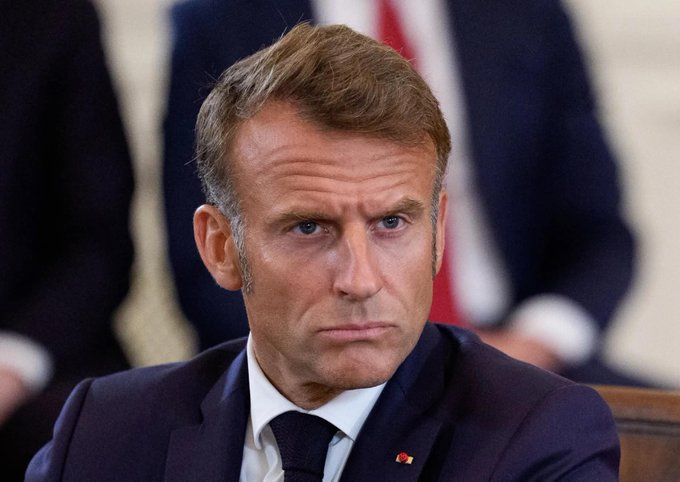
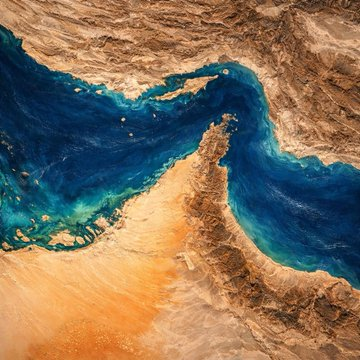
Reflecto News – French President Emmanuel Macron has issued a balanced but firm rebuke of both the United States and Iran, declaring that both sides are wrong on the ongoing dispute surrounding the Strait of Hormuz.
Speaking during a joint press appearance in Paris on Monday, April 20, 2026, Macron stated:
“Both the United States and Iran are wrong on the Strait of Hormuz. The blockade and the restrictions are unacceptable. Freedom of navigation in this international waterway must be fully restored without conditions or tolls.”
Macron emphasized that the strait is a global chokepoint vital to energy security and international trade, and that neither unilateral blockade (by the U.S.) nor restrictive controls and potential tolls (by Iran) serve the interests of regional or global stability.
Macron’s Position
The French leader called for:
- Immediate restoration of unrestricted commercial passage through the Strait of Hormuz.
- An end to the U.S. naval blockade of Iranian ports.
- An end to Iranian-imposed restrictions, authorization requirements, or tolls on merchant vessels.
- A return to full compliance with international maritime law, particularly the principle of transit passage under the UN Convention on the Law of the Sea (UNCLOS).
Macron described the current tit-for-tat actions as “dangerous escalation” that risks broader economic consequences, including higher energy prices and disrupted supply chains.
Context of the Dispute
The comments come as the two-week U.S.-Iran ceasefire remains under severe strain:
- Iran has reimposed strict controls over the strait and recent gunfire incidents against merchant vessels have heightened risks.
- The U.S. continues its naval blockade of Iranian ports, with President Trump warning he may not extend the ceasefire without a comprehensive deal.
- Vice President JD Vance is expected in Islamabad within hours for high-level talks with the Iranian delegation.
France, as a permanent member of the UN Security Council and a major European power with significant interests in Gulf energy security, has positioned itself as a voice calling for de-escalation and adherence to international norms.
Implications
Macron’s criticism of both sides is notable because it avoids the more one-sided positions taken by some other European leaders. It adds international pressure on Washington and Tehran to compromise ahead of the Islamabad talks and reflects growing European concern over the economic fallout from prolonged instability in the Persian Gulf.
Reflecto News will continue monitoring reactions from the White House, Tehran, and other capitals, as well as any impact on the upcoming high-level talks in Islamabad.
Frequently Asked Questions (FAQs)
Q1: What did President Macron say exactly?
He stated that “both the United States and Iran are wrong on the Strait of Hormuz” and called the blockade and restrictions unacceptable, demanding full restoration of freedom of navigation without conditions or tolls.
Q2: Why is Macron criticizing both sides?
France views the U.S. naval blockade and Iran’s restrictive controls/tolls as equally damaging to international maritime law and global energy security.
Q3: Does this reflect broader European opinion?
It aligns with growing European calls for de-escalation and adherence to UNCLOS principles, though Macron’s balanced criticism of both parties is more explicit than statements from some other EU leaders.
Q4: How does this affect the current ceasefire?
It adds diplomatic pressure on both Washington and Tehran to resolve the Hormuz dispute before the two-week truce expires, as continued restrictions risk further escalation.
Q5: When are the next talks?
Vice President JD Vance is expected to arrive in Islamabad within hours for high-level U.S.-Iran negotiations, with Pakistan acting as mediator.
Q6: What is the current situation in the Strait of Hormuz?
Iran has reimposed strict controls, with recent reports of gunfire against merchant vessels. Traffic has dropped sharply and insurance costs have surged.
Q7: Could Macron’s statement influence the talks?
Yes. As a major European voice and permanent UN Security Council member, France’s call for unrestricted navigation adds international weight to the negotiations in Islamabad.
For continuous, accurate coverage of the U.S.-Iran ceasefire, the Strait of Hormuz dispute, and developments in Islamabad, follow Reflecto News — your source for timely and professional reporting.
Questions people ask
What is China's current share of global manufacturing?
China now accounts for twenty eight percent of global manufacturing. This industrial output exceeds the combined manufacturing production of the United States, Japan, and Germany, making China the leading global industrial power according to recent reports.
Why were Andrew Tate and Tristan Tate arrested in Miami?
Andrew Tate and his brother Tristan Tate were taken into custody in Miami by the United States Marshals Service. They face thirty eight new charges in the United Kingdom, including rape and child pornography offences, and prosecutors are seeking their extradition.
What warning did Moscow issue about oil prices?
Kirill Dmitriev, the Chief Executive of the Russian Direct Investment Fund, warned that a tsunami of skyrocketing oil prices is approaching. Moscow describes this potential energy shock as a major threat to global markets.
What political shift is projected for Benjamin Netanyahu's coalition?
Political polls project that Prime Minister Benjamin Netanyahu's coalition is on track to lose its majority in the upcoming October election. This projection indicates a potential political shift in Jerusalem.
Why did a Russian military aircraft land in Tehran?
A Russian airborne command aircraft, widely known as a doomsday plane, landed in Tehran. The arrival of the aircraft represents a high stakes show of support from Russia for Iran during a period of heightened regional tensions.
What did President Masoud Pezeshkian claim about the United States and Israel?
Iranian President Masoud Pezeshkian claimed that the United States and Israel failed in a forty eight hour plan to topple the Iranian government. He made these statements during a televised address marking two years since his inauguration.