Reflecto News is an online news platform covering major international political events, global economic developments, and security conflicts. The site provides updates on topics such as Chinese manufacturing dominance, Middle Eastern political tensions, and high profile legal arrests. Readers can access current articles organized by categories like World News, Iran, and USA.
Beijing says the test was a “routine” annual exercise, but regional powers express deep concern over the lack of transparency and the potential for escalation in the South Pacific.
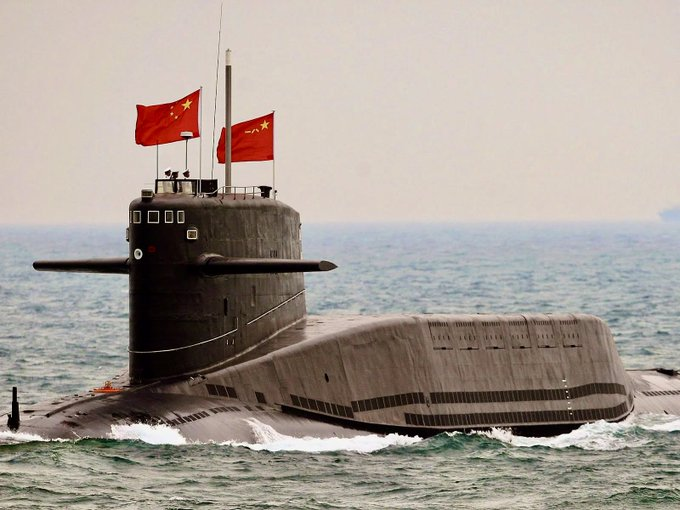
BEIJING / SYDNEY — China’s People’s Liberation Army (PLA) Navy has successfully test-launched a strategic ballistic missile from a nuclear-powered submarine into the high seas of the Pacific Ocean, a move that has drawn sharp rebukes and deep concern from regional neighbors Australia, New Zealand, and Japan .
The test took place at 12:01 PM Beijing time on Monday, July 6, 2026, according to China’s official Xinhua News Agency . The missile, which carried a simulated training warhead, was launched from a “strategic nuclear submarine of the Chinese People’s Liberation Army Navy” and “accurately landed in the designated area” .
Beijing emphasized that the test was a routine part of its annual military training program. “This missile test was a routine part of China’s annual military training program, and relevant countries had been notified in advance,” Xinhua reported . Chinese officials asserted the launch was in accordance with international law and practice, and “is not directed against any specific country or target” .
However, the test’s timing and location have fueled significant international unease. It came just hours after Australia and Fiji signed a new defence alliance, a development some analysts view as a calculated message from Beijing . The notification of regional governments, including Australia and New Zealand, also arrived mere hours before the launch, compounding concerns over a lack of transparency .
A Rare Test of Intercontinental Capability
This test is only the second known instance of China launching a ballistic missile into the Pacific in decades, following a similar test in September 2024 . That previous launch was also described as a “routine” military exercise.
While Beijing has not officially confirmed the missile type, military analysts widely believe the test involved the JL-3 (Julang-3) submarine-launched ballistic missile (SLBM), China’s most advanced sea-based nuclear deterrent .
The JL-3 is a third-generation missile that significantly enhances China’s sea-based nuclear deterrence, allowing it to project power far beyond its shores . It is reported to have an intercontinental range exceeding 8,000 kilometers and is capable of carrying multiple independently targetable reentry vehicles (MIRVs) .
Regional Reactions: ‘Deep Concern’ and ‘Destabilising’
The test was met with swift condemnation from regional powers, who characterized it as a destabilizing act.
Australia
Australian Foreign Minister Penny Wong, who was in Fiji when the test was announced, described it as “destabilising to the region” . “Australia has been clear with China that we regard this as destabilising to the region,” Wong stated, adding that the test takes place in the context of China’s rapid military buildup, which “is lacking in the transparency and reassurance as to intent that the region expects” .
Defence Minister Richard Marles confirmed Australia was informed of the test on the day it occurred and voiced concern over “any actions which undermine the stability, the peace, and security of the Pacific” .
New Zealand
New Zealand’s Foreign Minister Winston Peters expressed “deep concern,” noting that the launch was into the South Pacific Nuclear-Free Zone, established under the 1986 Rarotonga Treaty . China ratified the relevant protocols in 1987, committing not to test nuclear weapons in the area .
“New Zealand considers this an unwelcome and concerning development,” Peters said in a statement, adding that his government was informed “within hours” of the launch .
Japan
Japan’s government issued a strong warning to Beijing. The Japanese cabinet office said it had “firmly urged China to reconsider the ballistic missile test launch” to ensure it did not pose a threat to Japan’s security, such as passing through Japanese airspace .
Japan conveyed its “grave concern over China’s increasingly active military activities” and strongly urged China to reconsider conducting such training in a manner that could threaten its security .
Strategic Signals and the JL-3 Missile
The JL-3 missile is a cornerstone of China’s ambition to modernize its nuclear triad—land, air, and sea-based nuclear systems . The missile’s development was accelerated to overcome vulnerabilities in the range and survivability of its predecessors .
The JL-3 is believed to be integrated with the Type 096 nuclear submarines, which feature a reduced “hump” (the section behind the sail on ballistic missile submarines) to enhance stealth and survivability . This new capability allows these submarines to launch a second-strike nuclear attack from protected waters in the South China Sea, significantly lowering the threshold for a credible retaliatory strike against the continental United States .
The timing of the test, coinciding with the Australia-Fiji defence pact, has been noted by defense analysts as a deliberate signal. “That said, the notification landing the day after Australia and Fiji signed the Ocean of Peace Alliance is interesting, to say the least,” said Mark Douglas, an analyst for Starboard Maritime Intelligence, which tracks Chinese naval movements .
Frequently Asked Questions (FAQs)
Q1: What type of missile did China test-launch?
While China has not confirmed the specific model, the test is widely believed to have been the JL-3 (Julang-3) submarine-launched ballistic missile (SLBM). It is China’s most advanced sea-based nuclear deterrent, with an intercontinental range of over 8,000 kilometers and MIRV capability .
Q2: Why are regional countries concerned about this test?
Regional powers like Australia, New Zealand, and Japan have expressed concern over the lack of transparency and the potential for military escalation. Australia called it “destabilising,” while New Zealand noted the launch occurred in the South Pacific Nuclear-Free Zone, a treaty China ratified to not test nuclear weapons in the area .
Q3: What is the significance of the test’s timing?
The test occurred just hours after Australia and Fiji signed a new defence alliance. This timing has led analysts to believe Beijing’s move was a calculated message to the region about its military capabilities and intentions .
Q4: Did China notify other countries in advance?
Yes. China claims to have notified “relevant countries” in advance, including Australia and New Zealand. However, both nations confirmed they were only informed hours before the test, with New Zealand noting it was “within hours” of the launch .
Q5: Is this the first time China has conducted such a test?
No. China test-fired an intercontinental ballistic missile into the Pacific in September 2024, marking the first such known test in decades. Monday’s test is the second such launch in two years, reflecting an increased pace in military exercises .
This is a developing story. Reflecto News will continue to provide updates on China’s military exercises and regional reactions.
Questions people ask
What is China's current share of global manufacturing?
China now accounts for twenty eight percent of global manufacturing. This industrial output exceeds the combined manufacturing production of the United States, Japan, and Germany, making China the leading global industrial power according to recent reports.
Why were Andrew Tate and Tristan Tate arrested in Miami?
Andrew Tate and his brother Tristan Tate were taken into custody in Miami by the United States Marshals Service. They face thirty eight new charges in the United Kingdom, including rape and child pornography offences, and prosecutors are seeking their extradition.
What warning did Moscow issue about oil prices?
Kirill Dmitriev, the Chief Executive of the Russian Direct Investment Fund, warned that a tsunami of skyrocketing oil prices is approaching. Moscow describes this potential energy shock as a major threat to global markets.
What political shift is projected for Benjamin Netanyahu's coalition?
Political polls project that Prime Minister Benjamin Netanyahu's coalition is on track to lose its majority in the upcoming October election. This projection indicates a potential political shift in Jerusalem.
Why did a Russian military aircraft land in Tehran?
A Russian airborne command aircraft, widely known as a doomsday plane, landed in Tehran. The arrival of the aircraft represents a high stakes show of support from Russia for Iran during a period of heightened regional tensions.
What did President Masoud Pezeshkian claim about the United States and Israel?
Iranian President Masoud Pezeshkian claimed that the United States and Israel failed in a forty eight hour plan to topple the Iranian government. He made these statements during a televised address marking two years since his inauguration.