Reflecto News is an online news platform covering major international political events, global economic developments, and security conflicts. The site provides updates on topics such as Chinese manufacturing dominance, Middle Eastern political tensions, and high profile legal arrests. Readers can access current articles organized by categories like World News, Iran, and USA.
Reflecto News | Business & Economy | Global Investment
SÃO PAULO — China has made Brazil its top global investment destination, pouring US$6.1 billion into the South American nation in 2025 and surpassing the United States as the primary recipient of Chinese overseas capital, according to a newly released report from the China-Brazil Business Council (CBBC) .
The 45 percent surge in Chinese investment from the previous year far outpaced Brazil’s 4.8 percent rise in total foreign investment and dwarfed China’s worldwide outbound flows, which grew just 1.3 percent . Brazil absorbed 10.9 percent of all Chinese overseas capital, compared to 6.8 percent for the United States .
The investment figures represent a significant realignment of Chinese capital away from traditional Western destinations and toward a strategic partner in the Global South.
Tulio Cariello, the report’s author and director of research at CBBC, noted that the headline number matters less than where Chinese money is going. “We have seen greater diversification, including in areas where China used to invest in the United States,” he said .
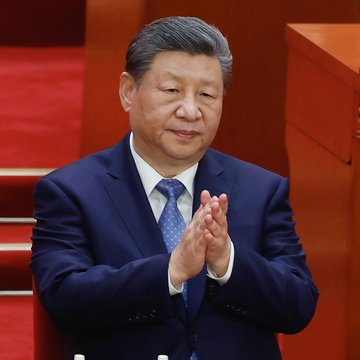

🏭 Where the Money Is Going
Chinese investment has fanned out across 20 Brazilian states, encompassing a record 52 projects in 2025. The investment landscape has shifted dramatically, with mining, automotive manufacturing, and green energy emerging as major pillars .
Mining investment more than tripled from the previous year, reaching US$1.76 billion. Key transactions included CMOC’s purchase of gold mines from Canada’s Equinox Gold for roughly US$1 billion, MMG’s acquisition of Anglo American’s Brazilian nickel operations for US$500 million, and newcomer Baiyin Nonferrous’ purchase of a copper mine in the northeastern state of Alagoas for US$243 million .
The automotive sector ranked third among Chinese investment destinations in Brazil, accounting for 15.8 percent of total Chinese capital . Chinese automakers BYD and Great Wall Motor (GWM) have established a significant presence in Brazil, taking over former Western automotive plants and converting them into electric and hybrid vehicle manufacturing centers . Both companies have seen explosive sales growth in the Brazilian market .
Chinese tech firms have also made their mark, with Meituan’s food delivery arm launching operations in major Brazilian cities .
🌱 The Green Energy Pivot
Sustainability and green energy projects reached a record 31 ventures in Brazil in 2025, representing 60 percent of all Chinese investments in the country . This pivot reflects both Brazilian demand for clean energy and China’s strategic push to export its renewable energy expertise.
In a related development, Brazil’s National Development Bank (BNDES) and China’s Export-Import Bank have established a US$1 billion bilateral fund to invest in energy transition, infrastructure, mining, agriculture, and artificial intelligence starting in 2026 . Brazil will contribute approximately US$400 million, with China adding US$600 million .
🇧🇷 What Makes Brazil Attractive
Multiple factors are driving Chinese capital toward Brazil:
- Weakening currency: Brazil’s real has depreciated, making its assets cheaper for foreign investors
- Vast consumer market: With over 210 million people, Brazil offers significant domestic demand
- Abundant natural resources: Brazil is a major global supplier of iron ore, soy, oil, and other commodities
- Renewable energy potential: Brazil’s hydroelectric, wind, solar, and biofuel capacity align with China’s green energy strategy
- Geopolitical alignment: Neither country imposes punitive tariffs on the other—a sharp contrast to U.S.-China trade relations
📈 Investment Trends and Future Outlook
Chinese investment in Brazil has shown remarkable growth over the past year, driven by diversification into new sectors and a strategic pivot away from traditional Western markets.
The investment surge comes as Chinese firms seek alternatives to the United States, which has erected trade barriers and implemented punitive tariffs on Chinese goods. Unlike the U.S. and Europe, Brazil has not restricted Chinese technology firms such as Huawei or ZTE, providing a more welcoming environment for Chinese capital.
Recent technological collaborations include a strategic partnership between ZTE and MediaTek, announced in May 2026, to launch premium Wi-Fi 7 and XGSPON connectivity solutions targeting high-end households and small businesses in Brazil . The collaboration aims to help local operators differentiate service offerings and increase profitability in a highly competitive broadband market.
The two countries are also negotiating a “partial agreement” under the Mercosur framework that would focus on non-tariff barriers, sanitary regulations, customs procedures, and import quotas—potentially paving the way for deeper integration of Chinese capital .
📊 Key Takeaways for Reflecto News Readers
| Aspect | Summary |
|---|---|
| Total Chinese Investment (2025) | US$6.1 billion (45% increase) |
| Share of Global Chinese Capital | 10.9% (vs U.S. 6.8%) |
| Number of Projects | 52 projects across 20 Brazilian states |
| Mining Investment | US$1.76 billion (triple 2024) |
| Automotive Share | 15.8% of Chinese investment |
| Green Energy Projects | 31 ventures (60% of all investments) |
| Bilateral Fund | US$1 billion (BNDES + China Ex-Im Bank) |
| U.S. Share of Chinese Capital | 6.8% (No. 2 after Brazil) |
Follow Reflecto News for continuous updates on global investment trends, China-Latin America relations, and all breaking business news from around the world.
This article is the intellectual property of Reflecto News. Redistribution without attribution is prohibited. For syndication or media inquiries, please contact the editorial team.
Questions people ask
What is China's current share of global manufacturing?
China now accounts for twenty eight percent of global manufacturing. This industrial output exceeds the combined manufacturing production of the United States, Japan, and Germany, making China the leading global industrial power according to recent reports.
Why were Andrew Tate and Tristan Tate arrested in Miami?
Andrew Tate and his brother Tristan Tate were taken into custody in Miami by the United States Marshals Service. They face thirty eight new charges in the United Kingdom, including rape and child pornography offences, and prosecutors are seeking their extradition.
What warning did Moscow issue about oil prices?
Kirill Dmitriev, the Chief Executive of the Russian Direct Investment Fund, warned that a tsunami of skyrocketing oil prices is approaching. Moscow describes this potential energy shock as a major threat to global markets.
What political shift is projected for Benjamin Netanyahu's coalition?
Political polls project that Prime Minister Benjamin Netanyahu's coalition is on track to lose its majority in the upcoming October election. This projection indicates a potential political shift in Jerusalem.
Why did a Russian military aircraft land in Tehran?
A Russian airborne command aircraft, widely known as a doomsday plane, landed in Tehran. The arrival of the aircraft represents a high stakes show of support from Russia for Iran during a period of heightened regional tensions.
What did President Masoud Pezeshkian claim about the United States and Israel?
Iranian President Masoud Pezeshkian claimed that the United States and Israel failed in a forty eight hour plan to topple the Iranian government. He made these statements during a televised address marking two years since his inauguration.