Reflecto News is an online news platform covering major international political events, global economic developments, and security conflicts. The site provides updates on topics such as Chinese manufacturing dominance, Middle Eastern political tensions, and high profile legal arrests. Readers can access current articles organized by categories like World News, Iran, and USA.
Reflecto News | Breaking News | Trade & Economy
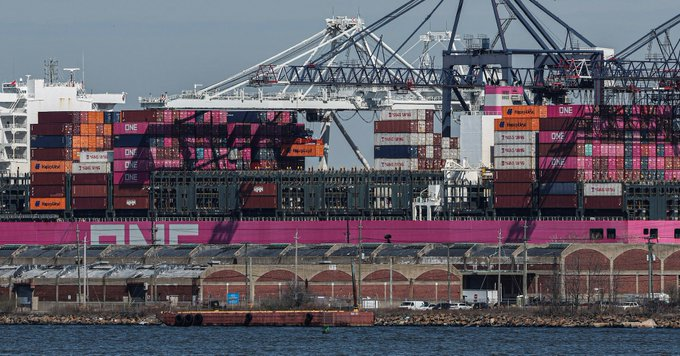
ATLANTA — U.S. container import volumes declined 5.5% in April 2026 compared with March, as escalating trade tensions, the ongoing war with Iran, and growing uncertainty over global shipping routes weighed on importer demand, according to data released Friday by Descartes Systems Group .
The drop follows two consecutive months of growth earlier in the year and adds to mounting evidence that the U.S. economy is feeling the strain of the two-month-old Iran war, which has effectively closed the Strait of Hormuz and disrupted global supply chains .
📊 The Numbers: A Sharp Reversal
| Metric | April 2026 | Change |
|---|---|---|
| Total TEU (20‑foot equivalent units) | 2.24 million | -5.5% vs. March |
| March TEU | 2.37 million | — |
| Year-over-year change | Not specified | — |
The 5.5% month-over-month decline represents a significant reversal from the gains seen in February and March, when importers had been front-loading goods ahead of expected tariff hikes and supply chain disruptions .
🚢 Why Container Imports Are Falling
Descartes attributed the slide to a confluence of headwinds that have made importing goods to the United States more expensive, riskier, and less predictable .
| Factor | Impact |
|---|---|
| Iran war | Closure of the Strait of Hormuz has disrupted global energy supplies, spiked fuel costs, and forced shipping lines to reroute vessels, adding weeks to transit times |
| Red Sea crisis | Houthi attacks on commercial shipping have diverted traffic around the Cape of Good Hope, increasing fuel consumption and reducing available capacity |
| Tariff uncertainty | President Trump’s threats to impose 25% tariffs on European cars and other goods have caused importers to pause orders |
| Labor negotiations | Ongoing dockworker contract talks have created uncertainty at West Coast ports, prompting some shippers to divert cargo to the East Coast or hold back shipments |
Descartes noted that the decline was broad‑based, affecting imports from China, Europe, and Southeast Asia — the three largest source regions for U.S. containerized goods .
🇨🇳 China Imports Drag Down the Total
Imports from China — which account for roughly one‑third of U.S. containerized imports — fell by approximately 8% in April compared with March . The decline follows Trump’s announcement of new tariffs on Chinese goods and the administration’s intensifying trade war with Beijing .
Importers had rushed to bring in goods from China in February and March ahead of the tariff hikes, depleting some of the demand that would have otherwise materialized in April .
☕️ Port Throughput Slows
The decline in import volumes was reflected in throughput at major U.S. ports .
- Port of Los Angeles — processed approximately 15% fewer containers in April compared to March
- Port of Long Beach — volumes fell approximately 12% month‑over‑month
- East Coast ports — Savannah and New York/New Jersey saw smaller declines as shippers diverted cargo away from the West Coast amid labor uncertainty
Descartes noted that the average transit time for goods from Chinese ports to U.S. warehouses increased by 15% in April compared with the pre-war baseline, as vessels were rerouted around Africa to avoid the Red Sea and the Strait of Hormuz .
📈 Forward Indicators: More Declines to Come
The decline in April imports may be just the beginning. The Descartes report noted that bookings for May and June shipments are “well below seasonal norms,” suggesting that import volumes could fall further in the coming months .
The Container Booking Index — a leading indicator of future imports compiled by Descartes — fell 12% in April compared to the year‑ago period, signaling that retailers and manufacturers are pulling back on orders .
⚠️ What This Means for the U.S. Economy
The drop in container imports has both positive and negative implications.
Potential positives:
- Lower import volumes could help reduce the U.S. trade deficit (which hit a record high in Q1 2026)
- May signal that businesses are drawing down inventories rather than ordering new goods, which could boost GDP in the short term
Potential negatives:
- The decline is driven by supply disruptions, not reduced demand — meaning consumers could face shortages of certain goods later in the year
- Higher transportation costs will eventually be passed through to retail prices, adding to inflationary pressures
- If the trend continues, retailers may be caught with insufficient inventory heading into the peak holiday season
Descartes warned that the current situation is “unprecedented in modern times,” with multiple crises — war, trade conflict, and labor disputes — all converging simultaneously .
🔮 What Comes Next
The trajectory of U.S. imports depends on several unresolved variables:
| Variable | Likely Impact |
|---|---|
| Iran war resolution | Rapid reopening of the Strait of Hormuz would ease shipping costs and restore normal transit routes; prolonged conflict would worsen disruptions |
| Red Sea security | Houthi attacks show no sign of abating; diversions around Africa likely to continue |
| Tariffs | Trump’s threatened auto tariffs could trigger further front‑loading, temporarily boosting imports before a sharp pullback |
| West Coast labor | Contract negotiations continue; strike or slowdown would severely disrupt imports |
Descartes expects import volumes to remain volatile until at least the third quarter, with the potential for sharp spikes if a deal is reached with Iran or labor agreements are finalized — followed by equally sharp declines if the disruptions persist .
📋 Key Takeaways for Reflecto News Readers
| Aspect | Summary |
|---|---|
| April Volume | 2.24 million TEU |
| Monthly Change | -5.5% from March |
| Primary Drivers | Iran war (Hormuz closure), Red Sea attacks, tariff uncertainty, West Coast labor talks |
| China Imports | Down approx. 8% from March |
| West Coast Ports | LA volumes down 15%; Long Beach down 12% |
| Forward Indicator | Booking index down 12% year‑over‑year |
| Outlook | Continued volatility; more declines likely before recovery |
| Risk | Shortages of certain goods later in 2026 if disruptions persist |
Follow Reflecto News for continuous updates on global trade, supply chain disruptions, and all breaking news from the U.S. economy.
This article is the intellectual property of Reflecto News. Redistribution without attribution is prohibited. For syndication or media inquiries, please contact the editorial team.
Questions people ask
What is China's current share of global manufacturing?
China now accounts for twenty eight percent of global manufacturing. This industrial output exceeds the combined manufacturing production of the United States, Japan, and Germany, making China the leading global industrial power according to recent reports.
Why were Andrew Tate and Tristan Tate arrested in Miami?
Andrew Tate and his brother Tristan Tate were taken into custody in Miami by the United States Marshals Service. They face thirty eight new charges in the United Kingdom, including rape and child pornography offences, and prosecutors are seeking their extradition.
What warning did Moscow issue about oil prices?
Kirill Dmitriev, the Chief Executive of the Russian Direct Investment Fund, warned that a tsunami of skyrocketing oil prices is approaching. Moscow describes this potential energy shock as a major threat to global markets.
What political shift is projected for Benjamin Netanyahu's coalition?
Political polls project that Prime Minister Benjamin Netanyahu's coalition is on track to lose its majority in the upcoming October election. This projection indicates a potential political shift in Jerusalem.
Why did a Russian military aircraft land in Tehran?
A Russian airborne command aircraft, widely known as a doomsday plane, landed in Tehran. The arrival of the aircraft represents a high stakes show of support from Russia for Iran during a period of heightened regional tensions.
What did President Masoud Pezeshkian claim about the United States and Israel?
Iranian President Masoud Pezeshkian claimed that the United States and Israel failed in a forty eight hour plan to topple the Iranian government. He made these statements during a televised address marking two years since his inauguration.