Reflecto News is an online news platform covering major international political events, global economic developments, and security conflicts. The site provides updates on topics such as Chinese manufacturing dominance, Middle Eastern political tensions, and high profile legal arrests. Readers can access current articles organized by categories like World News, Iran, and USA.
London – April 5, 2026 | Reflecto News
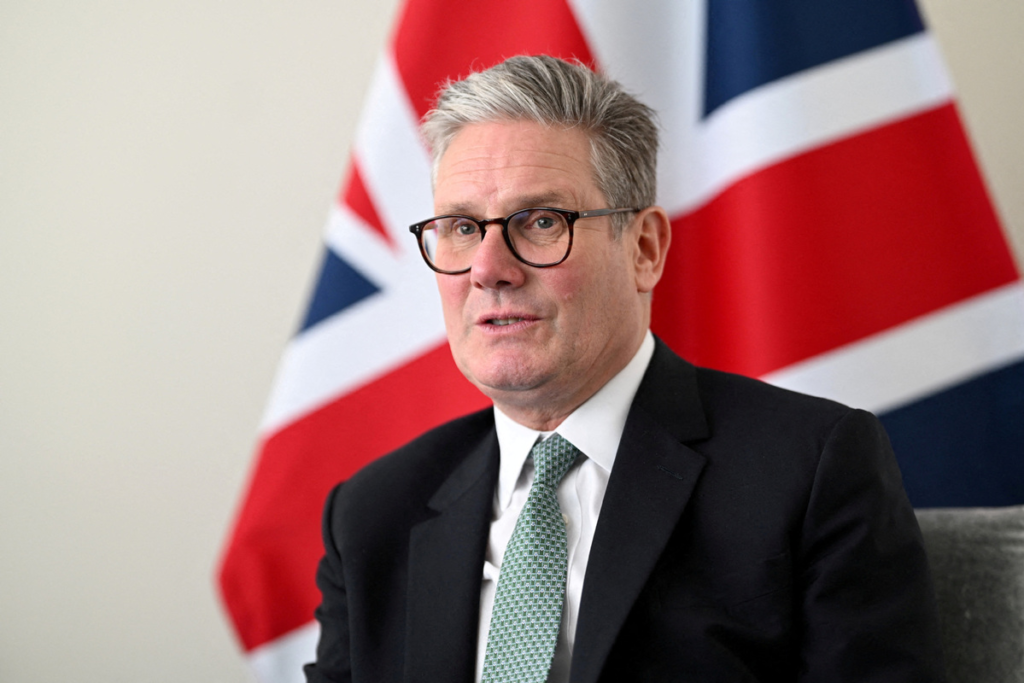
The United Kingdom will host high-level military planning talks with more than 40 countries aimed at securing safe and uninterrupted passage through the Strait of Hormuz once the current war between the US, Israel, and Iran concludes, British officials have confirmed.
The initiative, described as a “post-conflict stabilization framework,” is notably being organized without direct U.S. participation, reflecting growing transatlantic divergences over the handling of the Iran conflict.
Details of the UK-Led Initiative
According to statements from the UK Foreign, Commonwealth & Development Office and Ministry of Defence:
- The talks will focus on establishing a multinational naval and monitoring presence to guarantee freedom of navigation in the Strait of Hormuz, a critical chokepoint responsible for roughly 20% of global oil trade.
- Over 40 nations, including key European allies, India (already participating in earlier UK-led efforts), Gulf states, and several Asian energy importers, are expected to attend.
- The planning will cover rules of engagement, de-mining operations, joint patrols, and mechanisms to prevent future disruptions once a ceasefire or peace agreement is reached.
- The UK has emphasized that the framework is intended to be “inclusive and impartial,” designed to restore confidence in one of the world’s most vital shipping lanes.
This move builds on an earlier UK-led initiative that India had joined to explore ways to reopen the strait.
Context Amid Ongoing Conflict
The announcement comes as Operation Epic Fury enters a critical and volatile phase in its sixth week:
- U.S. forces successfully rescued both downed F-15E pilots in a complex operation involving ground battles with IRGC units, U.S. airstrikes, and the deliberate destruction of multiple aircraft (including HC-130J Combat King II, MH-6 Little Bird, A-10 Warthog, and C-130 Hercules) at a remote base inside Iran.
- Strikes on Tehran reportedly killed over 50 senior Iranian officials, while U.S. and Israeli forces have targeted petrochemical facilities.
- Iran has retaliated with drone strikes on Kuwaiti power and water desalination plants and continues to authorize limited humanitarian shipping through the strait.
- Ceasefire talks remain stalled after Iran rejected the U.S. 15-point peace proposal.
- Transatlantic tensions are rising, with The Wall Street Journal reporting that the US-Europe alliance is approaching a breaking point over the war.
The UK’s decision to organize the talks without the United States signals a desire among European and other partners to prepare for a post-war maritime security architecture that is less dependent on Washington, especially amid concerns over escalation and unilateral U.S. actions.
Reactions and Implications
- European and Asian partners have welcomed the initiative as a pragmatic step toward regional stability and energy security.
- U.S. officials have not yet issued a detailed response, though the exclusion has been noted as another sign of diverging approaches.
- Iran has not commented directly on the UK plan but continues to assert control over parts of the strait while allowing selective humanitarian and essential goods transits.
Analysts see the UK-led talks as an attempt to fill a potential security vacuum once hostilities cease and to reduce reliance on any single power for Hormuz security. However, success will ultimately depend on the terms of any future ceasefire and Iran’s willingness to cooperate.
Reflecto News will continue monitoring developments from London, reactions from participating countries, and any statements from Washington or Tehran regarding the proposed post-war framework. This initiative adds an important diplomatic and military-planning dimension to efforts aimed at containing the long-term fallout of the conflict.
By Reflecto News Desk
Sources: UK Foreign Office and Ministry of Defence statements, The Jerusalem Post, Reuters, Axios, BBC, and international wire services.
Questions people ask
What is China's current share of global manufacturing?
China now accounts for twenty eight percent of global manufacturing. This industrial output exceeds the combined manufacturing production of the United States, Japan, and Germany, making China the leading global industrial power according to recent reports.
Why were Andrew Tate and Tristan Tate arrested in Miami?
Andrew Tate and his brother Tristan Tate were taken into custody in Miami by the United States Marshals Service. They face thirty eight new charges in the United Kingdom, including rape and child pornography offences, and prosecutors are seeking their extradition.
What warning did Moscow issue about oil prices?
Kirill Dmitriev, the Chief Executive of the Russian Direct Investment Fund, warned that a tsunami of skyrocketing oil prices is approaching. Moscow describes this potential energy shock as a major threat to global markets.
What political shift is projected for Benjamin Netanyahu's coalition?
Political polls project that Prime Minister Benjamin Netanyahu's coalition is on track to lose its majority in the upcoming October election. This projection indicates a potential political shift in Jerusalem.
Why did a Russian military aircraft land in Tehran?
A Russian airborne command aircraft, widely known as a doomsday plane, landed in Tehran. The arrival of the aircraft represents a high stakes show of support from Russia for Iran during a period of heightened regional tensions.
What did President Masoud Pezeshkian claim about the United States and Israel?
Iranian President Masoud Pezeshkian claimed that the United States and Israel failed in a forty eight hour plan to topple the Iranian government. He made these statements during a televised address marking two years since his inauguration.