Reflecto News is an online news platform covering major international political events, global economic developments, and security conflicts. The site provides updates on topics such as Chinese manufacturing dominance, Middle Eastern political tensions, and high profile legal arrests. Readers can access current articles organized by categories like World News, Iran, and USA.
By Reflecto News Desk
April 6, 2026
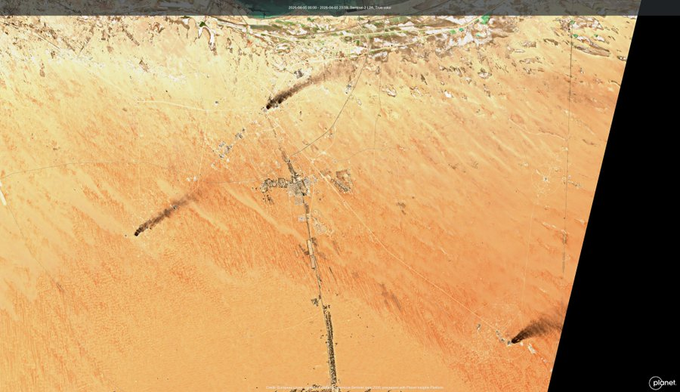
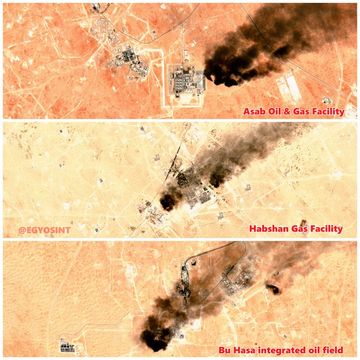
Recent Sentinel-2L satellite imagery shows persistent fires and smoke plumes at three key energy sites in the United Arab Emirates: the Asab oil processing hub, the massive Habshan gas complex, and the Bu Hasa oil field. The incidents follow waves of Iranian missile and drone attacks on Gulf energy infrastructure, part of Tehran’s retaliation amid the broader US-Israel-Iran conflict and Operation Epic Fury.
Asab, a critical oil processing and stabilization facility, has reportedly been burning for several days. Habshan, one of the world’s largest natural gas processing complexes, experienced new fires leading to partial shutdowns. Bu Hasa, the UAE’s largest onshore oil field, has also sustained damage with visible fires.
Sentinel-2L satellite imagery showing smoke and fires at one of the affected UAE oil/gas sites in the desert terrain (Asab area).
Additional satellite view highlighting smoke plumes from energy infrastructure in the UAE following reported strikes.
Details of the Affected Facilities
- Asab (Asab Central Degassing Station): Processes approximately 720,000 barrels per day of crude oil, stabilizing it into Murban blend, the UAE’s primary export grade. Ongoing fires have been visible for days, raising concerns over prolonged disruption to oil production and export capabilities.
- Habshan Gas Complex: One of the largest gas processing facilities globally, with a capacity of around 6.1 billion standard cubic feet per day. UAE authorities previously confirmed fires caused by debris from intercepted Iranian projectiles, leading to a temporary suspension of operations. At least one person (an Egyptian national) was killed and several others injured in related incidents at the site. A comprehensive damage assessment is underway, though domestic gas supply is reportedly being met through alternative ADNOC facilities.
Aerial/satellite overview of the Habshan gas processing complex in Abu Dhabi, a vital hub for UAE natural gas operations.
- Bu Hasa Oil Field: The UAE’s largest onshore oil field, with production capacity exceeding 650,000 barrels per day. Fires have been reported here as well, contributing to potential combined disruptions of over 1.3 million barrels per day in crude handling capacity.
These sites form part of the Abu Dhabi National Oil Company (ADNOC) network. Habshan also serves as the origin point for the Habshan-Fujairah pipeline, an important export route designed to bypass the Strait of Hormuz.
Context: Iranian Retaliatory Strikes on Gulf Energy Infrastructure
The fires align with Iran’s stated strategy of targeting energy assets in response to US and Israeli strikes on Iranian petrochemical facilities (including the recent Asaluyeh/South Pars complex). Iranian forces have launched waves of ballistic missiles, cruise missiles, and drones toward Gulf states, with the UAE intercepting hundreds of projectiles using advanced air defense systems such as THAAD.
UAE officials have attributed damage at Habshan primarily to falling debris from successful interceptions rather than direct hits, though Iran has claimed successful strikes on energy targets. Similar incidents have affected other Gulf locations, including pipeline pumping stations along Habshan-Fujairah routes.
Satellite imagery of fire and smoke at a pumping station along the Habshan-Fujairah oil pipeline.
Economic and Strategic Implications
Disruptions at these facilities could impact:
- Oil and gas production: Combined affected capacity represents a significant portion of UAE onshore output.
- Global energy markets: Any sustained reduction in UAE exports (a major OPEC+ producer) may contribute to price volatility, especially alongside ongoing tensions in the Strait of Hormuz.
- Regional stability: The UAE, a close US ally hosting American military assets, has faced repeated alerts and interceptions. Damage to alternative export infrastructure highlights vulnerabilities in Gulf energy security.
ADNOC has stated that affected areas are being isolated and that customer supply remains unaffected in the short term, but long-term repairs at sophisticated gas and oil processing sites could take weeks or months.
Broader Regional Picture
This development occurs as:
- President Trump has not approved a proposed 45-day ceasefire, with Operation Epic Fury ongoing.
- Iran has rejected temporary truces, demanding a permanent end to hostilities.
- Reports of civilian and infrastructure damage continue on multiple fronts, including earlier claims of child casualties in Tehran strikes.
The targeting (or collateral effects on) energy sites risks escalating the conflict into a wider economic war, with potential ripple effects on global oil supplies and shipping.
Reflecto News will continue monitoring the situation for updates on fire containment efforts, official damage assessments from ADNOC and UAE authorities, market reactions, and any further statements from involved parties. Bookmark Reflecto News for verified coverage of the escalating Middle East conflict, energy security developments, and related geopolitical events.
Questions people ask
What is China's current share of global manufacturing?
China now accounts for twenty eight percent of global manufacturing. This industrial output exceeds the combined manufacturing production of the United States, Japan, and Germany, making China the leading global industrial power according to recent reports.
Why were Andrew Tate and Tristan Tate arrested in Miami?
Andrew Tate and his brother Tristan Tate were taken into custody in Miami by the United States Marshals Service. They face thirty eight new charges in the United Kingdom, including rape and child pornography offences, and prosecutors are seeking their extradition.
What warning did Moscow issue about oil prices?
Kirill Dmitriev, the Chief Executive of the Russian Direct Investment Fund, warned that a tsunami of skyrocketing oil prices is approaching. Moscow describes this potential energy shock as a major threat to global markets.
What political shift is projected for Benjamin Netanyahu's coalition?
Political polls project that Prime Minister Benjamin Netanyahu's coalition is on track to lose its majority in the upcoming October election. This projection indicates a potential political shift in Jerusalem.
Why did a Russian military aircraft land in Tehran?
A Russian airborne command aircraft, widely known as a doomsday plane, landed in Tehran. The arrival of the aircraft represents a high stakes show of support from Russia for Iran during a period of heightened regional tensions.
What did President Masoud Pezeshkian claim about the United States and Israel?
Iranian President Masoud Pezeshkian claimed that the United States and Israel failed in a forty eight hour plan to topple the Iranian government. He made these statements during a televised address marking two years since his inauguration.