Reflecto News is an online news platform covering major international political events, global economic developments, and security conflicts. The site provides updates on topics such as Chinese manufacturing dominance, Middle Eastern political tensions, and high profile legal arrests. Readers can access current articles organized by categories like World News, Iran, and USA.
Reflecto News | Breaking News | US-Iran Diplomacy
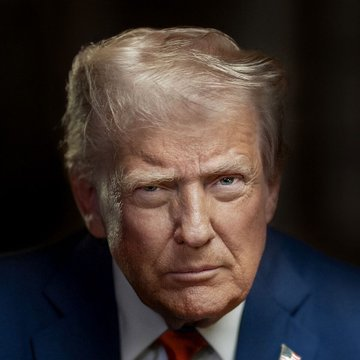
WASHINGTON — President Donald Trump is scheduled to convene a high-level national security meeting in the White House Situation Room on Monday to discuss the ongoing crisis with Iran, as his administration weighs a new diplomatic proposal from Tehran aimed at reopening the Strait of Hormuz and ending the two-month war .
🔒 Situation Room Session: What We Know
The meeting will bring together the President’s top national security and foreign policy team to assess the current diplomatic stalemate and determine potential next steps in the conflict .
Expected attendees include:
- Vice President JD Vance
- Secretary of State Marco Rubio
- Defense Secretary Pete Hegseth
- National Security Advisor (to be confirmed)
- CIA Director John Ratcliffe
- Joint Chiefs Chairman Dan Caine
- Other senior military and intelligence officials
The Situation Room—the White House’s secure nerve center for managing major crises—is typically reserved for decisions requiring the highest level of strategic coordination .
Key agenda items expected to be discussed:
- Assessment of Iran’s new written proposal delivered through Pakistani mediators
- Status of the naval blockade and Iran’s continued closure of the Strait of Hormuz
- The nuclear file, including U.S. demands that Iran suspend uranium enrichment
- Potential next military or diplomatic moves if the current impasse persists
📜 Iran’s New Proposal: What’s on the Table
According to an Axios report citing a U.S. official and two sources familiar with the matter, Iran has transmitted a new proposal to Washington through Pakistani intermediaries .
The proposal reportedly includes three core components:
| Component | Details |
|---|---|
| Reopen the Strait of Hormuz | Iran would restore maritime traffic through the strategic waterway, which normally carries ~20% of global oil shipments |
| End the war | The current ceasefire would be extended into a permanent cessation of hostilities |
| Delay nuclear talks | Negotiations over Iran’s uranium enrichment program would be postponed to a later stage |
By separating the nuclear issue from the immediate crisis, Tehran appears to be attempting to bypass internal disagreements within its leadership about how much to concede on enrichment .
A source told Axios there is “no consensus inside the Iranian leadership about how to address the US demands” on its nuclear program—a division Tehran hopes to resolve by deferring the issue entirely . Iran has also reportedly informed mediators that it will not negotiate on nuclear issues or the status of the Strait of Hormuz at this stage, insisting that any discussions must first focus on ending the war .
Iran’s written proposal, submitted to Washington on Saturday through the Pakistani channel, came shortly after Trump abruptly canceled a planned trip by his envoys Steve Witkoff and Jared Kushner to Islamabad .
📞 ‘No Reason to Meet Without a Nuclear Deal’: Trump’s Position
The President has been characteristically blunt about his bottom line.
In an interview with Fox News on Sunday, Trump reaffirmed that any agreement must address what he considers the core threat: “They know what has to be in the agreement. It’s very simple: they cannot have a nuclear weapon, otherwise there’s no reason to meet” .
Trump told Fox that Iran “offered a lot, but not enough,” explaining his decision to cancel the envoys’ trip . He reiterated that “if they want to talk, they can come to us, or they can call us. You know, there is a telephone. We have nice, secure lines” .
According to Axios, the administration’s war objectives are now to convince Tehran to suspend uranium enrichment for at least a decade and remove its stockpile of enriched uranium from the country .
The White House has declined to negotiate through the press. Spokesperson Olivia Wales told Axios: “These are sensitive diplomatic discussions and the U.S. will not negotiate through the press. As the president has said, the United States holds the cards and will only make a deal that puts the American people first, never allowing Iran to have a nuclear weapon” .
🚢 The Sticking Points: Blockade and Strait of Hormuz
Despite the ceasefire, the core drivers of the crisis remain unresolved:
- The Naval Blockade: The United States imposed a blockade on Iranian ports on April 13. Iran has demanded the blockade be lifted as a precondition for returning to the negotiating table .
- The Strait of Hormuz: Tehran has effectively closed the strategic waterway, which normally carries a fifth of the world’s oil. In exchange for reopening the strait, Iran is demanding a “new legal regime” that would enshrine its sovereign control and guarantee continued revenue from transit .
A senior Iranian official told Reuters that Tehran would not accept a return to the pre-war status quo, insisting that any agreement must recognize Iran’s right to manage the strait .
🏛️ Domestic Pressure: The War Powers Clock
The meeting also comes as the 60-day deadline under the War Powers Act approaches. April 29 will mark 60 days since the conflict began with joint U.S.-Israeli strikes on Iranian nuclear facilities on February 28 .
The Act provides the president with authority to deploy U.S. forces into combat for 60 days without congressional authorization, followed by a 30-day withdrawal period.
A growing number of Republican senators have signaled they will not support extending hostilities beyond the 60-day window without a formal vote from Congress:
- Sen. Susan Collins (R-Maine): “We are now getting closer to the 60-day point under the War Powers Act. If we reach that point and this is not successful, then I do not think that Congress should authorize further hostilities” .
- Sen. Thom Tillis (R-N.C.) , who is not seeking re-election, said it would be difficult for him to support continuing the conflict past the 60-day mark without a clear exit strategy .
- Sen. Roger Wicker (R-Miss.) , chair of the Senate Armed Services Committee, has taken a harder line, writing on X that “the time is over for negotiations with Iran’s regime” and calling on Trump to “direct his skilled military leaders to finish destroying Iran’s conventional military capabilities” .
🌍 Meanwhile in Moscow: Iran Coordinates with Putin
As Trump prepares for his Situation Room meeting, Iranian Foreign Minister Abbas Araghchi has arrived in St. Petersburg for consultations with Russian President Vladimir Putin .
Iran’s ambassador to Moscow, Kazem Jalali, described the visit as a “continuation of Iran’s diplomatic jihad to advance the country’s interests amid external threats” and noted that Araghchi would brief Putin on the latest status of negotiations .
The coordination with Moscow—a key Iranian strategic partner throughout the war—signals that Tehran is preparing for a prolonged diplomatic standoff even as it keeps the channel to Washington open through Pakistani and Omani mediators .
🔮 What Comes Next
The outcome of today’s Situation Room meeting is likely to determine whether the U.S. engages with Iran’s new proposal or maintains its current pressure strategy.
| Scenario | Likelihood | Implications |
|---|---|---|
| Engage with proposal | Uncertain | Could reopen Strait of Hormuz, ease energy crisis, but defer nuclear fight |
| Reject, maintain pressure | Possible | Blockade continues; diplomatic stalemate persists |
| Military escalation | Unlikely but not zero | Would require congressional authorization under War Powers Act |
Sen. Wicker’s call for military action reflects a hawkish minority view, but multiple GOP senators have signaled they would not vote to extend the war past the 60-day deadline without a clear agreement .
For now, the ceasefire remains in place—but both sides have kept their military options open. April 29 is fast approaching, and with it, the first major test of Congress’s willingness to authorize continued hostilities .
Frequently Asked Questions (FAQs)
Q1: What time is the Situation Room meeting?
The White House has not released an official time, but the meeting is expected to occur on Monday, April 27, 2026 .
Q2: What is Iran proposing in its new deal?
Iran has offered to reopen the Strait of Hormuz and end the war in exchange for postponing nuclear negotiations until a later stage .
Q3. Has the White House responded to the proposal?
The White House has confirmed receipt but has not committed to the framework. A spokesperson said the U.S. “will not negotiate through the press” .
Q4. What is Trump’s bottom line?
Trump has stated that any agreement must permanently prevent Iran from obtaining a nuclear weapon; otherwise, “there’s no reason to meet” .
Q5. What is the 60-day deadline?
The War Powers Act gives the president authority to deploy forces into combat for 60 days without congressional authorization. That window ends April 29 .
Q6: Is Iran’s foreign minister involved in these talks?
Araghchi has been shuttling between Pakistan, Oman, and Russia. He is currently in St. Petersburg meeting with President Putin .
Key Takeaways for Reflecto News Readers
| Aspect | Summary |
|---|---|
| Meeting today | Trump convenes Situation Room session on Iran |
| Iran’s proposal | Reopen Hormuz, end war → postpone nuclear talks |
| Trump’s position | No nuclear weapon, otherwise “no reason to meet” |
| War Powers deadline | 60-day authorization ends April 29 |
| Key GOP senators | Collins, Tillis signal they won’t extend without vote |
| Hawkish voices | Sen. Wicker calls for finishing Iran’s military capabilities |
| Araghchi’s location | St. Petersburg, consulting with Putin |
| Ceasefire status | Extended but fragile; no formal agreement reached |
Follow Reflecto News for continuous updates from the White House Situation Room, the War Powers Act deadline, and all breaking news from Washington and around the world.
This article is the intellectual property of Reflecto News. Redistribution without attribution is prohibited. For syndication or media inquiries, please contact the editorial team.
Questions people ask
What is China's current share of global manufacturing?
China now accounts for twenty eight percent of global manufacturing. This industrial output exceeds the combined manufacturing production of the United States, Japan, and Germany, making China the leading global industrial power according to recent reports.
Why were Andrew Tate and Tristan Tate arrested in Miami?
Andrew Tate and his brother Tristan Tate were taken into custody in Miami by the United States Marshals Service. They face thirty eight new charges in the United Kingdom, including rape and child pornography offences, and prosecutors are seeking their extradition.
What warning did Moscow issue about oil prices?
Kirill Dmitriev, the Chief Executive of the Russian Direct Investment Fund, warned that a tsunami of skyrocketing oil prices is approaching. Moscow describes this potential energy shock as a major threat to global markets.
What political shift is projected for Benjamin Netanyahu's coalition?
Political polls project that Prime Minister Benjamin Netanyahu's coalition is on track to lose its majority in the upcoming October election. This projection indicates a potential political shift in Jerusalem.
Why did a Russian military aircraft land in Tehran?
A Russian airborne command aircraft, widely known as a doomsday plane, landed in Tehran. The arrival of the aircraft represents a high stakes show of support from Russia for Iran during a period of heightened regional tensions.
What did President Masoud Pezeshkian claim about the United States and Israel?
Iranian President Masoud Pezeshkian claimed that the United States and Israel failed in a forty eight hour plan to topple the Iranian government. He made these statements during a televised address marking two years since his inauguration.