Reflecto News is an online news platform covering major international political events, global economic developments, and security conflicts. The site provides updates on topics such as Chinese manufacturing dominance, Middle Eastern political tensions, and high profile legal arrests. Readers can access current articles organized by categories like World News, Iran, and USA.
Reflecto News
April 15, 2026
In a forthright address to the House of Commons, UK Prime Minister Sir Keir Starmer has publicly confirmed he is under intense pressure from the United States to alter Britain’s position on the escalating US-Israel conflict with Iran. Starmer firmly declared: “It is not our war… A lot of pressure has been applied to me to take a different course… I’m not going to change my mind. I’m not going to yield. It is not in our national interest to join this war and we will not do so.”
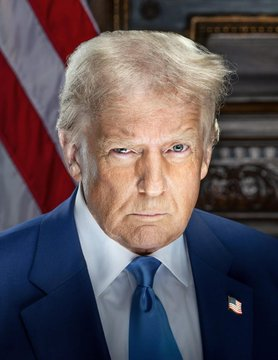
The statement comes amid growing strains in the UK-US “special relationship,” with President Donald Trump openly criticising Britain’s refusal to join offensive operations or enforce a US-led blockade of the Strait of Hormuz.
Starmer’s Direct Response to US Pressure
During Prime Minister’s Questions, Starmer left no room for ambiguity. He reiterated that Britain’s position had been consistent from the outset of the conflict, which began in late February 2026. The Prime Minister acknowledged that “pressure included what happened last night” but stressed his government would prioritise national interest over external demands.
Starmer has authorised limited defensive support — such as allowing US use of RAF bases for protective missions and contributing to mine-clearing operations — but has explicitly ruled out participation in offensive strikes or the controversial blockade of Iranian ports.
The US-UK Rift: Trump’s Criticism and Trade Threats
President Trump has repeatedly voiced frustration with the UK’s stance. In recent interviews, he described the special relationship as “sad” and suggested the landmark UK-US trade deal — signed in May 2025 and providing tariff relief on cars, steel, and aluminium — “can always be changed.” Trump has accused Britain of being absent when needed and dismissed UK naval capabilities as “toys.”
Chancellor Rachel Reeves has hit back, describing the US approach as a “folly” launched without a clear exit strategy, while a Downing Street spokesperson insisted the transatlantic alliance remains “far bigger than any individual issue.”
Background: The Iran Conflict and Strait of Hormuz Crisis
The US-Israel military campaign against Iran, launched in late February 2026, has rapidly escalated into a major regional crisis. Central to the dispute is the Strait of Hormuz — a narrow waterway through which roughly one-fifth of global oil and liquefied natural gas passes. The US has imposed a full blockade of Iranian ports, halting the vast majority of Iran’s sea trade and driving up global energy prices.
Britain, as a net energy importer, has felt the economic ripple effects, with rising fuel costs already impacting households and businesses. The Bank of England has warned of a “major supply shock” to the UK economy.
Starmer’s government has instead focused on diplomacy. The Prime Minister is co-hosting an international summit with French President Emmanuel Macron this week to secure a political solution, reopen the strait, and prevent further escalation.
Economic and Strategic Implications for the UK
The IMF has downgraded UK growth forecasts, citing the country’s vulnerability to energy price spikes. Higher petrol prices, increased building costs, and disrupted supply chains are already being felt. Starmer has warned that joining the conflict would harm British interests at a time when economic recovery remains fragile.
Geopolitically, the row tests the limits of the UK-US alliance. While intelligence and defence cooperation continues, public differences over Iran have exposed diverging priorities. Starmer has simultaneously signalled a desire for closer EU partnerships to navigate an increasingly volatile global landscape.
Domestic and International Reactions
Opposition Leader Kemi Badenoch has accused Starmer of misrepresenting positions on Iran, while Liberal Democrat leader Ed Davey has criticised Trump’s approach. Public opinion in Britain largely supports avoiding deeper entanglement in Middle East conflicts.
Internationally, several US allies including France, Spain, and Türkiye have also distanced themselves from the Hormuz blockade. China has condemned the move, and peace talks — mediated in part through Pakistan — remain fragile.
King Charles and Queen Camilla’s upcoming state visit to the US (27-30 April) is expected to proceed, with both sides insisting the royal engagement symbolises enduring ties beyond current political tensions.
What Happens Next?
Starmer has committed to diplomatic efforts aimed at de-escalation and reopening the Strait of Hormuz. Whether US pressure intensifies or a ceasefire materialises will shape the coming weeks. The Prime Minister’s firm stance may bolster his domestic image as a steady leader, but risks further friction with Washington at a critical time for global security and the UK economy.
Reflecto News will continue to monitor developments closely.
Frequently Asked Questions (FAQs)
Q1: What exactly did Keir Starmer say about US pressure on Iran?
Starmer told MPs: “It is not our war… a lot of pressure has been applied to me… I’m not going to yield. It is not in our national interest to join this war and we will not do so.”
Q2: Why is the US pressuring the UK over Iran?
The Trump administration wants broader allied support for offensive operations and the Strait of Hormuz blockade. Britain’s refusal to participate fully has drawn sharp criticism from the President.
Q3: What is the Strait of Hormuz and why is it important?
It is a vital chokepoint in the Persian Gulf carrying 20% of the world’s oil supply. Disruptions have already pushed up global energy prices and affected UK fuel costs.
Q4: Has the UK provided any support to the US in the Iran conflict?
Yes — limited defensive support, including access to UK bases for protective missions and assistance with maritime security. Britain has not joined offensive strikes or the blockade.
Q5: Could the UK-US trade deal be affected?
President Trump has explicitly threatened to revisit the 2025 tariff agreement. UK officials are continuing trade talks but maintain the relationship transcends any single dispute.
Q6: How is the Iran conflict affecting the UK economy?
As a net energy importer, Britain faces higher fuel prices, increased inflation risks, and slower growth. The IMF has already cut its UK growth forecast.
Q7: What is Britain doing diplomatically?
Starmer is co-hosting a summit with France to build an international coalition focused on de-escalation, reopening the strait, and supporting a sustainable ceasefire.
For the latest updates on UK foreign policy, the Iran conflict, and US-UK relations, bookmark Reflecto News — your trusted source for accurate, in-depth analysis.
Questions people ask
What is China's current share of global manufacturing?
China now accounts for twenty eight percent of global manufacturing. This industrial output exceeds the combined manufacturing production of the United States, Japan, and Germany, making China the leading global industrial power according to recent reports.
Why were Andrew Tate and Tristan Tate arrested in Miami?
Andrew Tate and his brother Tristan Tate were taken into custody in Miami by the United States Marshals Service. They face thirty eight new charges in the United Kingdom, including rape and child pornography offences, and prosecutors are seeking their extradition.
What warning did Moscow issue about oil prices?
Kirill Dmitriev, the Chief Executive of the Russian Direct Investment Fund, warned that a tsunami of skyrocketing oil prices is approaching. Moscow describes this potential energy shock as a major threat to global markets.
What political shift is projected for Benjamin Netanyahu's coalition?
Political polls project that Prime Minister Benjamin Netanyahu's coalition is on track to lose its majority in the upcoming October election. This projection indicates a potential political shift in Jerusalem.
Why did a Russian military aircraft land in Tehran?
A Russian airborne command aircraft, widely known as a doomsday plane, landed in Tehran. The arrival of the aircraft represents a high stakes show of support from Russia for Iran during a period of heightened regional tensions.
What did President Masoud Pezeshkian claim about the United States and Israel?
Iranian President Masoud Pezeshkian claimed that the United States and Israel failed in a forty eight hour plan to topple the Iranian government. He made these statements during a televised address marking two years since his inauguration.