By Reflecto News Staff
April 4, 2026

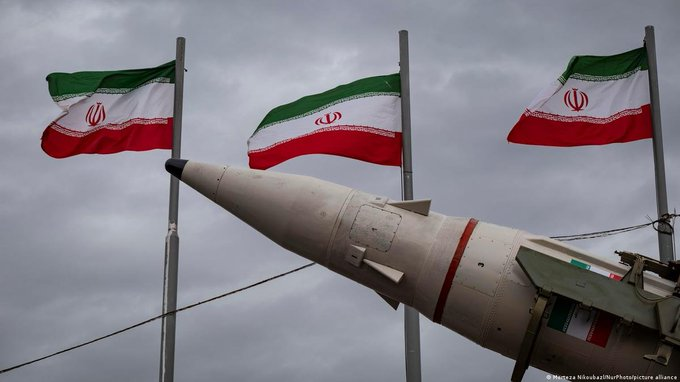
Lahore, Pakistan – Iran’s Khatam al-Anbiya Central Headquarters, the Islamic Revolutionary Guard Corps (IRGC) operational command overseeing much of the country’s military construction and defensive projects, has issued a defiant statement asserting that key strategic assets—including missile production centers, stockpiles, drones, modern air defense systems, and electronic warfare capabilities—have not been significantly degraded by weeks of U.S. and Israeli strikes.
Spokesperson Lieutenant Colonel Ebrahim Zolfaghari (or Ibrahim Zolfaqari, per varying transliterations) declared that adversaries “know nothing” of Iran’s true military depth, emphasizing that production occurs in secret, hardened, or unknown locations unreachable to enemy forces. He described targeted sites as “insignificant” and warned that the conflict will continue until the U.S. and Israel face “humiliation and total surrender.”
The statement comes on the 35th day of the ongoing Iran war, which escalated in late February 2026 with U.S.-Israeli operations targeting Iranian military infrastructure, nuclear-related sites, and proxy networks. Iran has responded with repeated missile and drone barrages, while its Hezbollah ally continues rocket attacks on northern Israel, including the recent damage to a McDonald’s branch.
IRGC-affiliated imagery or map often circulated with such statements showing claimed underground or dispersed facilities. (Representative image from Iranian state media channels)
What Khatam al-Anbiya Claimed
In the announcement, the headquarters stressed:
- Strategic missile production centers, long-range offensive and precision drones, modern air defense systems, and electronic warfare equipment remain fully operational.
- Attacks so far hit only peripheral or low-value targets; core capabilities are protected in dispersed, underground, or classified sites.
- Enemy intelligence on Iran’s arsenal is “incomplete and inaccurate.”
- Iran continues to produce and upgrade ballistic missiles at key bases with no reported shortages in stockpiles.
- New air defense systems have been deployed in recent engagements, with claims of successes against U.S. and Israeli assets on April 3 (described by Iran as “Black Friday” for adversaries).
The command vowed sustained resistance, including potential escalation against U.S. bases in the region if hostilities persist.
Khatam al-Anbiya Construction Headquarters (also known as Ghorb Khatam) is a major IRGC-linked engineering conglomerate involved in military infrastructure, passive defense projects, and support for ballistic missile and nuclear programs.
Contrasting Assessments from U.S., Israeli, and Independent Sources
Iran’s claims stand in sharp contrast to statements from Washington and Jerusalem, though U.S. intelligence provides a more nuanced picture:
- U.S. Intelligence View: Recent assessments indicate that roughly half of Iran’s ballistic missile launchers remain intact (including some buried under rubble but potentially recoverable), alongside thousands of one-way attack drones. Production facilities have been hit hard, but not completely eliminated. Underground bunkers and dispersed sites complicate full destruction.
- Trump Administration Claims: President Trump and officials have stated that approximately 90% of Iran’s missile and launch systems have been disabled, with two-thirds or more of production capacity damaged or destroyed. They emphasize overwhelming U.S.-Israeli air dominance and strikes on over 4,000–10,000 targets, including steel plants critical for missile casings.
- Israeli Assessments: The IDF reports destroying or damaging key production sites (e.g., in Parchin, Shahrud, Khojir, and multiple locations in Tehran, Isfahan, and elsewhere), along with numerous launchers and storage facilities. Some estimates suggest Iran’s missile inventory has dropped significantly (from ~2,500 to around 1,000 in one analysis), though reconstitution remains a concern.
- Independent Analyses: Reports note that while visible strikes have degraded capabilities—hitting steel factories, engine production lines, and known bases—Iran’s heavy reliance on underground facilities, rapid repair efforts, and possible external support (Russia, China, North Korea) allows partial continuity. Launch rates have declined but not collapsed entirely.
Satellite imagery and OSINT have confirmed damage to several high-profile sites, yet the full extent of Iran’s dispersed arsenal remains difficult to verify due to secrecy and terrain.
Broader Context in the Iran War
The conflict, now over a month old, centers on degrading Iran’s ability to threaten the region, particularly its missile and drone programs used against Israel and Gulf targets, as well as efforts to reopen the Strait of Hormuz. Iran’s proxies continue operations on multiple fronts, including Hezbollah’s rocket fire that recently damaged civilian sites in northern Israel.
Strikes on Iranian defense industries have economic ripple effects, with some steel plants shut down. However, Iranian officials insist production persists underground or at alternate locations. U.S. and allied air defenses have intercepted most incoming threats, but sustained Iranian salvos strain interceptor stockpiles.
This latest Iranian statement serves both propaganda and deterrence purposes: projecting resilience to domestic audiences and adversaries while signaling that Tehran retains offensive options.
Implications and What Lies Ahead
- For the Conflict: If Iran’s core capabilities are indeed more intact than publicly acknowledged by the U.S./Israel, prolonged fighting could escalate costs for all sides, including risks to global energy markets via the Strait of Hormuz.
- Reconstitution Risks: Even with damage, Iran has historically shown ability to rebuild missile programs relatively quickly with foreign assistance.
- NATO and Alliance Dynamics: The ongoing war continues to fuel debates over burden-sharing, with President Trump previously criticizing the alliance as an “unreliable partner” amid European reluctance to engage directly.
Analysts caution that both sides have incentives to shape narratives—Tehran to deter further attacks and maintain morale, while the coalition highlights operational successes to justify continued pressure.
Reflecto News will track further developments, including any verified strikes, Iranian retaliatory actions, or diplomatic overtures. The fog of war persists, with verifiable damage assessments remaining challenging due to restricted access and classified programs on all sides.
This is a developing story. Updates will follow as more confirmed details emerge from Washington, Tehran, Jerusalem, and independent monitors.