Reflecto News is an online news platform covering major international political events, global economic developments, and security conflicts. The site provides updates on topics such as Chinese manufacturing dominance, Middle Eastern political tensions, and high profile legal arrests. Readers can access current articles organized by categories like World News, Iran, and USA.
By Reflecto News Desk
April 6, 2026
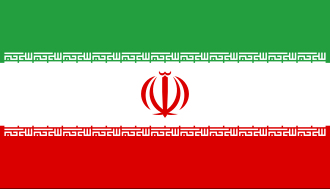

Iran has firmly rejected a proposed 45-day ceasefire with the United States and Israel, insisting instead on a permanent end to the ongoing conflict accompanied by strong security guarantees. The announcement comes as mediators from Pakistan, Egypt, and Turkey push a two-phase framework aimed at halting hostilities and reopening the Strait of Hormuz, while President Donald Trump has yet to approve the plan and maintains pressure through Operation Epic Fury.
Iranian Foreign Ministry spokesperson Esmaeil Baghaei (also referred to as Esmail Baqaei) stated during a press briefing that Tehran has formulated its response to the proposals conveyed via intermediaries. He emphasized that negotiations are “incompatible with ultimatums and threats” and described certain US demands as “excessive, unrealistic, and illogical.” A senior Iranian official told Reuters that Washington appears unprepared for a genuine permanent ceasefire.
Map illustrating the critical oil transit route through the Strait of Hormuz, a key point of contention in current talks.
Details of the Rejected Ceasefire Proposal
The draft plan, circulated overnight by regional mediators, envisions:
- An immediate ceasefire (Phase 1), potentially lasting 45 days and extendable, during which the Strait of Hormuz would reopen to international shipping.
- Followed by intensive negotiations (Phase 2) to reach a comprehensive, permanent settlement within 15–20 days.
Iran has made clear it will not reopen the Strait of Hormuz as part of any temporary truce. Officials argue that a short-term pause would only allow the US and Israel to regroup and resume attacks, without addressing Tehran’s core concerns. Instead, Iran demands “guarantees that this vicious cycle will not be repeated,” including assurances against future military actions and potentially reparations for damages.
Baghaei noted that Iran has conveyed its positions and national interests through intermediary channels, rejecting earlier US proposals such as a 15-point plan as overly demanding.
Detailed geographic overview of the Strait of Hormuz, showing its narrow chokepoint between Iran and Oman.
Trump’s Position and the Approaching Deadline
President Trump has not signed off on the 45-day framework, with a White House official describing it as “one of many ideas” under discussion. Trump has set a Tuesday deadline (April 7, 2026, at 8pm ET) for Iran to reopen the Strait of Hormuz, warning of severe consequences—including further strikes on Iranian infrastructure—if demands are not met. He has used strong language, vowing consequences if the waterway remains closed.
Despite the diplomatic maneuvering, Operation Epic Fury continues unabated. Recent actions include Israeli strikes on Iran’s largest petrochemical facility in Asaluyeh (South Pars complex), which halted operations at a site critical to Iran’s exports.
President Donald Trump addressing the nation on developments in the Middle East conflict (file image).
Why Iran Insists on a Permanent Solution
Iranian officials argue that any temporary ceasefire without ironclad guarantees would be unacceptable. Key elements in Tehran’s stance include:
- Full cessation of hostilities rather than a pause.
- Security assurances preventing renewed US or Israeli attacks.
- Addressing damages from the conflict, with some past statements referencing reparations.
- Rejection of deadlines or pressure tactics.
This position aligns with previous rejections of shorter proposals, such as a 48-hour ceasefire. Iran maintains it is defending its sovereignty and will only accept terms that respect its national interests.
Iranian protesters expressing strong national resolve amid the ongoing conflict (illustrative).
Broader Context: Escalating Conflict and Humanitarian Impact
The rejection comes amid a series of intense developments:
- Reports of civilian casualties, including claims of seven children killed in strikes near Tehran earlier today.
- Iranian accusations that a recent US pilot rescue mission may have been a cover for attempting to steal enriched uranium.
- Continued degradation of Iranian energy infrastructure, with facilities responsible for a large portion of petrochemical production now offline.
The Strait of Hormuz remains strategically vital, handling roughly 20-30% of global seaborne oil trade under normal conditions. Its prolonged disruption has contributed to market volatility and pressure on energy prices worldwide.
Regional map highlighting the Persian Gulf, Strait of Hormuz, and surrounding nations.
Potential Implications and What Lies Ahead
Iran’s firm stance reduces the immediate likelihood of a short-term de-escalation, raising risks of further military escalation as Trump’s deadline approaches. Analysts note deep mistrust on both sides: the US and Israel seek to neutralize Iran’s missile capabilities, proxy networks, and nuclear ambitions, while Tehran demands respect for its sovereignty and an end to what it calls an “imposed war.”
Mediators continue efforts to bridge gaps, but chances of a breakthrough in the coming hours appear limited. Global markets, energy security, and humanitarian concerns remain heavily impacted.
Reflecto News will continue to monitor this rapidly evolving situation for updates on Iran’s detailed response, any statements from the White House or Jerusalem, developments in Operation Epic Fury, and reactions from regional and international actors. Bookmark Reflecto News for verified, timely coverage of the US-Iran-Israel conflict and related Middle East developments.
Questions people ask
What is China's current share of global manufacturing?
China now accounts for twenty eight percent of global manufacturing. This industrial output exceeds the combined manufacturing production of the United States, Japan, and Germany, making China the leading global industrial power according to recent reports.
Why were Andrew Tate and Tristan Tate arrested in Miami?
Andrew Tate and his brother Tristan Tate were taken into custody in Miami by the United States Marshals Service. They face thirty eight new charges in the United Kingdom, including rape and child pornography offences, and prosecutors are seeking their extradition.
What warning did Moscow issue about oil prices?
Kirill Dmitriev, the Chief Executive of the Russian Direct Investment Fund, warned that a tsunami of skyrocketing oil prices is approaching. Moscow describes this potential energy shock as a major threat to global markets.
What political shift is projected for Benjamin Netanyahu's coalition?
Political polls project that Prime Minister Benjamin Netanyahu's coalition is on track to lose its majority in the upcoming October election. This projection indicates a potential political shift in Jerusalem.
Why did a Russian military aircraft land in Tehran?
A Russian airborne command aircraft, widely known as a doomsday plane, landed in Tehran. The arrival of the aircraft represents a high stakes show of support from Russia for Iran during a period of heightened regional tensions.
What did President Masoud Pezeshkian claim about the United States and Israel?
Iranian President Masoud Pezeshkian claimed that the United States and Israel failed in a forty eight hour plan to topple the Iranian government. He made these statements during a televised address marking two years since his inauguration.