Reflecto News is an online news platform covering major international political events, global economic developments, and security conflicts. The site provides updates on topics such as Chinese manufacturing dominance, Middle Eastern political tensions, and high profile legal arrests. Readers can access current articles organized by categories like World News, Iran, and USA.
Iran has formally severed all remaining direct diplomatic channels with the United States, according to a Wall Street Journal report. The decision deepens the diplomatic isolation between the two nations and comes amid heightened military tensions, recent U.S. strikes, and Iranian threats to expand the conflict through allies and alternative maritime routes.
By Reflecto News Desk
April 7, 2026 | Tehran / Washington
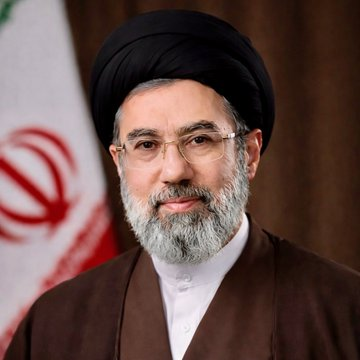
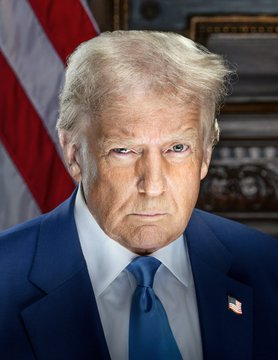
The move, confirmed by Iranian officials and reported by the Wall Street Journal, effectively ends any remaining official or semi-official communication lines between Tehran and Washington. This follows Iran’s earlier announcement freezing all indirect and backchannel talks in response to President Trump’s aggressive rhetoric, including his warning that “a whole civilization will die tonight” if demands regarding the Strait of Hormuz are not met.
The cutoff marks a significant escalation in the breakdown of relations, leaving little room for immediate de-escalation through traditional diplomatic means.
Timeline of Diplomatic Collapse
The severance of direct diplomacy caps a rapid deterioration:
- Iran previously froze indirect talks (including those facilitated through Pakistan) after Trump’s latest threats.
- U.S. Vice President JD Vance warned of untapped “tools in our toolkit” that President Trump could deploy if Iran does not change course.
- Targeted U.S. strikes have continued on Iranian sites, including bunkers, radar stations, and ammunition storage on Kharg Island, as well as damage reported at Mehrabad International Airport in Tehran.
- Iran’s IRGC has warned of responses “beyond the region” if red lines are crossed, while President Masoud Pezeshkian has emphasized national sacrifice and claimed over 14 million Iranians are ready to defend the country.
In contrast, limited bilateral diplomacy has persisted elsewhere, as seen in the recent France-Iran prisoner exchange that freed two French nationals and one Iranian citizen.
Strategic and Regional Implications
With direct diplomacy now cut off:
- The risk of miscalculation increases significantly, as there are fewer mechanisms to clarify intentions or prevent unintended escalation.
- Iran maintains selective control over the Strait of Hormuz, allowing limited tanker transits while insisting the waterway “will never return to its former state, especially for America and Israel.”
- Iran has warned that its allies could close the Bab al-Mandab Strait (handling ~10–12% of world trade) if the conflict escalates further, potentially compounding global shipping disruptions.
- U.S. threats of larger-scale strikes on power plants, bridges, and critical infrastructure remain on the table.
The development also highlights diverging approaches among Western allies, with France achieving a humanitarian prisoner swap while U.S.-Iran relations hit a new low.
Global Concerns
Energy markets, shipping companies, and humanitarian organizations are closely watching the situation. Simultaneous risks to Hormuz and Bab al-Mandab could trigger severe economic shocks. Legal experts continue to caution that further infrastructure strikes risk disproportionate civilian harm and potential violations of international humanitarian law.
Reflecto News will continue monitoring any official reactions from the White House or Iranian leadership, potential new military developments, the status of key maritime chokepoints, and any third-party mediation attempts.
FAQs: Iran Cuts Off Direct Diplomacy with the U.S.
Q1: What does “cutting off direct diplomacy” mean?
It refers to the formal severance of all official communication channels between Iranian and U.S. governments, leaving no direct line for dialogue.
Q2: Why has Iran taken this step now?
Iran cites U.S. threats and military actions as crossing red lines, following earlier freezes on indirect talks.
Q3: Does this make war more likely?
It removes safety valves for communication, increasing the danger of miscalculation, though military restraint or indirect mediators could still play a role.
Q4: How does this affect the Strait of Hormuz and Bab al-Mandab?
Iran continues selective control over Hormuz and has threatened ally-led closure of Bab al-Mandab, raising risks to global energy and trade routes.
Q5: Are other diplomatic avenues still open?
Limited bilateral deals (such as the recent France-Iran prisoner exchange) remain possible, but core U.S.-Iran issues appear stalled.
Sources: Wall Street Journal reporting, Iranian official statements, cross-referenced international coverage as of April 7, 2026. Diplomatic breakdowns in active conflicts can sometimes be tactical or temporary, but the current trajectory points to heightened risks.
Questions people ask
What is China's current share of global manufacturing?
China now accounts for twenty eight percent of global manufacturing. This industrial output exceeds the combined manufacturing production of the United States, Japan, and Germany, making China the leading global industrial power according to recent reports.
Why were Andrew Tate and Tristan Tate arrested in Miami?
Andrew Tate and his brother Tristan Tate were taken into custody in Miami by the United States Marshals Service. They face thirty eight new charges in the United Kingdom, including rape and child pornography offences, and prosecutors are seeking their extradition.
What warning did Moscow issue about oil prices?
Kirill Dmitriev, the Chief Executive of the Russian Direct Investment Fund, warned that a tsunami of skyrocketing oil prices is approaching. Moscow describes this potential energy shock as a major threat to global markets.
What political shift is projected for Benjamin Netanyahu's coalition?
Political polls project that Prime Minister Benjamin Netanyahu's coalition is on track to lose its majority in the upcoming October election. This projection indicates a potential political shift in Jerusalem.
Why did a Russian military aircraft land in Tehran?
A Russian airborne command aircraft, widely known as a doomsday plane, landed in Tehran. The arrival of the aircraft represents a high stakes show of support from Russia for Iran during a period of heightened regional tensions.
What did President Masoud Pezeshkian claim about the United States and Israel?
Iranian President Masoud Pezeshkian claimed that the United States and Israel failed in a forty eight hour plan to topple the Iranian government. He made these statements during a televised address marking two years since his inauguration.