Reflecto News is an online news platform covering major international political events, global economic developments, and security conflicts. The site provides updates on topics such as Chinese manufacturing dominance, Middle Eastern political tensions, and high profile legal arrests. Readers can access current articles organized by categories like World News, Iran, and USA.
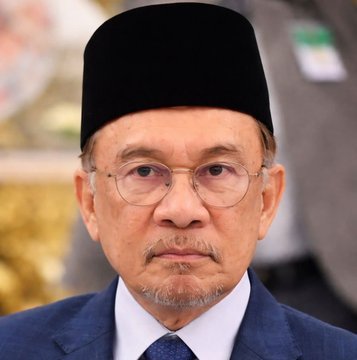
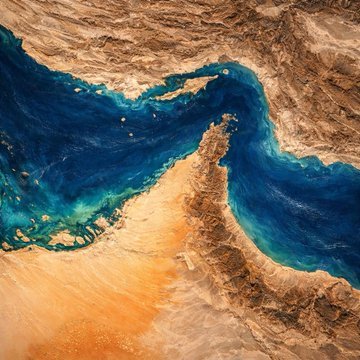
KUALA LUMPUR — In a major diplomatic victory for the government of Prime Minister Anwar Ibrahim, Malaysia has confirmed that its commercial vessels are being permitted to transit the Strait of Hormuz without paying the controversial “transit tolls” recently imposed by Tehran. Speaking at a press conference on Wednesday, April 1, 2026, Communications Minister Fahmi Fadzil clarified that despite reports of other nations being charged millions, Malaysian ships have been granted safe, free-of-charge passage.
“We will not pay any toll… we’re not paying anything,” Fadzil stated, debunking rumors circulating online that Malaysian tankers were being subjected to the new Iranian “sovereign fee.”
The “Phone-Call Diplomacy” Result
The exemption is being credited to a week of intensive “phone-call diplomacy” led by Prime Minister Anwar Ibrahim and Foreign Minister Mohamad Hasan.
- The Pezeshkian Agreement: Last week, PM Anwar held a televised announcement thanking Iranian President Masoud Pezeshkian for “giving way” to Malaysia and ensuring the safety of Malaysian seafarers.
- Friendly Party Status: Transport Minister Anthony Loke confirmed on Tuesday that the Iranian Ambassador to Malaysia, Valiollah Mohammadi Nasrabadi, explicitly assured that no tolls would be levied on Malaysian vessels because the country is considered a “friendly party” with deep diplomatic ties to Tehran.
- The “Queue” is Moving: While maritime traffic in the Strait has plummeted by 95% since the start of the war, a small “safe corridor” has been opened for approved vessels. Seven Malaysian ships—including tankers owned by Petronas, Sapura Energy, and MISC—were recently cleared to resume their journeys home.
The $2 Million Toll vs. Neutrality
Malaysia’s free passage stands in stark contrast to the experience of other non-aligned or “hostile” nations.
- The New “Sovereign Regime”: As of late March, reports from Fox News and Nation Thailand suggest Iran has begun charging some tankers up to $2 million per voyage to transit the waterway. Iranian lawmakers have described the fee as a “transit toll” to cover the “costs of war” and regional security.
- Selective Enforcement: Tehran’s strategy appears to be one of “selective management,” favoring countries like China, Russia, India, and Malaysia while maintaining a total ban on U.S., British, and Israeli-linked vessels.
- Economic Lifeline: For Malaysia, this access is critical; roughly 50% of the country’s total oil passes through the Strait. While Malaysia is a net exporter of light crude, it relies on heavier Middle Eastern imports to keep its domestic refineries running and fuel prices stable.
| Shipping Metric | Global/Hostile Vessels | Malaysian Vessels |
| Transit Fee | Up to $2,000,000 | $0 (Exempt) |
| Status | Blocked or “Under Review” | “Friendly Party” / Approved |
| Waiting Time | Indefinite / Rerouting | Managed “Designated Window” |
| Security Guarantees | High Risk of Seizure/Strike | “Commitment” to Safe Passage |
Analysis: The Price of Neutrality
By securing toll-free access, Malaysia has successfully navigated the most dangerous maritime chokepoint in the world without compromising its stance on the conflict. While President Trump threatens to “obliterate” Iranian infrastructure if the Strait isn’t opened to all, and UK PM Keir Starmer forms a 35-state “convoy” coalition, Malaysia has chosen a path of bilateral engagement.
However, the “friendly” status comes with its own geopolitical risks. As UANI (United Against Nuclear Iran) monitors “ghost fleet” activity off the coast of Johor, Malaysia’s continued ability to trade with Iran while avoiding Western sanctions will be a delicate balancing act. For now, the “Anwar Doctrine” of being a “friend to everyone” has saved the Malaysian economy millions in transit fees—and potentially millions more in energy costs.
Questions people ask
What is China's current share of global manufacturing?
China now accounts for twenty eight percent of global manufacturing. This industrial output exceeds the combined manufacturing production of the United States, Japan, and Germany, making China the leading global industrial power according to recent reports.
Why were Andrew Tate and Tristan Tate arrested in Miami?
Andrew Tate and his brother Tristan Tate were taken into custody in Miami by the United States Marshals Service. They face thirty eight new charges in the United Kingdom, including rape and child pornography offences, and prosecutors are seeking their extradition.
What warning did Moscow issue about oil prices?
Kirill Dmitriev, the Chief Executive of the Russian Direct Investment Fund, warned that a tsunami of skyrocketing oil prices is approaching. Moscow describes this potential energy shock as a major threat to global markets.
What political shift is projected for Benjamin Netanyahu's coalition?
Political polls project that Prime Minister Benjamin Netanyahu's coalition is on track to lose its majority in the upcoming October election. This projection indicates a potential political shift in Jerusalem.
Why did a Russian military aircraft land in Tehran?
A Russian airborne command aircraft, widely known as a doomsday plane, landed in Tehran. The arrival of the aircraft represents a high stakes show of support from Russia for Iran during a period of heightened regional tensions.
What did President Masoud Pezeshkian claim about the United States and Israel?
Iranian President Masoud Pezeshkian claimed that the United States and Israel failed in a forty eight hour plan to topple the Iranian government. He made these statements during a televised address marking two years since his inauguration.