Reflecto News is an online news platform covering major international political events, global economic developments, and security conflicts. The site provides updates on topics such as Chinese manufacturing dominance, Middle Eastern political tensions, and high profile legal arrests. Readers can access current articles organized by categories like World News, Iran, and USA.
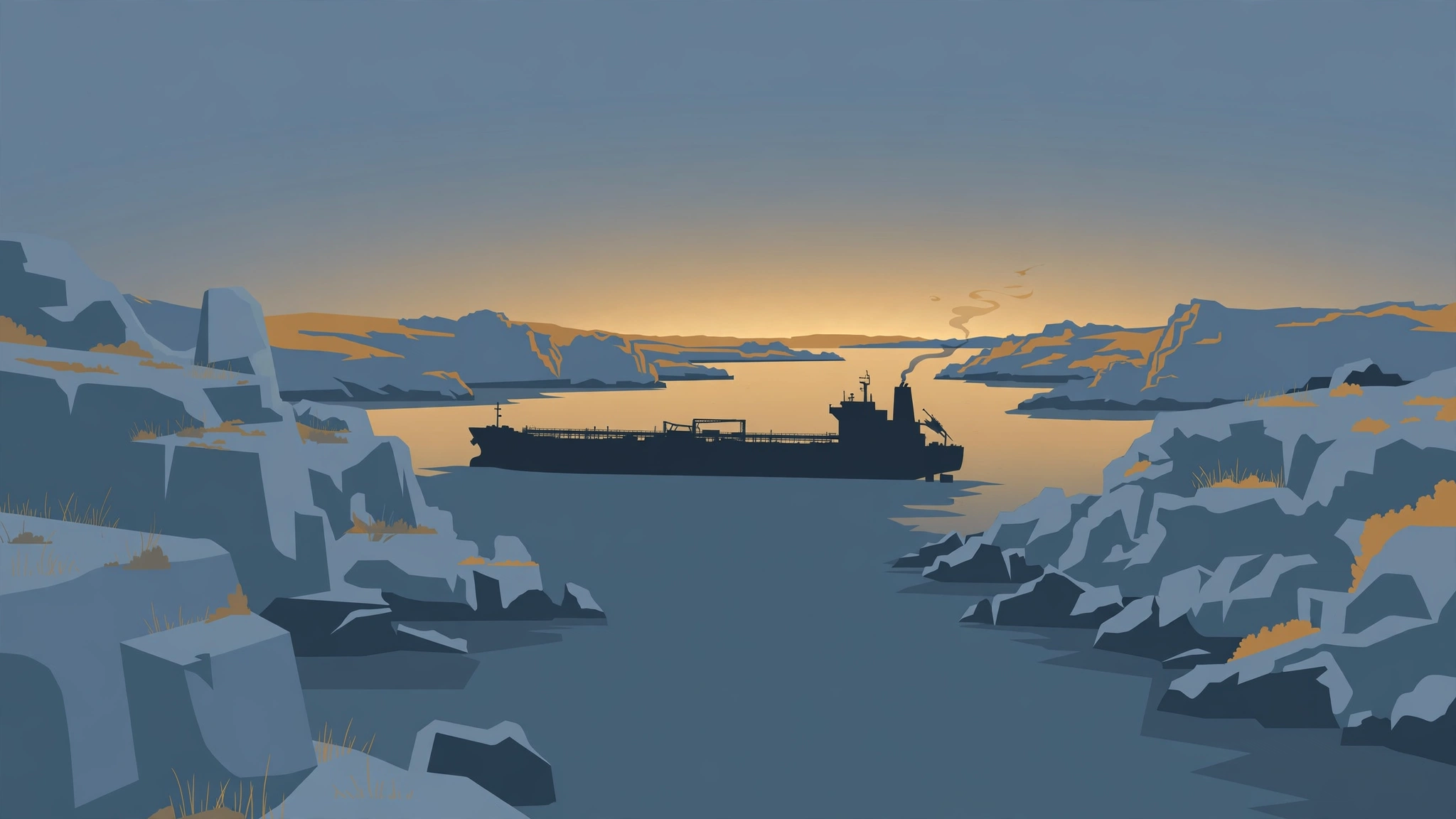
Four tankers caught fire after hitting mines in the Strait of Hormuz, Iran’s armed forces said on Thursday, disputing U.S. claims that key shipping routes through the waterway had been cleared. The reports, attributed to Iran’s military, raise fresh questions about safety in one of the world’s most important oil transit routes.
What Iran Reported
Iran’s armed forces said on Thursday, October 29, 2026, that at least four tankers caught fire after hitting mines while attempting to navigate the Strait of Hormuz, according to reports from AFP carried by The Hindu, Malay Mail, FMT, Arab News and the New Indian Express. The Iranian statement came a day after the U.S. military said it had cleared key routes through the waterway.
The Islamic Revolutionary Guard Corps (IRGC) said: “Over the past 24 hours, three violating oil tankers exploded and caught fire after striking mines while attempting to pass through the unauthorised southern route of the Strait of Hormuz.” The statement used the spelling “unauthorised” for the route, which Iran does not authorise for transit.
According to the IRGC statement, the vessels had “switched off all their radar and navigation systems” and disregarded warnings from the IRGC navy. The statement did not, in the reports, name the vessels, their flags, their owners or their cargoes.
Iran’s army reported later on Thursday that another tanker caught fire east of the strait after hitting mines while “operating in a restricted and dangerous area”, rendering it unable to move, according to the reports. That fourth incident brought the total reported by Iran’s armed forces to at least four tankers.
It was not immediately clear when the incidents occurred or which flags the tankers were flying, the reports said. No casualty count was confirmed in the reports, and this article does not name any vessel, flag, owner or cargo, because none was confirmed.
The timing is central to the dispute. Iran’s report followed the U.S. claim that key routes had been cleared, and Tehran presented the reported fires as evidence that the southern route, in particular, remained dangerous. Washington has not, in the reports, accepted that characterisation.
The U.S. Mine-Clearing Dispute
U.S. Central Command (CENTCOM) insists that all mines in “primary transit routes” have been cleared, according to the reports, a position it reiterated on social media. That claim is the one Iran’s armed forces disputed on Thursday.
IRGC spokesman Hossein Mohebi challenged the U.S. position on X, saying: “Prove your Hormuz mine-clearing claim with independent evidence, not statements!” The remark was directed at CENTCOM’s public claim, rather than at a detailed technical assessment, according to the reports.
The IRGC statement also warned: “the unauthorised route through the Strait of Hormuz is mined, and vessel owners and crews are responsible for transiting these routes.” In other words, Iran’s position is that ships using that southern corridor do so at their own risk, even if primary routes are described by the United States as clear.
The two accounts therefore focus on different routes. CENTCOM’s claim concerns primary transit routes, while Iran’s warning concerns the unauthorised southern route. The reports do not resolve whether the same waters were involved, and this article does not treat either side’s claim as independently verified.
The dispute over mines in the strait is not new. Earlier reporting on the waterway included a report that the US was unable to find or destroy any mines in the Strait of Hormuz, according to AP, a reminder that mine claims in the strait have previously been contested.
What UKMTO Reported
The British maritime agency UKMTO reported late on Thursday that it had received a report of a vessel on fire about 25 nautical miles (46 km) northeast of Khasab, Oman, in the strait, according to the reports. Later, UKMTO said the fire was extinguished and the crew were safe.
Separately, UKMTO said a dhow caught fire and sank following a maritime security incident 9 nautical miles north of Khasab, and that the crew was safely evacuated or rescued, according to the reports. A dhow is a traditional sailing vessel, distinct from a large oil tanker.
The UKMTO reports were issued separately from the Iranian statements, and the reports did not state that the UKMTO incidents were the same incidents described by Iran’s armed forces. Readers should therefore not assume that every reported fire refers to the same vessel.
Maritime agencies often issue brief incident notices before fuller details are known, and UKMTO’s notices in this case gave location and crew safety information without naming a vessel or assigning responsibility for the incidents.
Why the Strait Matters
The Strait of Hormuz normally carries about one-fifth of global oil consumption, according to the reports, which is why any disruption there draws attention far beyond the region. Even a short interruption can affect shipping schedules, insurance costs and energy markets, although the reports did not quantify any market effect from these incidents.
Iran considers ships using the southern corridor near the Omani coast unauthorised, the reports said. That position is central to the current dispute, because it means Iran and the United States are not simply disagreeing about whether mines exist, but also about which routes ships should be using at all. Iran has previously stated that its position on the Strait of Hormuz will not change.
The strait has been a focus of tension throughout the war that broke out on February 28, 2026, according to the New Indian Express. Earlier in the conflict, seven tankers were reported damaged in the Strait of Hormuz as war fears grew, showing that tanker traffic in the waterway has repeatedly been at risk.
For shipowners and crews, the practical question is which route, if any, can be used safely. For governments, the question is whether public claims about cleared routes can be verified independently. Neither question was settled by the statements reported on Thursday.
For now, the central dispute remains unresolved in public reporting: Iran says tankers caught fire after hitting mines in the strait, the United States insists primary transit routes have been cleared, and UKMTO has reported separate fires in the area with crews safe. Further independent verification would be needed to reconcile those accounts.
Frequently Asked Questions
How many tankers did Iran say caught fire?
Iran’s armed forces said at least four tankers caught fire after hitting mines. The IRGC reported three tankers on the unauthorised southern route, and Iran’s army later reported another tanker east of the strait.
What does the United States say about mines in the strait?
U.S. Central Command insists that all mines in “primary transit routes” have been cleared, a position it reiterated on social media. Iran disputes that claim, particularly for the unauthorised southern route.
What did UKMTO report?
UKMTO reported a vessel on fire about 25 nautical miles northeast of Khasab, Oman, later saying the fire was extinguished and the crew were safe. Separately, it reported a dhow that caught fire and sank 9 nautical miles north of Khasab, with the crew safely evacuated or rescued.
Why does the Strait of Hormuz matter?
The strait normally carries about one-fifth of global oil consumption. Iran considers the southern corridor near the Omani coast unauthorised, while the United States says primary transit routes have been cleared, leaving a dispute over both safety and which routes ships should use.