Reflecto News is an online news platform covering major international political events, global economic developments, and security conflicts. The site provides updates on topics such as Chinese manufacturing dominance, Middle Eastern political tensions, and high profile legal arrests. Readers can access current articles organized by categories like World News, Iran, and USA.
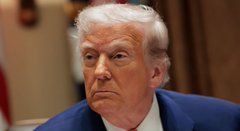
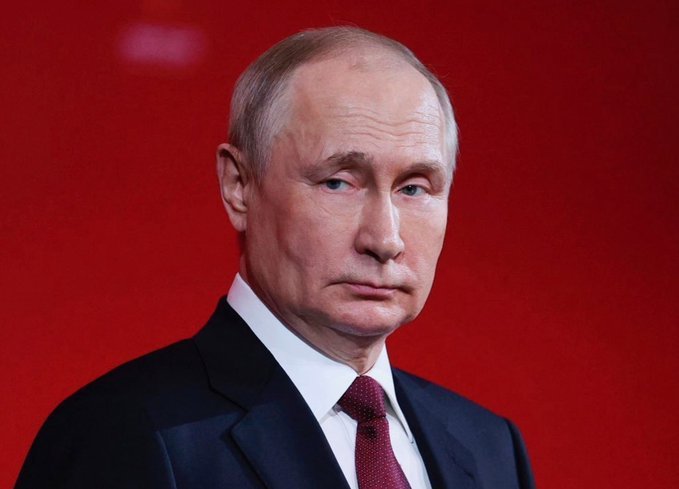
MOSCOW — The Kremlin has issued a sharp warning to the United States and its allies, asserting that any attempt to forcibly wrestle control of the Strait of Hormuz away from Iran is destined to fail. In a statement released late Wednesday, April 1, 2026, the Russian Foreign Ministry described Iran’s de facto grip on the world’s most vital energy chokepoint as an “objective reality” that even American military might cannot alter.
The Russian intervention comes as the Trump administration faces an April 6 deadline to either secure a diplomatic opening of the waterway or escalate to a potentially catastrophic ground operation.
1. The “Geography is Destiny” Argument
Moscow’s assessment mirrors concerns from military analysts who argue that Iran’s thousands of mobile cruise missiles, drone swarms, and “smart” naval mines make the Strait of Hormuz a “death trap” for conventional naval forces.
- Beyond U.S. Power: “This is an objective reality of geography and asymmetric warfare,” a senior Russian diplomatic source noted. “It is a reality that even the United States of America cannot challenge without risking a global economic apocalypse.”
- Sovereign Gatekeepers: Russia reiterated its stance that the Strait falls within the territorial and internal waters of the coastal states (Iran and Oman), and that any “internationalization” of the waterway by force would be a violation of international law.
- The “Asymmetric” Edge: Moscow pointed to the failure of Operation Epic Fury to reopen the Strait after 30 days of intense bombardment as proof that Tehran’s “Missile Cities” remain operational.
2. Russia’s Role as the “Crisis Alternative”
The Kremlin’s defense of Iranian control is not purely diplomatic; it is deeply tied to Russia’s emerging role as the primary alternative for a world starved of Middle Eastern energy.
- The “Safe Passage” Pact: Russia is one of the few nations currently granted “safe passage” by Tehran, allowing it to export its own crude (now at $104 per barrel) while its competitors are blocked.
- Redirecting Global Trade: President Putin stated earlier today that the war has proven the need for “Russia-led logistics,” such as the Northern Sea Route, which bypasses the “Hormuz hostage-taking” entirely.
- Diplomatic Shield: In the UN Security Council, Russia (along with China) has consistently blocked resolutions that would authorize a “multinational naval task force” to clear the Strait by force.
3. The Reality on the Water (April 1, 2026)
| Factor | Current Status | Implications |
| Tanker Traffic | ~0% (Incoming) | Global gas prices hit $4/gal in U.S. |
| U.S. Navy Presence | Carrier Strike Groups in Gulf of Oman | Unable to enter Strait due to “Land-to-Sea” threats. |
| Iranian Tolls | $2 Million per transit | Only “Friendly” nations (RU, CN, IN, PK) paying. |
| Russian Position | Defensive Shield | Bolsters Tehran’s leverage in ceasefire talks. |
Analysis: The Strategic Deadlock
The Russian statement is a calculated attempt to demoralize the U.S.-led coalition just hours before President Trump’s 9:00 PM ET address. By framing Iranian control as an “unchallengeable reality,” Moscow is encouraging the White House to accept a “compromise” that leaves the Strait under a joint Iran-Oman administration—a move that would be seen as a historic strategic defeat for the West.
For the American public, the “objective reality” Moscow speaks of is being felt at the gas pump. If the U.S. cannot challenge Iran’s control, the “temporary” energy crisis described by the IEA today may become a permanent feature of the late 2020s. As the April 6 “Line in the Sand” approaches, the world is watching to see if Trump will heed Moscow’s warning or attempt to prove that American power can still reshape the “realities” of the Persian Gulf.
Questions people ask
What is China's current share of global manufacturing?
China now accounts for twenty eight percent of global manufacturing. This industrial output exceeds the combined manufacturing production of the United States, Japan, and Germany, making China the leading global industrial power according to recent reports.
Why were Andrew Tate and Tristan Tate arrested in Miami?
Andrew Tate and his brother Tristan Tate were taken into custody in Miami by the United States Marshals Service. They face thirty eight new charges in the United Kingdom, including rape and child pornography offences, and prosecutors are seeking their extradition.
What warning did Moscow issue about oil prices?
Kirill Dmitriev, the Chief Executive of the Russian Direct Investment Fund, warned that a tsunami of skyrocketing oil prices is approaching. Moscow describes this potential energy shock as a major threat to global markets.
What political shift is projected for Benjamin Netanyahu's coalition?
Political polls project that Prime Minister Benjamin Netanyahu's coalition is on track to lose its majority in the upcoming October election. This projection indicates a potential political shift in Jerusalem.
Why did a Russian military aircraft land in Tehran?
A Russian airborne command aircraft, widely known as a doomsday plane, landed in Tehran. The arrival of the aircraft represents a high stakes show of support from Russia for Iran during a period of heightened regional tensions.
What did President Masoud Pezeshkian claim about the United States and Israel?
Iranian President Masoud Pezeshkian claimed that the United States and Israel failed in a forty eight hour plan to topple the Iranian government. He made these statements during a televised address marking two years since his inauguration.