Reflecto News is an online news platform covering major international political events, global economic developments, and security conflicts. The site provides updates on topics such as Chinese manufacturing dominance, Middle Eastern political tensions, and high profile legal arrests. Readers can access current articles organized by categories like World News, Iran, and USA.
Reflecto News – Ukrainian President Volodymyr Zelensky has reaffirmed that Ukrainian military experts deployed to the Middle East will continue their operations to support regional partners in countering Iranian drone and missile threats. The statement comes as Ukraine leverages its extensive battlefield experience against Russian forces — including Iranian-designed Shahed drones — to assist Gulf countries facing retaliatory attacks during the 2026 US-Iran conflict.
This development highlights Ukraine’s growing role as a provider of specialized defense expertise on the global stage, even as it continues its own defense against Russian aggression.
Zelensky’s Statement and Context
In recent remarks, President Zelensky emphasized that Ukrainian expert teams are actively engaged across the region and will sustain their efforts to strengthen local security capabilities. He described the cooperation as mutually beneficial, noting that Ukraine is “exporting” its proven systems for protecting critical infrastructure, people, and airspace from low-cost drone swarms.
The initiative builds on earlier announcements in March 2026, when Zelensky revealed that over 200 Ukrainian anti-drone specialists had been sent to countries including the United Arab Emirates (UAE), Qatar, Saudi Arabia, and others, with additional teams preparing for deployment to Kuwait and Jordan. By late March, the number of experts in the region was reported at around 228.
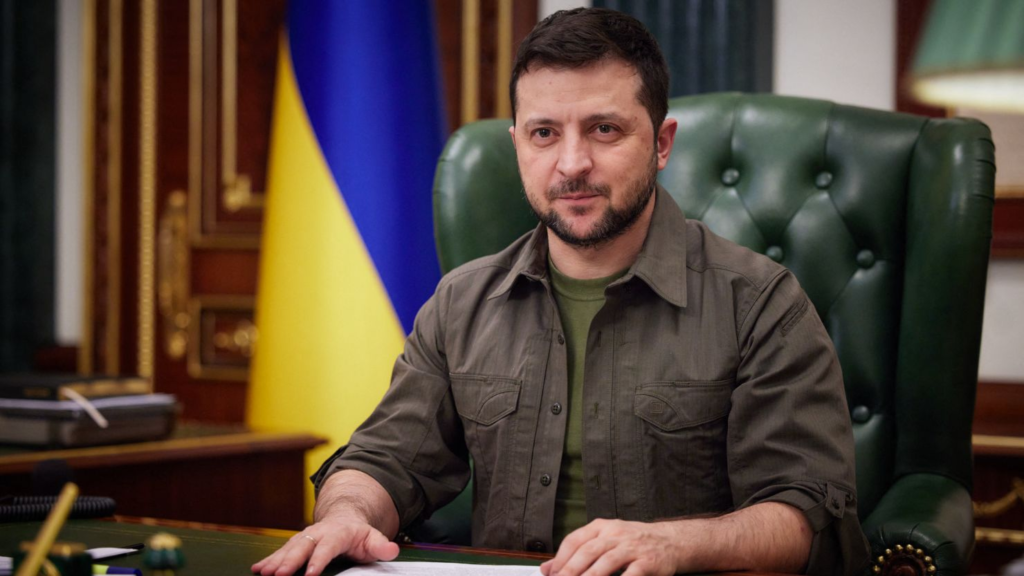
Ukrainian President Volodymyr Zelensky addressing international audiences on defense cooperation.
Why Ukraine? Battlefield Expertise Against Shahed Drones
Ukraine has gained unparalleled real-world experience in countering large-scale drone attacks over more than four years of war with Russia. Iranian-designed Shahed (or Geran) drones, widely used by Russian forces, have been a primary threat to Ukrainian cities and infrastructure. Ukrainian forces have developed cost-effective interception methods, including specialized anti-drone systems, electronic warfare, and low-cost interceptor drones.
Gulf states targeted by similar Iranian Shahed drones during the recent escalation have turned to Kyiv for practical solutions. Traditional high-end systems like Patriot missiles are expensive for downing low-cost drones, making Ukraine’s affordable and battle-tested approaches highly attractive.
An Iranian-designed Shahed drone, the type Ukrainian experts are helping regional partners defend against.
Deployment Details and Partner Countries
Ukrainian teams are focused on:
- Assessing and upgrading air defense systems
- Training local forces in drone interception
- Protecting critical energy infrastructure and civilian areas
- Sharing intelligence on Iranian drone tactics
Key locations include Qatar, UAE, Saudi Arabia, with ongoing work or discussions involving Kuwait, Jordan, and others. Zelensky has also highlighted potential cooperation on maritime security, drawing parallels between Ukraine’s experience reopening Black Sea routes and challenges in the Strait of Hormuz.
Map of the Middle East highlighting key Gulf countries where Ukrainian experts are operating.
Broader Strategic Implications
Ukraine’s engagement serves multiple purposes:
- Diplomatic gains: Strengthening ties with wealthy Gulf nations, potentially leading to long-term defense contracts, investment, and political support.
- Economic benefits: Securing 10-year agreements that include technology transfers, co-production, and funding for Ukraine’s defense industry.
- Leverage with Western partners: Demonstrating Ukraine’s value as a contributor to global security, which could help secure continued military aid.
Zelensky has described these as “historic” agreements and noted strong interest from regional leaders in deeper cooperation.
Ukrainian personnel demonstrating anti-drone capabilities, similar to the expertise being shared in the Middle East.
Connection to the Wider US-Iran Conflict
The deployment aligns with the fragile two-week US-Iran ceasefire and upcoming talks in Islamabad. While Ukraine is not a direct party to the US-Iran negotiations, its experts are helping shield US allies and infrastructure from Iranian retaliation, indirectly supporting stability in the region.
This move also underscores a shifting dynamic: Ukraine is no longer solely a recipient of aid but an active exporter of hard-earned military know-how.
Reflecto News will continue tracking developments in Ukraine’s international defense partnerships and their impact on the Middle East conflict.
Frequently Asked Questions (FAQs)
Q1: What did Zelensky say about Ukrainian experts in the Middle East?
Zelensky stated that Ukrainian military experts will continue their work in the region to help develop and strengthen security capabilities against Iranian drone and missile threats.
Q2: How many Ukrainian experts are involved?
Over 200 experts were initially deployed in March 2026, with numbers reaching around 228 across several countries. Additional teams remain ready for further deployment.
Q3: Which countries are receiving Ukrainian assistance?
Primary partners include the UAE, Qatar, Saudi Arabia, with ongoing or planned cooperation in Kuwait, Jordan, and discussions with others such as Bahrain and Oman.
Q4: What specific expertise is Ukraine providing?
Specialists focus on countering Shahed-type drones through interception techniques, training, system assessments, and protection of critical infrastructure.
Q5: Why are Gulf countries turning to Ukraine?
Ukraine has unique, combat-proven experience fighting the same Iranian-designed drones used by Russia. Its solutions are often more cost-effective than traditional Western systems.
Q6: How does this relate to the US-Iran ceasefire?
The experts help protect regional allies and infrastructure during the conflict, contributing to stability that supports broader diplomatic efforts, including talks in Islamabad.
Q7: What are the long-term benefits for Ukraine?
The initiative has led to multi-year defense agreements, potential revenue, technology partnerships, and enhanced global standing for Ukraine.
For ongoing coverage of the US-Iran conflict, Ukraine’s international role, and Middle East security developments, stay tuned to Reflecto News—delivering accurate, timely, and in-depth reporting.
Questions people ask
What is China's current share of global manufacturing?
China now accounts for twenty eight percent of global manufacturing. This industrial output exceeds the combined manufacturing production of the United States, Japan, and Germany, making China the leading global industrial power according to recent reports.
Why were Andrew Tate and Tristan Tate arrested in Miami?
Andrew Tate and his brother Tristan Tate were taken into custody in Miami by the United States Marshals Service. They face thirty eight new charges in the United Kingdom, including rape and child pornography offences, and prosecutors are seeking their extradition.
What warning did Moscow issue about oil prices?
Kirill Dmitriev, the Chief Executive of the Russian Direct Investment Fund, warned that a tsunami of skyrocketing oil prices is approaching. Moscow describes this potential energy shock as a major threat to global markets.
What political shift is projected for Benjamin Netanyahu's coalition?
Political polls project that Prime Minister Benjamin Netanyahu's coalition is on track to lose its majority in the upcoming October election. This projection indicates a potential political shift in Jerusalem.
Why did a Russian military aircraft land in Tehran?
A Russian airborne command aircraft, widely known as a doomsday plane, landed in Tehran. The arrival of the aircraft represents a high stakes show of support from Russia for Iran during a period of heightened regional tensions.
What did President Masoud Pezeshkian claim about the United States and Israel?
Iranian President Masoud Pezeshkian claimed that the United States and Israel failed in a forty eight hour plan to topple the Iranian government. He made these statements during a televised address marking two years since his inauguration.