Reflecto News is an online news platform covering major international political events, global economic developments, and security conflicts. The site provides updates on topics such as Chinese manufacturing dominance, Middle Eastern political tensions, and high profile legal arrests. Readers can access current articles organized by categories like World News, Iran, and USA.
Reflecto News – Qatar’s Foreign Ministry has firmly stated that Iran must compensate the Gulf state for all damages resulting from Iranian missile and drone attacks during the recent regional conflict. The demand, reiterated in official communications including multiple letters to the United Nations and the UN Security Council, underscores Doha’s position that Tehran bears international responsibility for the strikes on Qatari sovereign territory and critical infrastructure.
This latest assertion comes as a fragile two-week US-Iran ceasefire holds, with high-level talks scheduled in Islamabad, even as disputes persist over its scope—particularly regarding Lebanon.
Background: Iranian Strikes on Qatar During the 2026 Conflict
Since the escalation of hostilities between the US-Israel alliance and Iran in late February 2026, Iran launched retaliatory attacks on several Gulf countries, including Qatar. Iranian forces targeted Qatari territory with hundreds of missiles, drones, and even aircraft in some incidents.
Key targets included:
- The Ras Laffan Industrial City, home to the world’s largest liquefied natural gas (LNG) export facility.
- Energy infrastructure, with reports of extensive damage to processing trains and related assets.
- Other sites, including areas near Al Udeid Air Base and civilian-adjacent locations.
Qatar’s authorities reported that while many projectiles were intercepted by air defenses, several strikes caused significant material damage. QatarEnergy declared force majeure on some LNG contracts, and repairs to affected facilities are expected to take years, impacting global energy supplies. No major human casualties were reported due to precautionary measures, but property losses—including fires and structural damage—have been substantial.
Satellite imagery showing damage at Qatar’s Ras Laffan LNG facility following Iranian strikes.
Aerial view of the Ras Laffan Industrial City, Qatar’s vital energy hub that sustained extensive damage.
Qatar’s Official Position and Actions
In its latest statements and formal letters to the UN (including the 10th and 11th identical communications), Qatar emphasized that Iran’s actions constitute “illegal” violations of sovereignty and international law. The Foreign Ministry stressed that these attacks entail international responsibility, obligating Iran to provide full compensation for all assessed damages and losses.
Qatar has:
- Condemned the strikes as a “dangerous escalation” and “unacceptable violation.”
- Expelled Iranian military and security attaches.
- Informed the UN Security Council that competent authorities will assess damages, with updates to follow.
- Called for a diplomatic resolution to the broader conflict while rejecting Iran’s targeting of civilian and energy infrastructure.
Foreign Ministry spokesperson Majed al-Ansari and senior officials, including Prime Minister and Foreign Minister Sheikh Mohammed bin Abdulrahman Al Thani, have described the attacks as crossing “many red lines” with catastrophic effects on bilateral relations and regional stability.
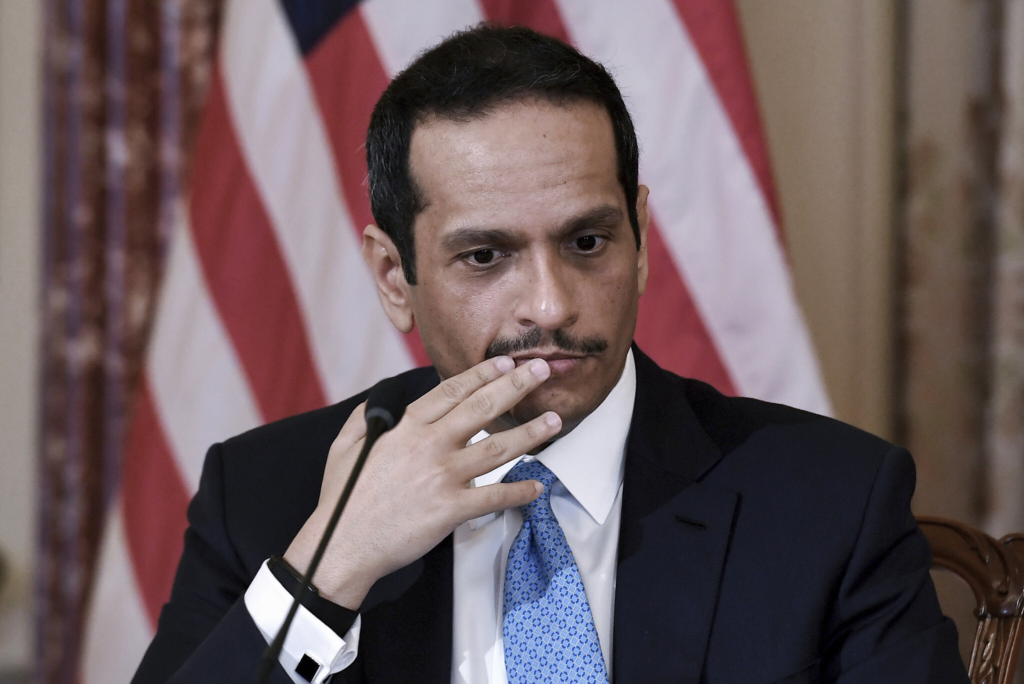
Qatar’s Foreign Ministry spokesperson addressing the media on regional developments.
Impact on Global Energy and Regional Stability
The strikes on Ras Laffan disrupted a significant portion of Qatar’s LNG production capacity—potentially up to 17% for several years—triggering spikes in global gas prices and supply concerns, especially for Europe and Asia. Qatar, a leading LNG exporter, plays a pivotal role in global energy security, making the damage particularly consequential.
The attacks also heightened tensions across the Persian Gulf, with similar incidents reported in neighboring countries. Qatar has urged restraint and warned that continued escalation could spiral out of control, affecting economies worldwide.
Map of the Persian Gulf highlighting Qatar, Ras Laffan, and the strategically vital Strait of Hormuz.
Context Within the Current Ceasefire and Islamabad Talks
Qatar’s compensation demand arrives amid the two-week US-Iran ceasefire announced earlier this week. While the truce focuses on reopening the Strait of Hormuz and halting direct attacks, disputes remain—especially Israel’s clarification that operations in Lebanon against Hezbollah are excluded.
Pakistan-mediated talks in Islamabad on Friday are expected to address broader issues, including sanctions, nuclear concerns, and regional security. Qatar, which maintains relations with both sides and hosts key US military assets, has advocated for a comprehensive diplomatic solution but has not positioned itself as the primary mediator.
Iran has not publicly responded to Qatar’s latest compensation demand as of now.
Symbolic image of Qatar and Iran flags, representing complex bilateral ties strained by the conflict.
What’s Next?
Qatar has indicated it will continue updating the UN on damage assessments and developments. Any compensation process would likely involve international legal mechanisms, though enforcement remains challenging amid ongoing diplomatic efforts.
The situation highlights the wider costs of the conflict on neutral or indirectly involved states and the importance of protecting critical energy infrastructure under international norms.
Reflecto News will monitor reactions from Tehran, Doha, and the international community, including any impact on the upcoming Islamabad talks.
Frequently Asked Questions (FAQs)
Q1: Why is Qatar demanding compensation from Iran?
Qatar states that Iranian missile and drone attacks on its territory, including the Ras Laffan LNG facility, caused significant damage. It holds Iran internationally responsible under law and demands full compensation for all assessed losses.
Q2: What was damaged in the Iranian attacks on Qatar?
The primary target was the Ras Laffan Industrial City, Qatar’s massive LNG export hub. Strikes caused extensive damage to energy infrastructure, with some production capacity affected for years. Other sites, including areas near military and civilian facilities, were also hit.
Q3: Has Qatar suffered human casualties?
Qatari officials reported no major human casualties thanks to effective air defenses and precautionary measures, though some minor injuries from debris were noted in certain incidents.
Q4: How has Qatar responded diplomatically?
Doha has sent multiple letters to the UN and Security Council, expelled Iranian attaches, and publicly condemned the strikes. It continues to call for de-escalation and a diplomatic end to the broader conflict.
Q5: What is the global impact of the damage to Ras Laffan?
The disruption led to force majeure declarations on LNG contracts and contributed to higher global gas prices. Repairs could take 3–5 years, affecting energy supplies worldwide.
Q6: Does this affect the current US-Iran ceasefire?
The compensation demand adds pressure on Iran but is separate from the two-week truce focused on the Strait of Hormuz. It may feature in broader negotiations in Islamabad.
Q7: Will Iran pay compensation?
Iran has not commented publicly on Qatar’s demand. Any resolution would likely require diplomatic or legal processes, influenced by ongoing regional talks.
For the latest updates on the US-Iran ceasefire, Gulf diplomacy, energy security, and related developments, follow Reflecto News—your source for accurate, timely, and professional coverage.
Questions people ask
What is China's current share of global manufacturing?
China now accounts for twenty eight percent of global manufacturing. This industrial output exceeds the combined manufacturing production of the United States, Japan, and Germany, making China the leading global industrial power according to recent reports.
Why were Andrew Tate and Tristan Tate arrested in Miami?
Andrew Tate and his brother Tristan Tate were taken into custody in Miami by the United States Marshals Service. They face thirty eight new charges in the United Kingdom, including rape and child pornography offences, and prosecutors are seeking their extradition.
What warning did Moscow issue about oil prices?
Kirill Dmitriev, the Chief Executive of the Russian Direct Investment Fund, warned that a tsunami of skyrocketing oil prices is approaching. Moscow describes this potential energy shock as a major threat to global markets.
What political shift is projected for Benjamin Netanyahu's coalition?
Political polls project that Prime Minister Benjamin Netanyahu's coalition is on track to lose its majority in the upcoming October election. This projection indicates a potential political shift in Jerusalem.
Why did a Russian military aircraft land in Tehran?
A Russian airborne command aircraft, widely known as a doomsday plane, landed in Tehran. The arrival of the aircraft represents a high stakes show of support from Russia for Iran during a period of heightened regional tensions.
What did President Masoud Pezeshkian claim about the United States and Israel?
Iranian President Masoud Pezeshkian claimed that the United States and Israel failed in a forty eight hour plan to topple the Iranian government. He made these statements during a televised address marking two years since his inauguration.