Reflecto News is an online news platform covering major international political events, global economic developments, and security conflicts. The site provides updates on topics such as Chinese manufacturing dominance, Middle Eastern political tensions, and high profile legal arrests. Readers can access current articles organized by categories like World News, Iran, and USA.
Reflecto News | Breaking News | Global Health
GENEVA — The World Health Organization (WHO) has confirmed that a cluster of severe respiratory illness aboard a cruise ship in the South Atlantic may involve limited human-to-human transmission of the hantavirus, raising concerns about the spread of a disease typically associated with rodent exposure. As of May 4, 2026, seven cases, including three deaths, have been linked to the outbreak.
Dr. Maria Van Kerkhove, WHO’s acting director for epidemic and pandemic preparedness and prevention, emphasized that while hantavirus transmission between people is rare, it has occurred in this outbreak among close contacts.
“We do think that there has been some level of human-to-human transmission between very close contacts, like couples or people sharing the same cabin.” – Dr. Maria Van Kerkhove, WHO
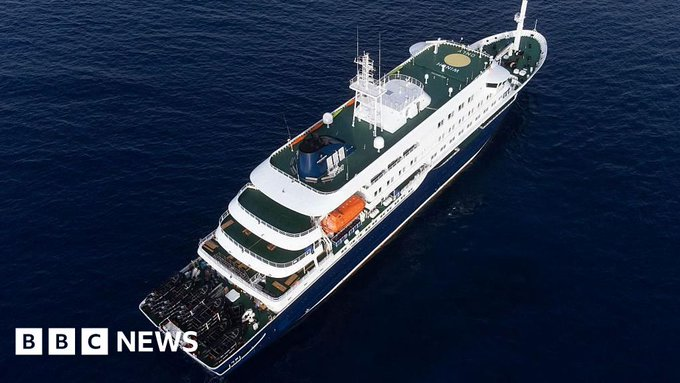
🚢 The Outbreak: Seven Cases, Three Deaths
The outbreak occurred on the M/V Hondius, a Dutch-flagged expedition cruise ship operated by Oceanwide Expeditions. The vessel departed from Ushuaia, Argentina, on April 1, 2026, and followed a route across the South Atlantic.
Key figures at a glance:
Total individuals on board: 147 (88 passengers, 59 crew)
Confirmed & suspected cases: 7
Deaths: 3
Nationalities on board: 23
The timeline of the outbreak shows the first case fell ill on April 6 while on board. That passenger, a Dutch national, died on April 11 without laboratory confirmation. A second passenger, the spouse of the first case, was evacuated to South Africa but also died.
A German national died on May 2, and another patient remains critically ill in an intensive care unit in South Africa.
🧬 From Rodents to Humans — and Between Humans
Hantavirus is a zoonotic disease primarily transmitted to humans through contact with infected rodents’ urine, droppings, or saliva, often by inhaling aerosolized particles. The virus causes Hantavirus Pulmonary Syndrome (HPS), a severe illness characterized by fever, muscle aches, and gastrointestinal symptoms that can rapidly progress to respiratory failure and shock.
Most hantaviruses do not spread between people. However, the Andes virus strain (common in South America) has been documented to transmit through close, prolonged contact. Dr. Van Kerkhove confirmed that the high degree of similarity between cases in the same cabin—such as the initial couple—suggests this type of limited human-to-human spread occurred.
Outbreak timeline and infection source:
| Date | Event |
|---|---|
| April 1 | Ship departs Ushuaia, Argentina |
| April 6 | First passenger develops symptoms |
| April 11 | First death (Dutch passenger) |
| April 25 | Second passenger (spouse) medically evacuated; dies on April 26 |
| May 2 | Third death (German passenger) |
| May 4 | WHO confirms 7 cases with possible human-to-human transmission |
🌎 The Ship’s Route: Ecological Exposure
The ship’s itinerary took it through remote and ecologically diverse regions, including Antarctica, South Georgia, Tristan da Cunha, Saint Helena, and Ascension Island. Dr. Van Kerkhove noted that many of these islands have large rodent populations, and shore excursions could have brought passengers into contact with infected animals or their contaminated environments.
While the ship’s operator has stated there are no rats aboard the vessel, environmental contamination from footwear or clothing after shore landings remains a possible source of infection. The WHO stated that it is not yet clear whether transmission occurred on land or in the confined spaces of the ship.
🏥 International Response and Quarantine
The vessel is currently moored off the coast of Cabo Verde, and passengers have been confined to their cabins to prevent further spread. The WHO has released funds from its Contingency Fund for Emergencies to support the response.
Spanish authorities have agreed to allow the ship to dock at the Canary Islands. Spain’s health ministry has dispatched a medical team to board the vessel to conduct epidemiological investigations and deep sanitation.
Medical evacuation is underway for two remaining patients, who are being transported to the Netherlands for treatment. All passengers and crew are being advised to monitor their symptoms for 45 days.
⚠️ WHO Risk Assessment: Low but Not Zero
The WHO currently assesses the global public health risk from this outbreak as low.
- For Europe: The European Centre for Disease Prevention and Control (ECDC) considers the risk “very low” given that control measures are in place.
- For Africa: Cabo Verde authorities are managing port health measures.
- For Travelers: Health officials advise all cruise ship passengers to practice strict hygiene, report symptoms immediately, and isolate if respiratory illness develops.
While this outbreak is tragic for the families involved, hantavirus remains a rare disease that is difficult to transmit. The WHO continues to monitor the situation and will update its risk assessment as new information emerges.
📋 Key Takeaways for Reflecto News Readers
| Aspect | Summary |
|---|---|
| The Ship | M/V Hondius (Dutch-flagged), 147 aboard |
| The Toll | 7 cases, 3 deaths |
| The Virus | Hantavirus (suspected Andes strain) |
| Transmission | Primarily rodent-to-human; limited human-to-human possible in close quarters |
| Current Status | Quarantined off Cabo Verde; Spain to receive ship |
| Risk to Public | Low, according to WHO |
Follow Reflecto News for continuous updates on this developing story and global health alerts.
This article is the intellectual property of Reflecto News. Redistribution without attribution is prohibited. For syndication or media inquiries, please contact the editorial team.
Questions people ask
What is China's current share of global manufacturing?
China now accounts for twenty eight percent of global manufacturing. This industrial output exceeds the combined manufacturing production of the United States, Japan, and Germany, making China the leading global industrial power according to recent reports.
Why were Andrew Tate and Tristan Tate arrested in Miami?
Andrew Tate and his brother Tristan Tate were taken into custody in Miami by the United States Marshals Service. They face thirty eight new charges in the United Kingdom, including rape and child pornography offences, and prosecutors are seeking their extradition.
What warning did Moscow issue about oil prices?
Kirill Dmitriev, the Chief Executive of the Russian Direct Investment Fund, warned that a tsunami of skyrocketing oil prices is approaching. Moscow describes this potential energy shock as a major threat to global markets.
What political shift is projected for Benjamin Netanyahu's coalition?
Political polls project that Prime Minister Benjamin Netanyahu's coalition is on track to lose its majority in the upcoming October election. This projection indicates a potential political shift in Jerusalem.
Why did a Russian military aircraft land in Tehran?
A Russian airborne command aircraft, widely known as a doomsday plane, landed in Tehran. The arrival of the aircraft represents a high stakes show of support from Russia for Iran during a period of heightened regional tensions.
What did President Masoud Pezeshkian claim about the United States and Israel?
Iranian President Masoud Pezeshkian claimed that the United States and Israel failed in a forty eight hour plan to topple the Iranian government. He made these statements during a televised address marking two years since his inauguration.