Reflecto News is an online news platform covering major international political events, global economic developments, and security conflicts. The site provides updates on topics such as Chinese manufacturing dominance, Middle Eastern political tensions, and high profile legal arrests. Readers can access current articles organized by categories like World News, Iran, and USA.
Published on Reflecto News | World News | Diplomacy & Geopolitics
In a significant diplomatic development following the collapse of US-Iran talks in Islamabad, Russian President Vladimir Putin has declared Moscow’s readiness to help facilitate peace efforts in the Middle East. During a phone call with Iranian President Masoud Pezeshkian on Sunday, Putin emphasized Russia’s willingness to mediate and assist in finding a political and diplomatic settlement to the ongoing conflict .
The call came just hours after nearly 21 hours of direct negotiations between the United States and Iran in Pakistan’s capital ended without an agreement, leaving the fragile two-week ceasefire in an uncertain position .
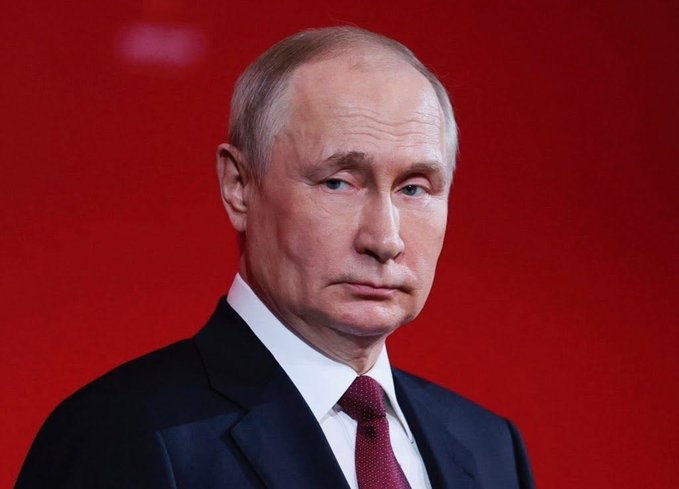
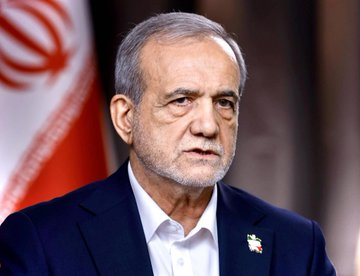
Putin’s Mediation Offer
The Kremlin’s readout of the phone call detailed Putin’s commitment to pursuing a diplomatic resolution to the conflict that began with US-Israeli strikes on Iran on February 28.
“Vladimir Putin emphasized his readiness to further facilitate the search for a political and diplomatic settlement to the conflict, and to mediate efforts to achieve a just and lasting peace in the Middle East.” — Kremlin Statement
The Russian president’s offer is not entirely new — Moscow has previously offered mediation between Iran and Israel during the “Twelve-Day War” in June 2025 . However, the timing of this renewed offer, coming immediately after the failure of Pakistan-mediated US-Iran talks, positions Russia as a potential alternative diplomatic channel.
Putin also stressed the need to respect Iran’s national sovereignty and territorial integrity, while backing what the Kremlin described as Iran’s “legitimate positions” — including demands for compensation over damages caused by recent military attacks and the need for long-term security guarantees .
Pezeshkian’s Assessment of the Failed Talks
During the call, President Pezeshkian conveyed his assessment of the US-Iran negotiations that took place in Islamabad on Saturday . According to the Kremlin statement, Pezeshkian expressed gratitude for Russia’s “principled position, including on international platforms, aimed at de-escalating the situation” .
The Iranian president also thanked Russia for the humanitarian aid it has provided during the conflict .
Speaking through official channels, Pezeshkian said Iran remains ready to reach a “balanced and fair agreement” that would ensure lasting peace and security in the region . However, he identified the main obstacle as “double standards” by the United States, suggesting that a deal would be achievable “if Washington adheres to international legal frameworks” .
Why Russia Is Stepping In
Moscow’s offer to mediate comes at a moment of diplomatic vacuum. The Islamabad talks, which involved the highest-level direct engagement between the US and Iran since the 1979 Islamic Revolution, ended without any agreement .
| Talks Detail | Information |
|---|---|
| Duration | Approximately 21 hours |
| Location | Islamabad, Pakistan |
| US lead | Vice President JD Vance |
| Iran lead | Parliament Speaker Mohammad Bagher Ghalibaf |
| Outcome | No agreement reached |
Key sticking points included Iran’s nuclear program (the US demanded a complete end to enrichment, while Iran insisted on its right to peaceful nuclear energy), control over the strategic Strait of Hormuz, and Tehran’s ballistic missile capabilities .
Russia’s involvement also serves its broader strategic interests. Moscow has consistently opposed US-led pressure on Iran and has criticized Washington’s calls for Iranians to “rise against their leadership” as “cynical and inhumane” . The Russian Foreign Ministry has also blamed the United States and Israel for “unleashing aggression” against Iran and has called for the immediate cessation of hostilities in Lebanon .
The Fragile Ceasefire
Despite the collapse of the talks, the two-week ceasefire announced on April 7 remains in effect — at least for now . The ceasefire was brokered by Pakistan after President Donald Trump threatened “complete decimation” of Iran, and it was explicitly conditioned on Iran’s agreement to the “COMPLETE, IMMEDIATE, and SAFE OPENING of the Strait of Hormuz” — a condition Iran has not met.
The status of the Strait of Hormuz, through which approximately 20 percent of the world’s oil passes, remains unchanged. According to Iranian sources cited by CNN, the number of ships allowed to pass through the strait will remain the same, and Iran is in “no hurry” to change the situation .
International Reactions
The United States has not yet responded to Putin’s offer of mediation. Vice President JD Vance, who led the US delegation in Islamabad, described the failed talks as “bad news for Iran much more than it is bad news for the United States of America” . He also stated that the US had made a “final and best offer” and that it was now up to Iran to accept it .
Pakistan, which mediated the failed talks, has reaffirmed its commitment to continuing facilitation efforts. Pakistan’s Foreign Minister Ishaq Dar said it was “imperative” to preserve the two-week ceasefire .
What Comes Next
With the US delegation having fully departed Pakistan and no immediate plans for further US-Iran talks, Russia’s offer of mediation introduces a new variable into the diplomatic equation.
| Scenario | Likelihood | Implications |
|---|---|---|
| Russia brokers new talks | Possible | Could bypass Pakistan as mediator |
| US rejects Russian mediation | Likely | Tensions with Moscow may increase |
| Ceasefire extended without deal | Possible | Temporary pause continues |
| Return to conflict | Elevated | Both sides preparing for potential war |
For now, the ceasefire holds, the Strait of Hormuz remains largely restricted, and the world waits to see whether Putin’s offer of mediation can succeed where 21 hours of direct US-Iran talks failed.
Frequently Asked Questions (FAQs)
1. What did President Putin offer during the call with Iran’s president?
Putin declared Russia’s readiness to help facilitate peace efforts, mediate between the US and Iran, and assist in finding a political and diplomatic settlement to the conflict .
2. When did the phone call take place?
The call occurred on Sunday, April 12, 2026, just hours after US-Iran talks in Islamabad ended without an agreement .
3. Why did the US-Iran talks in Islamabad fail?
The talks failed due to fundamental disagreements over Iran’s nuclear program (the US demanded an end to enrichment), control over the Strait of Hormuz, and Iran’s ballistic missile capabilities . Iran blamed “excessive US demands,” while the US said Iran would not commit to abandoning nuclear weapons .
4. Is the ceasefire still in effect?
Yes, the two-week ceasefire announced on April 7 remains in effect for now, though its future is uncertain with no further US-Iran talks scheduled .
5. What is Russia’s interest in mediating?
Russia has consistently opposed US-led pressure on Iran and has strategic interests in maintaining influence in the Middle East. Moscow has also criticized US calls for regime change in Iran as “cynical and inhumane” .
6. How has the US responded to Putin’s offer?
The United States has not yet officially responded to Putin’s offer of mediation .
7. What is the status of the Strait of Hormuz?
The strait remains largely restricted. Iranian sources say the status “will remain unchanged” until Washington and Tehran shape a common stance for continuing talks, and Iran is in “no hurry” .
Stay informed with Reflecto News – Your trusted source for breaking diplomatic and geopolitical intelligence. Subscribe for real-time updates on Russia’s mediation efforts, the US-Iran crisis, and regional security developments.
Questions people ask
What is China's current share of global manufacturing?
China now accounts for twenty eight percent of global manufacturing. This industrial output exceeds the combined manufacturing production of the United States, Japan, and Germany, making China the leading global industrial power according to recent reports.
Why were Andrew Tate and Tristan Tate arrested in Miami?
Andrew Tate and his brother Tristan Tate were taken into custody in Miami by the United States Marshals Service. They face thirty eight new charges in the United Kingdom, including rape and child pornography offences, and prosecutors are seeking their extradition.
What warning did Moscow issue about oil prices?
Kirill Dmitriev, the Chief Executive of the Russian Direct Investment Fund, warned that a tsunami of skyrocketing oil prices is approaching. Moscow describes this potential energy shock as a major threat to global markets.
What political shift is projected for Benjamin Netanyahu's coalition?
Political polls project that Prime Minister Benjamin Netanyahu's coalition is on track to lose its majority in the upcoming October election. This projection indicates a potential political shift in Jerusalem.
Why did a Russian military aircraft land in Tehran?
A Russian airborne command aircraft, widely known as a doomsday plane, landed in Tehran. The arrival of the aircraft represents a high stakes show of support from Russia for Iran during a period of heightened regional tensions.
What did President Masoud Pezeshkian claim about the United States and Israel?
Iranian President Masoud Pezeshkian claimed that the United States and Israel failed in a forty eight hour plan to topple the Iranian government. He made these statements during a televised address marking two years since his inauguration.